In an era where mass production once reigned supreme, a powerful shift toward individuality and precision has taken hold across every major industry. From aerospace components to medical implants, from automotive parts to bespoke furniture, the demand for unique, high-tolerance parts has never been greater. At the heart of this transformation lies Custom CNC Manufacturing — a process that combines the unerring accuracy of computer numerical control with the flexibility of personalized design.
Custom CNC manufacturing is not merely about cutting metal or carving plastic; it is about turning digital blueprints into physical reality, one micron at a time, without the constraints of traditional tooling.
What Is Custom CNC Manufacturing?
CNC machining is a subtractive manufacturing process in which pre-programmed computer software controls the movement of industrial tools and machinery. When we add the word “custom” to this equation, it means that every part, component, or product is produced according to a client’s unique specifications — not pulled from a standard catalog.
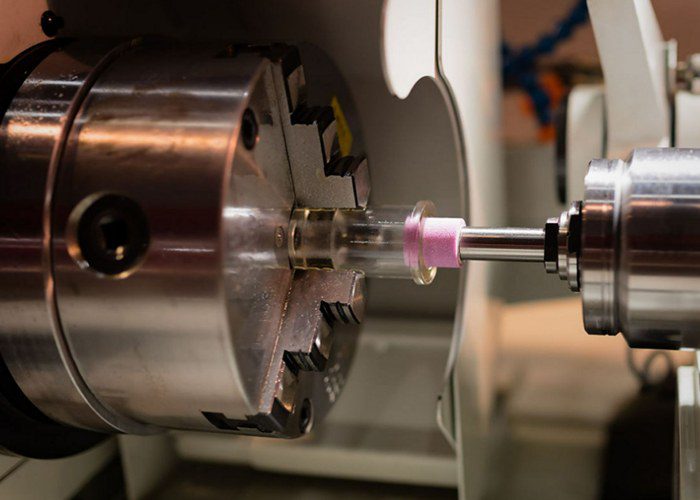
Custom CNC manufacturing can involve several processes: milling, turning (lathe), routing, grinding, and electrical discharge machining (EDM). These methods allow manufacturers to work with a vast array of materials, including aluminum, stainless steel, titanium, brass, engineering plastics like PEEK and Delrin, as well as composites and exotic alloys.
The key differentiator is flexibility. A custom CNC shop can produce a single prototype in the morning and switch to a production run of several hundred units by the afternoon, with minimal downtime and zero loss in accuracy.
Why Choose Custom Over Off-the-Shelf?
For many engineers and product designers, off-the-shelf components are a compromise. They fit — but rarely perfectly. They perform — but seldom optimally. Custom CNC manufacturing removes these trade-offs in several key ways:
- Design Freedom and Complexity
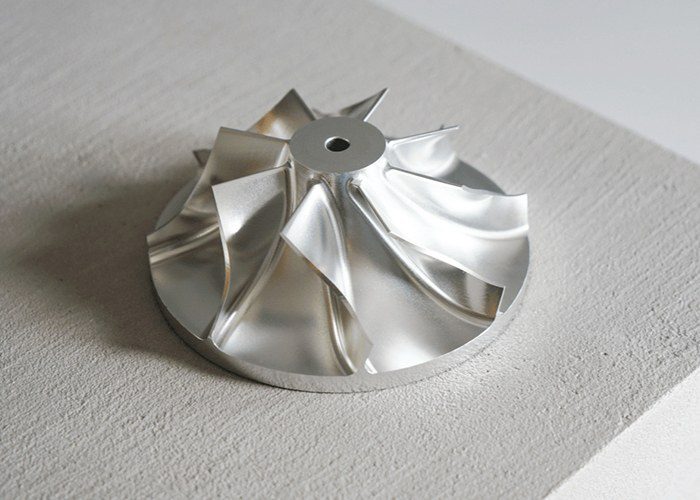
With multi-axis CNC machines (3-axis, 4-axis, and 5-axis), manufacturers can create complex geometries, undercuts, angled holes, freeform surfaces, and internal cavities that are impossible to achieve with manual machining or standard molds. This opens the door to lightweight aerospace brackets, ergonomic surgical tools, and fluid-optimized impellers. - Superior Tolerances
While traditional machining might hold ±0.005 inches, modern custom CNC operations routinely achieve tolerances of ±0.0002 inches (±5 microns). In industries like semiconductor manufacturing or medical robotics, such precision is not a luxury — it is a safety requirement. - Material Optimization
Custom CNC allows for strategic material selection based on the part’s exact operating environment: high-temperature nickel alloys for turbine blades, corrosion-resistant 316 stainless for marine components, or lightweight 7075 aluminum for drone frames. There is no need to accept a generic material that underperforms. - No Minimum Order Quantities (MOQ)
One of the greatest advantages of custom CNC manufacturing is that it thrives on low-volume production. Injection molding may require thousands of dollars in tooling before a single part is made. In contrast, a CNC program can be written, verified, and run for one piece or one hundred pieces with equal efficiency. This is a game-changer for startups, research labs, and custom automotive builders.
The Technical Backbone: From CAD to Finished Part
The journey of a custom CNC part begins with a digital file — typically a CAD (Computer-Aided Design) model. That model is converted into CAM (Computer-Aided Manufacturing) data, which generates the toolpaths and G-code instructions that guide the machine.
Once the program is loaded, the CNC machine takes over. A rotating cutting tool removes material from a solid block (the workpiece) with extreme speed and accuracy. Coolant floods the cutting zone to manage heat and flush away chips. After roughing passes, finishing passes refine the surface to its final dimensions.
Post-processing steps may include deburring, anodizing, powder coating, plating, or heat treatment — all performed to the customer’s specifications.
Real-World Applications
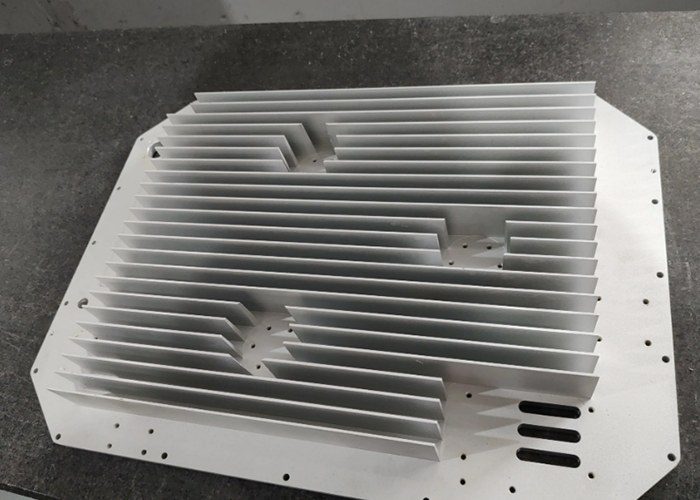
Custom CNC manufacturing is ubiquitous, even if invisible to the end user. In the medical field, it produces patient-specific surgical guides, spinal implants, and prosthetic sockets. In motorsports, teams rely on CNC shops to make one-off suspension components, intake manifolds, and brake calipers. The electronics industry uses CNC for heat sinks, enclosures, and waveguide components. Even consumer goods — think high-end flashlights, mechanical watch cases, and custom knife handles — often come from a CNC machine.
One compelling example is the space industry. Companies like SpaceX and Blue Origin depend on custom CNC machining for prototype engine parts, fuel nozzles, and structural brackets. Because these parts may be redesigned weekly, traditional casting or forging would be impossibly slow and expensive. Custom CNC offers speed and agility without sacrificing reliability.
Cost Considerations and Lead Times
It would be disingenuous to ignore cost. Custom CNC manufacturing is generally more expensive per unit than mass die-casting or injection molding — for large quantities. However, for small to medium runs (1 to 1,000 parts), it is often the most economical choice due to zero tooling costs.
Lead times vary: a simple bracket from aluminum might ship in 3–5 days, while a complex 5-axis part from Inconel could take two to three weeks. Many shops now offer “rapid CNC” services that prioritize speed over cost for emergency prototypes.
The Future: Automation and Smart Factories
The future of custom CNC manufacturing is intelligent and autonomous. With the rise of Industry 4.0, CNC machines are now integrated with IoT sensors, real-time tool wear monitoring, and adaptive feed rate control. Automated pallet changers and robotic arms allow “lights-out” manufacturing — running jobs unattended overnight.
Moreover, the growing synergy between additive manufacturing (3D printing) and subtractive CNC is creating hybrid machines that can print near-net shapes and then finish them to exact tolerances. This is especially promising for repair applications and complex internal lattices.
Conclusion
Custom CNC manufacturing is not a niche service — it is a foundational capability of the modern industrial economy. It bridges the gap between imagination and physical form, offering designers the freedom to create without worrying about tooling constraints, minimum order quantities, or excessive lead times.
Whether you are an engineer prototyping a revolutionary medical device, a hobbyist building a custom rally car, or a production manager seeking low-volume, high-quality components, custom CNC manufacturing delivers one essential promise: the right part, exactly the way you designed it, without compromise. As technology continues to evolve, the limits of what can be customized will only expand — driven by smarter machines, better software, and an enduring human demand for precision and individuality.