In an era dominated by software, artificial intelligence, and digital twins, it is easy to overlook the physical substance that holds our world together. Beneath the sleek surfaces of every smartphone, behind the safety of every automotive braking system, and inside the roaring turbines of jet engines lies a silent hero: Custom Precision Hardware Parts. These are not the generic screws or bolts found at a local hardware store; they are highly specialized, meticulously engineered components designed to perform specific tasks under extreme conditions. As industries push the boundaries of miniaturization, efficiency, and durability, the demand for these bespoke parts is not just growing—it is becoming the standard.
Defining the Niche: What Makes a Part “Custom” and “Precision”?
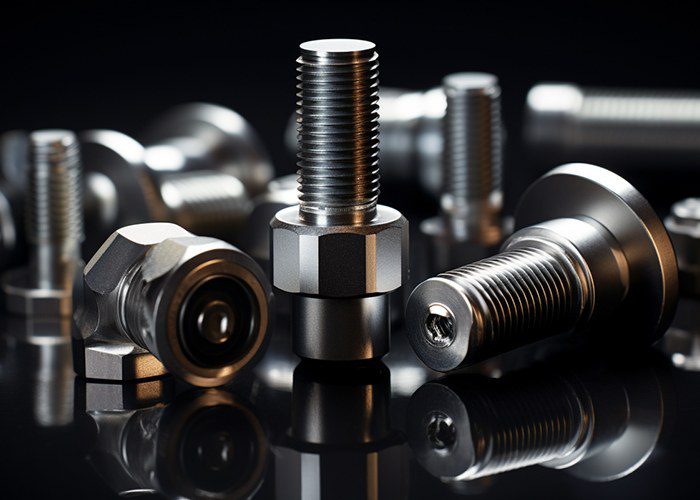
To understand the value of this sector, one must first dissect the terminology. A “custom” part implies that it does not conform to standard industry sizes or specifications (such as ISO or ANSI standards). Instead, it is designed to fit a unique geometric space, interact with a proprietary mechanism, or operate within a specific environmental threshold. “Precision,” on the other hand, refers to the tolerance levels—often measured in microns (millionths of a meter). While standard hardware might allow for a variance of 0.5mm, custom precision parts for medical robotics or aerospace instrumentation routinely require tolerances of ±0.005mm or less.
The Engineering Imperative: Why Off-the-Shelf Isn’t Enough
Why would an engineer choose the complex route of custom fabrication over readily available off-the-shelf components? The answer lies in optimization. In competitive industries, space is a luxury. For example, when designing a drone for search-and-rescue missions, every gram of weight and millimeter of space matters. A standard bracket might be too thick or the wrong shape. A custom precision bracket, however, can be topology-optimized to be 70% lighter while retaining 100% of the structural integrity.
Furthermore, standard hardware often fails in specialized environments. Consider a chemical processing plant dealing with high salinity or acidic compounds. A standard steel bolt will corrode within weeks. A custom part made from Inconel or Hastelloy, with specific surface treatments, can last for decades. This reliability translates directly to safety and total cost of ownership.
The Manufacturing Symphony: CNC, EDM, and Quality Control
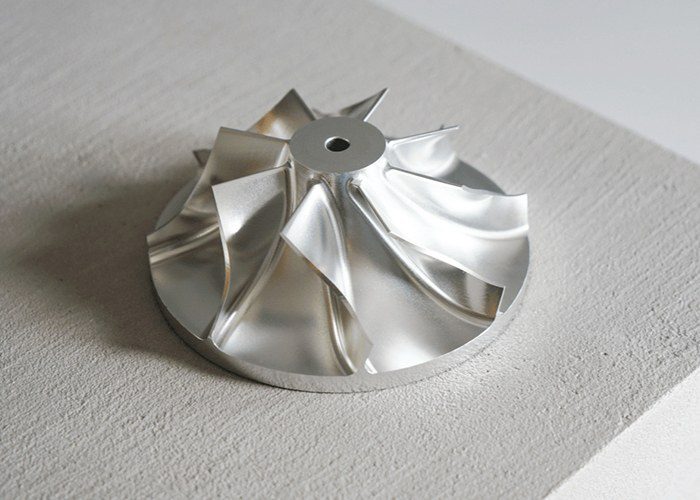
The creation of these parts is a symphony of advanced manufacturing technologies. CNC (Computer Numerical Control) machining remains the workhorse, allowing for the rapid removal of material from solid blocks of metal or plastic with autonomous precision. For geometries that are too complex for cutting tools, EDM (Electrical Discharge Machining) uses controlled electrical sparks to erode the material into the desired shape.
However, machining is only half the battle. The “precision” label is earned in the metrology lab. Advanced Coordinate Measuring Machines (CMMs) and laser scanners inspect every critical dimension. If a part is designed to fit a bearing with an interference fit of 0.002mm, the manufacturer must provide a certificate of inspection proving that compliance. This level of quality assurance is non-negotiable for sectors like defense and medical implants.
Applications Across Industries: A Ubiquitous Necessity
The influence of custom precision hardware parts spans virtually every facet of modern life.
- Aerospace: Turbine blades, landing gear actuators, and satellite deployment mechanisms rely on custom fasteners that can withstand the vacuum of space and extreme thermal cycling.
- Medical: Surgical robots, bone screws, and prosthetic joints require biocompatible materials (like titanium) finished to a mirror-like smoothness to prevent infection and tissue rejection.
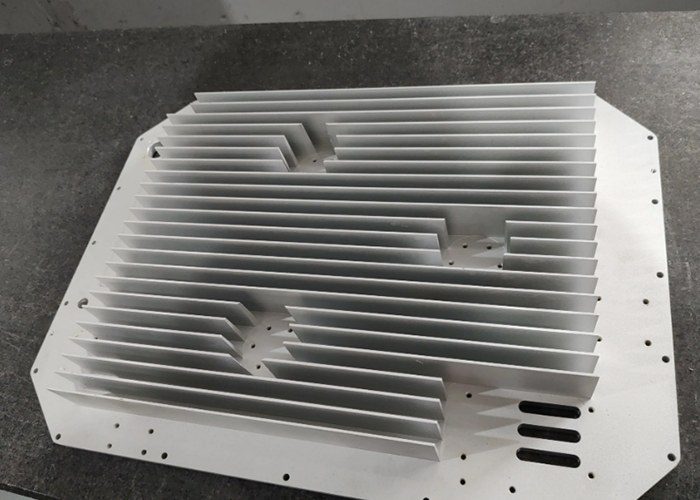
- Electronics: The heat sinks in high-performance computing and the shielding frames in 5G antennas are custom precision parts designed to manage thermal dynamics in a tight footprint.
- Automotive (EV Revolution): Electric vehicles require custom busbars for power distribution and cooling plates for battery packs, which must align perfectly with the cells to prevent hot spots.
The Future: Smart Hardware and Rapid Prototyping
Looking forward, the industry is converging with the digital world. We are seeing the rise of “Smart Hardware”—precision parts embedded with micro-sensors to monitor stress, temperature, and vibration in real-time. Additive manufacturing (3D metal printing) is also revolutionizing the field, allowing for lattice structures that are impossible to create with subtractive machining, further pushing the limits of weight reduction.
Conclusion
While software gets the headlines, the world literally rests on the shoulders of hardware. Custom Precision Hardware Parts represent the highest form of practical engineering—solving unique physical problems with exacting accuracy. For any business looking to innovate, whether it is building the next rocket to Mars or the next generation of wearable health tech, investing in custom precision hardware is not an expense; it is the fundamental foundation of reliability and performance. In a world that demands things work perfectly the first time, “custom” and “precision” are not just adjectives; they are requirements.