
In the world of modern manufacturing, few processes offer the combination of precision, repeatability, and material versatility found in CNC turning. When this process is applied to stainless steel—a material renowned for its strength and corrosion resistance—the result is a class of components that form the backbone of countless industries. From aerospace fittings to medical implants and automotive shafts, CNC turned stainless steel parts are indispensable. This article explores the intricacies of CNC turning for stainless steel, its advantages, challenges, and the critical considerations for achieving optimal results.
Understanding CNC Turning
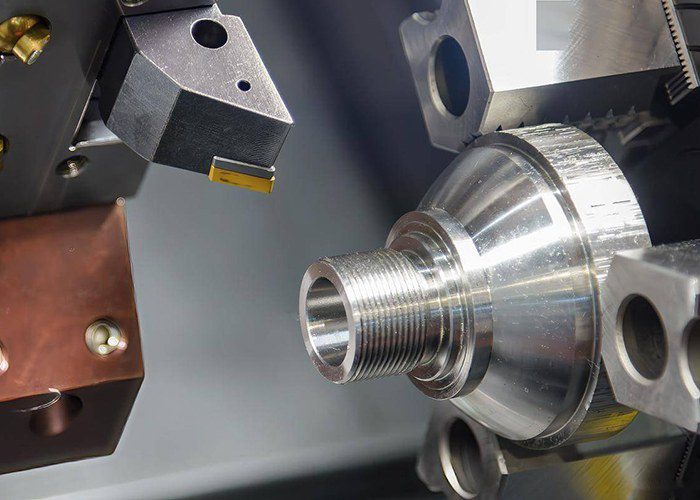
CNC (Computer Numerical Control) turning is a subtractive machining process where a rotating workpiece is fed against a stationary cutting tool. Unlike milling, which spins the tool, turning spins the bar stock or pre-formed blank. The lathe’s computer-controlled axes (typically X and Z) guide the tool to remove material with micron-level accuracy, creating cylindrical or contoured shapes such as shafts, bushings, pins, and threaded rods.
Modern CNC lathes often include live tooling and Y-axis capabilities, enabling milling, drilling, and tapping without removing the part from the chuck. This “turn-mill” approach is especially valuable for stainless steel, as it reduces handling and maintains tight tolerances across complex geometries.
Why Stainless Steel?
Stainless steel is not a single material but a family of alloys containing at least 10.5% chromium, which forms a passive oxide layer that resists rust and staining. Common grades used in CNC turning include:
- 304 Stainless Steel: The most versatile austenitic grade, offering excellent formability and corrosion resistance. Ideal for food equipment, chemical containers, and general-purpose parts.
- 316 Stainless Steel: Formulated with molybdenum for exceptional resistance to chlorides and acids. Used in marine environments, medical devices, and pharmaceutical machinery.
- 17-4 PH Stainless Steel: A precipitation-hardening grade that achieves high strength after heat treatment. Common in aerospace and nuclear components.
- 303 Stainless Steel: Contains sulfur to improve machinability, making it a preferred choice for complex turned parts, though with slightly reduced corrosion resistance.
Each grade presents unique turning characteristics, but all share common attributes: high strength, work-hardening tendencies, and low thermal conductivity. These properties make stainless steel both highly appealing and technically challenging to work with.
Advantages of CNC Turning for Stainless Steel
- Exceptional Precision and Surface Finish
CNC turning consistently achieves tolerances of ±0.0005 inches (±0.0127 mm) or better. Modern lathes with rigid construction and vibration damping produce smooth surface finishes (down to 8 µin Ra), reducing or eliminating secondary polishing operations—a significant benefit for stainless steel, which can be difficult to finish manually. - High Repeatability for Volume Production
Once a program is verified, CNC turning produces identical parts from bar stock, run after run. This is critical for industries like automotive and hydraulics, where thousands or millions of stainless steel components must interchange flawlessly. - Complex Geometries in One Setup
With live tooling and sub-spindles, a single CNC turning center can machine hex flats, cross-holes, slots, and threads on a stainless steel part. This reduces fixturing errors and cycle times compared to switching between lathes and mills. - Material Conservation
Modern bar feeders and optimized toolpaths minimize waste. While stainless steel is expensive (often 3–3–8 per pound or more for raw stock), efficient turning processes maximize yield from each bar length.
Challenges When Turning Stainless Steel
Despite its advantages, stainless steel is not a forgiving material to machine. Three primary challenges stand out:
- Work Hardening: Austenitic grades (304, 316) rapidly harden under the cutting tool if feeds or speeds are too low. Once work-hardened, the surface becomes abrasive and difficult to cut, leading to tool failure and poor finish.
- Heat Generation: Stainless steel conducts heat poorly, meaning most cutting heat concentrates at the tool-chip interface. Without proper coolant application and chip breaking, this heat can soften the tool edge (especially carbide) and cause built-up edge (BUE).
- High Cutting Forces: Stainless steel’s toughness requires robust machine rigidity and sharp, positive-rake tool geometries. Underpowered lathes may chatter or stall.
Solutions and Best Practices
Successful CNC turning of stainless steel hinges on four pillars: tooling, speeds and feeds, coolant, and chip control.
- Tooling: Use carbide inserts with high heat resistance, such as those coated with TiAlN or AlCrN. These coatings withstand temperatures up to 1100°C. For finishing passes, polished or ground inserts reduce friction. Avoid uncoated high-speed steel (HSS) tools except for very small, low-volume jobs.
- Speeds and Feeds: As a rule, run slower surface speeds (200–400 SFM for austenitic grades) but higher feeds (0.004–0.012 in/rev) to stay ahead of the work-hardening zone. Constant surface speed (CSS) mode on CNC lathes automatically adjusts spindle RPM to maintain optimal cutting conditions as the tool moves toward the center.
- Coolant: High-pressure flood coolant (300–1000 PSI) directed precisely at the cutting edge is essential. Use a water-soluble oil emulsion (6–10% concentration). Through-tool coolant (where the insert has internal coolant holes) dramatically improves chip breaking and heat evacuation.
- Chip Breaking: Long, stringy chips are dangerous and can wrap around the part or turret. Select inserts with chipbreakers designed for stainless steel. Pecking cycles for drilling and variable feed rates for turning help break chips.
Applications Across Industries
The combination of CNC turning and stainless steel serves demanding sectors:
- Medical: Bone screws, surgical handle components, and orthopedic joint instruments (316 or 17-4 PH) require biocompatibility and absolute cleanliness.
- Food & Beverage: Valves, pump shafts, and fittings constructed from 304 or 316 stainless steel are resistant to acidic foods and cleaning chemicals.
- Oil & Gas: Downhole tool components, connectors, and instrumentation bodies must withstand high pressure and sour gas environments—turned from duplex or super-austenitic stainless steels.
- Aerospace: Actuator rods, landing gear pins, and hydraulic manifolds (often 17-4 PH or 15-5 PH) benefit from high strength-to-weight ratio and corrosion resistance.
Quality Control and Finishing
Post-machining, stainless steel turned parts often undergo deburring, passivation (removing free iron to enhance corrosion resistance), and inspection. Common QC tools include optical comparators, CMM (coordinate measuring machines), and surface roughness testers. For critical applications, 100% dimensional inspection is standard.
Conclusion
CNC turning of stainless steel parts represents a synergy of advanced machine control and material science. While stainless steel poses challenges in work hardening and heat management, modern CNC lathes equipped with rigid tooling, high-pressure coolant, and optimized programming reliably produce high-quality components. From life-saving medical implants to heavy-duty industrial valves, these turned parts deliver the strength, cleanliness, and longevity that modern engineering demands. For manufacturers, mastering stainless steel turning is not merely a technical capability—it is a gateway to high-value, mission-critical production.


