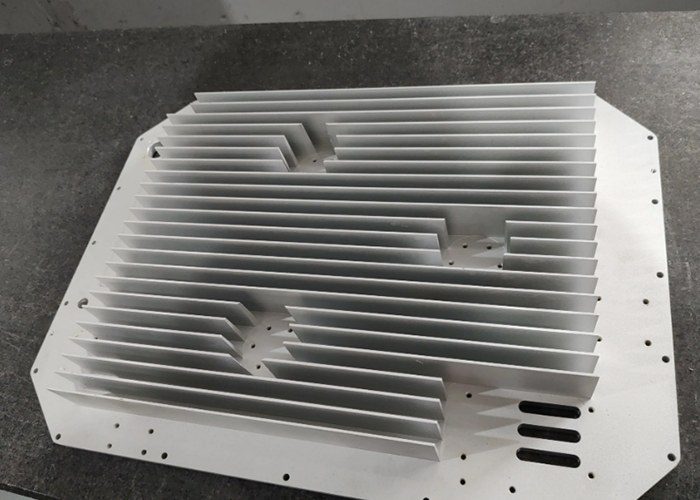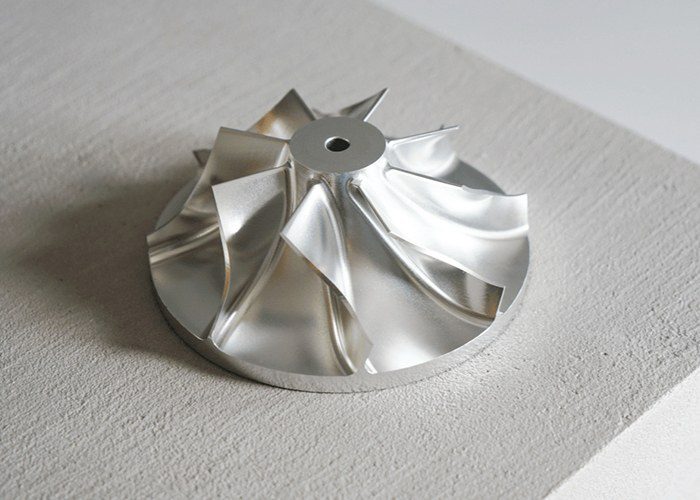
In the relentless march of modern manufacturing, few processes have proven as transformative as Computer Numerical Control (CNC) milling. When applied to metal, this technology transcends simple material removal; it becomes an art form governed by microns, a symphony of spinning cutters and solid alloys. CNC milled metal parts are the silent workhorses of the 21st century, found in everything from the wing flaps of an Airbus to the surgical tools in a neurosurgical suite.
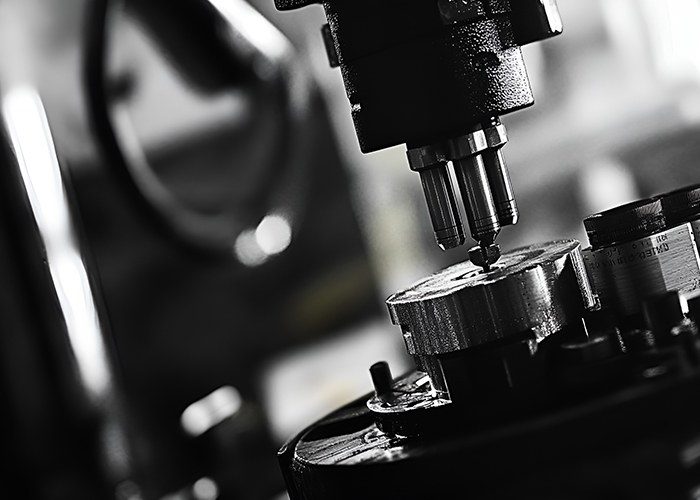
Fundamentally, CNC milling is a subtractive manufacturing process. Unlike 3D printing which builds an object layer by layer, milling starts with a solid block of metal—known as a billet—and carves away material until only the desired part remains. The “CNC” aspect means that every movement of the rotating cutting tool is dictated by a precise G-code generated from a 3D CAD model. A human machinist might use levers and handwheels; a CNC machine uses servomotors and ball screws to achieve movements as fine as a few ten-thousandths of an inch.
The Spectrum of Materials
The versatility of CNC milling is perhaps best illustrated by the sheer range of metals it can shape. For aerospace and defense, where strength-to-weight ratio is paramount, aluminum 7075 and Titanium Grade 5 (Ti-6Al-4V) are common choices. Titanium, while notoriously difficult to machine due to its poor thermal conductivity and work-hardening tendencies, rewards the effort with parts that are incredibly strong, lightweight, and corrosion-resistant.
In the medical and food processing industries, stainless steel (304 and 316) dominates. Its ability to resist oxidation and withstand repeated sterilization in autoclaves makes it indispensable for bone screws, dental implants, and conveyor system components. Meanwhile, the automotive and heavy machinery sectors rely on brass, bronze, and tool steels (like D2 or A2) for bushings, gears, and injection molds. Each material demands specific cutting speeds, feed rates, and specialized carbide tooling, making CNC milling as much a science of metallurgy as it is of mechanics.
Why Choose CNC Milling Over Alternatives?
The enduring popularity of CNC milled metal parts stems from three undeniable advantages: precision, repeatability, and geometric freedom.
Precision is the headline feature. While a manual mill can hold a tolerance of ±0.005 inches (0.127 mm), a modern 5-axis CNC machining center routinely achieves ±0.0002 inches (0.005 mm). For a component like a fuel injection nozzle or a hydraulic spool valve, that level of accuracy separates proper function from catastrophic failure.
Repeatability is what separates craftsmen from manufacturers. If a customer orders 10,000 identical aluminum brackets, the CNC mill will produce part #10,000 with the exact same dimensions as part #1. This statistical consistency allows for mass production without the cost of hard tooling (which would be required for casting or forging).
Geometric freedom has been dramatically expanded by multi-axis machines. A basic 3-axis mill (X, Y, Z) can produce flat plates and simple cavities. But a 5-axis machine can rotate the cutting tool and the worktable simultaneously, allowing a single setup to machine undercuts, compound angles, and freeform surfaces. This eliminates multiple setups, reduces human error, and produces parts that were literally unmachinable a decade ago.
The Unseen Details: Surface Finish and Tolerances
A layperson might look at a CNC milled metal part and see only a shiny object. An engineer sees surface finish values measured in Ra (roughness average). A raw machined surface might have a 63 Ra finish—functional but visibly striated. Through high-speed machining, proper coolant application, and perhaps a secondary process like tumbling or bead blasting, that finish can drop to 16 Ra, creating a surface that is nearly reflective.
Tolerances tell the real story. General machining might work to a standard of ±0.005 inches. However, high-precision milling for industries like optics or semiconductor manufacturing demands tolerances of ±0.0001 inches (2.54 microns). At this scale, the ambient temperature of the shop floor matters; a rise of just 10°F can cause a 12-inch steel part to grow by 0.0008 inches, potentially pushing it out of spec.
Applications Across Industries
No discussion of CNC milled metal parts would be complete without acknowledging their ubiquity:
- Aerospace: Turbine blades, wing ribs, landing gear components. Every gram is optimized; every surface is inspected.
- Medical: Orthopedic plates, hip stems, surgical guide tools. Biocompatibility and sterilization are non-negotiable.
- Automotive: Prototype engine blocks, custom suspension components, transmission cases (both in motorsport and limited-run hypercars).
- Defense: Receiver housings for firearms, drone chassis, missile guidance housings.
- Energy: Housings for wind turbine sensors, connectors for oil drilling equipment, components for nuclear reactor maintenance tools.
The Future: Lights-Out Manufacturing
The frontier for CNC milled metal parts is “lights-out manufacturing”—fully automated workshops where robotic arms load raw billets, machines run overnight without human intervention, and finished parts are washed, measured by laser scanners, and packed into crates. With the integration of IoT sensors and adaptive toolpath algorithms, modern CNC mills can detect a dull end mill and automatically swap it for a fresh one. The result is lower cost per part, faster lead times, and 24/7 productivity.
Conclusion
CNC milled metal parts are far more than metal shavings on a factory floor. They are the physical manifestation of digital design—a seamless bridge between the virtual world of CAD and the tangible reality of high-strength alloys. Whether it’s a one-off prototype for a moon rover or a million-piece run of smartphone chassis, the principles remain the same: rigid machines, sharp tools, precise code, and an unwavering commitment to quality. As materials advance and software grows smarter, the humble CNC mill will continue to carve the future, one micron at a time.