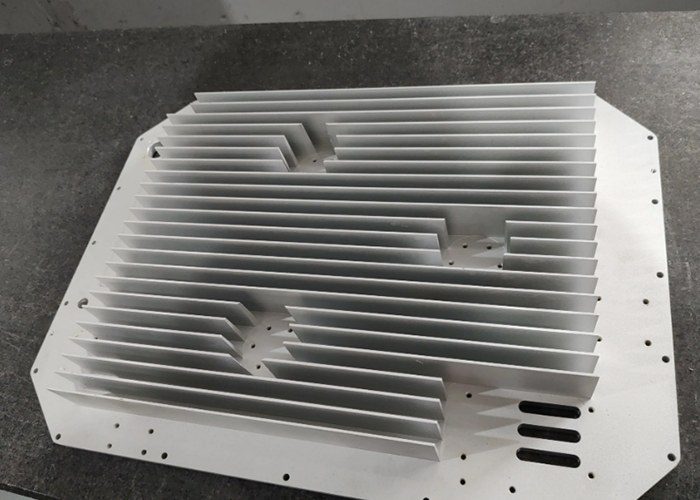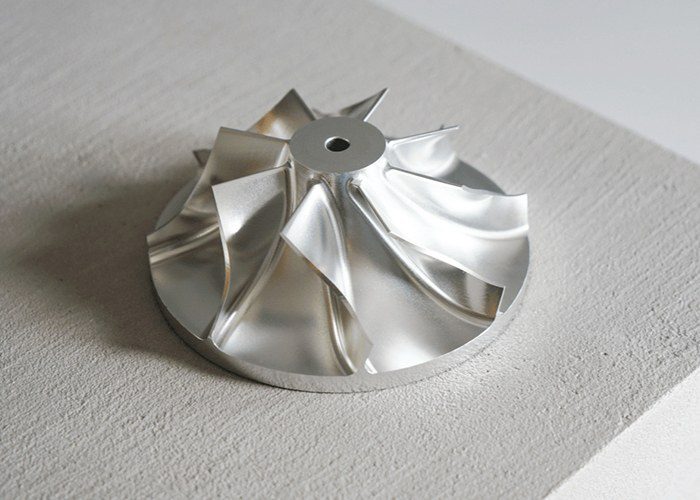
In today’s high-stakes manufacturing landscape, precision is not a luxury — it is a necessity. From the engines that power commercial aircraft to the implantable devices that save lives, custom precision CNC turned parts are the unsung heroes enabling innovation across virtually every industry. These components, manufactured through computer-controlled turning processes, combine micron-level accuracy with remarkable consistency, making them indispensable in applications where failure is not an option.
What Are Custom Precision CNC Turned Parts?
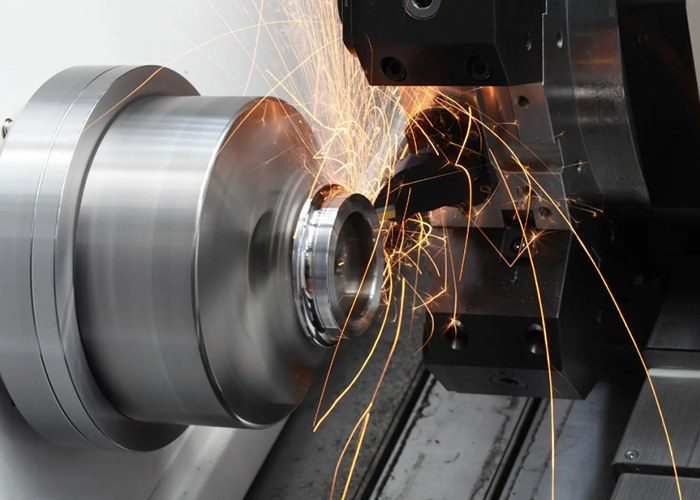
Custom precision CNC turned parts are components produced using CNC (Computer Numerical Control) lathes or turning centers, where a rotating workpiece is shaped by stationary cutting tools to exact specifications. Unlike standard off-the-shelf components, custom turned parts are engineered to meet unique dimensional, material, and performance requirements dictated by specific applications. In turning, a rotating workpiece is machined by a cutting tool that removes stock, generating rotationally symmetrical geometries, including shafts, bushings, pins, connectors, fasteners, and sensor housings.
What sets precision turning apart is its ability to achieve extraordinarily tight tolerances. Leading manufacturers routinely deliver components with tolerances as tight as ±0.005 mm (±5 microns), and in some cases, high-precision turning can reach IT5 to IT6 level tolerances between ±0.004 mm and ±0.008 mm. Surface finishes can be controlled down to Ra 0.4 μm or even finer with additional processes. This level of precision ensures that each part fits, functions, and performs exactly as designed — every single time.
The Manufacturing Process: From Design to Delivery
The journey of a custom precision turned part begins long before metal meets cutting tool. Engineers first create a detailed 3D model using CAD (Computer-Aided Design) software. This digital design is then translated into machining instructions through CAM (Computer-Aided Manufacturing) software, which generates the toolpaths and G-code that guide the CNC machine.
The actual machining process typically follows a structured sequence: roughing removes the bulk of material, semi-finishing brings the part closer to final dimensions, and finishing achieves the required tolerances and surface quality. Equipped with multi-axis functionality, live tooling, sub-spindles, and Y-axis motion, today’s CNC turning centers offer advanced versatility, allowing complex parts to be machined to completion without repositioning. This reduces part handling, shortens lead times, and lowers cost-per-piece. Many facilities now operate with bar feeders, robotic part handling, and in-process measurement systems that allow unattended, lights-out operations.
Materials: Versatility Across Applications
One of the greatest strengths of custom precision CNC turning is its remarkable material versatility. Manufacturers can machine virtually any machinable material, from common metals to exotic alloys and engineering plastics. Renowned for corrosion resistance and toughness, stainless steels (e.g., 303, 304, 316L) stand in contrast to aluminum alloys like 6061 and 7075, which excel in delivering a lightweight yet high-strength performance. Brass and bronze provide superior machinability and aesthetic appeal. For demanding environments, manufacturers turn to titanium, Inconel®, and other superalloys that withstand extreme temperatures and corrosive conditions. Engineering plastics such as PEEK, PTFE, and polycarbonate expand the possibilities into lightweight, non-metallic applications.
Industries and Applications
The applications for custom precision CNC turned parts span virtually every sector of the global economy:
Aerospace and Defense: Aircraft and spacecraft rely on precision-turned fasteners, sensor housings, hydraulic fittings, and structural inserts where failure is simply unacceptable. AS9100 certification is often required, reflecting the stringent quality standards of this industry.
Medical and Healthcare: From orthopedic and dental implants to surgical instruments and connectors, medical devices demand the highest levels of precision and traceability. Manufacturers serving this sector often hold ISO 13485 certification.
Automotive and Electric Vehicles: Engine components, transmission parts, and EV drivetrain components — including stator housings and coolant junctions — require the tight tolerances and thermal stability that precision turning delivers.
Industrial Automation and Electronics: Pneumatic fittings, linear motion components, connectors, and heat sinks are just a few examples of turned parts that keep modern industry running.
Quality Assurance and Certifications
Quality is the foundation of custom precision CNC turning. Reputable manufacturers operate under rigorous quality management systems certified to ISO 9001:2015. For aerospace applications, AS9100D certification is the gold standard. Medical device manufacturers often require ISO 13485. These certifications ensure that every part is produced with documented, traceable processes and subjected to comprehensive inspection using advanced metrology equipment such as CMM (Coordinate Measuring Machines) and SPC (Statistical Process Control).
The Market and Future Outlook
The precision turned product manufacturing market is experiencing robust growth. Valued at approximately USD 121 billion in 2025, it is forecast to reach USD 172 billion by 2031, representing a compound annual growth rate of 6.06%. CNC processes alone account for 65.98% of the market share and are projected to expand at an 8.41% CAGR through 2031. Key drivers include the reshoring of manufacturing supply chains to North America and Europe, the proliferation of electric vehicle drivetrains, and the ongoing miniaturization of medical implants and devices.
Conclusion
Custom precision CNC turned parts are far more than simple components — they are the precision-engineered building blocks upon which modern industry depends. Through advanced machining technology, rigorous quality control, and an unwavering commitment to accuracy, manufacturers transform raw materials into mission-critical parts that power aircraft, heal patients, drive vehicles, and connect the world. As manufacturing continues to evolve toward greater automation, tighter tolerances, and more demanding applications, the importance of custom precision CNC turning will only continue to grow.