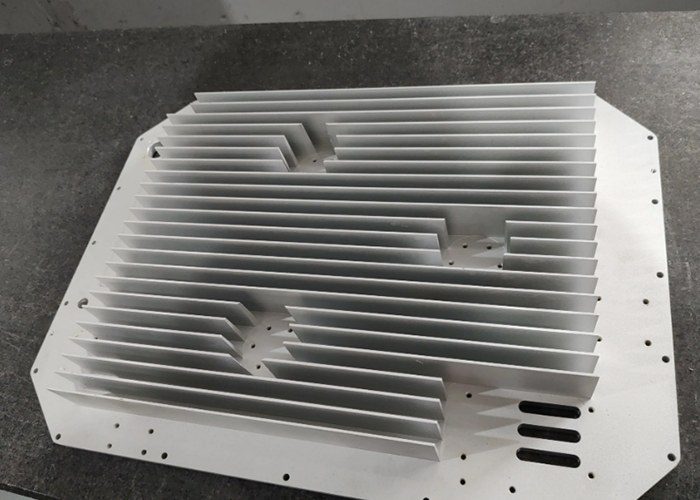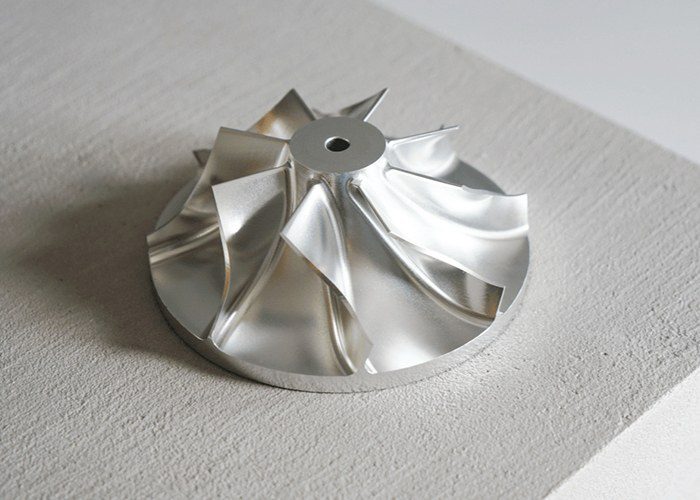
In today’s fast-paced manufacturing landscape, the demand for components that meet exacting specifications with unwavering consistency has never been greater. Custom precision CNC milled parts have emerged as the cornerstone of modern production, enabling industries ranging from aerospace to medical devices to push the boundaries of what is possible. These computer-controlled components represent a perfect marriage of digital design and physical fabrication, delivering accuracy measured in microns and repeatability that manual methods simply cannot match.
Understanding the Process
Custom CNC milling parts are produced through a subtractive manufacturing process guided by computer programming. The journey begins with a Computer-Aided Design (CAD) model — a digital blueprint that contains every dimension, tolerance, and geometric specification required for the part to function as intended. This model is then translated into machine-readable instructions using Computer-Aided Manufacturing (CAM) software, which generates the precise tool paths, spindle speeds, and cutting parameters that the CNC machine will follow.
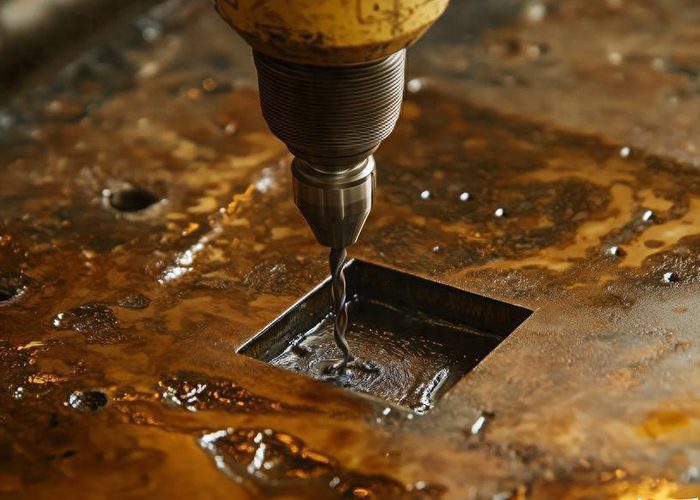
During the milling operation, the machine employs a rotating cutting tool to carve material from a solid block — known as a billet — with extreme precision. The process is entirely computer-controlled, meaning each cut, hole, and contour follows a programmed path with minimal human intervention. For complex parts, multiple setups and different cutting tools may be required, and the finished components typically undergo post-processing operations such as deburring, polishing, anodizing, or coating to enhance appearance, performance, and durability.
Unmatched Precision and Capability
What sets custom CNC milled parts apart is their extraordinary accuracy. Modern CNC milling machines can achieve tolerances as tight as ±0.005 mm, making them indispensable for applications where even the slightest deviation could lead to functional failure or safety risks. Surface finishes can reach Ra 0.8 μm or better — a level of smoothness that eliminates visible tool marks and is essential for sealing surfaces and high-precision assemblies.
Beyond precision, CNC milling offers remarkable versatility in geometry. Multi-axis machines — including 3-axis, 4-axis, and 5-axis systems — can produce intricate features such as deep pockets, complex 3D contours, internal channels, helical grooves, and undercuts that would be impossible or prohibitively expensive with traditional manual methods. Five-axis CNC milling, in particular, can machine multiple faces of a part in a single setup, reducing positioning errors and significantly shortening production time.
Material Versatility and Customization
One of the greatest strengths of custom CNC milling is its compatibility with an extensive range of materials. From metals like aluminum, stainless steel, brass, titanium, and copper to engineering plastics such as POM, PTFE, PEEK, and nylon, the process accommodates virtually every engineering material in use today. This flexibility ensures that components not only meet mechanical requirements but also satisfy durability, weight, thermal performance, and aesthetic considerations.
The “custom” aspect is equally important. Unlike standardized parts that come in pre-set dimensions, custom CNC milled components are produced according to unique CAD drawings or 3D models provided by the customer. This total flexibility allows engineers to create tailored solutions that match the specific needs of their projects, regardless of complexity.
Advantages Over Traditional Manufacturing
The advantages of custom CNC milling over conventional machining methods are substantial. CNC technology completely eclipses manual methods, delivering unmatched precision, efficiency, and adaptability. While traditional machining depends on operator skill and is prone to variability, CNC machining delivers computer-controlled accuracy that ensures consistency across every batch. Part repeatability can exceed 99%, making it ideal for both prototyping and large-scale production.
Efficiency gains are equally impressive. CNC milling can reduce production time by up to 60% compared with traditional methods, while also lowering scrap rates by more than 30%. The ability to run continuously around the clock, combined with high-speed cutting and automatic tool changes, translates into shorter lead times and significant labor savings. Furthermore, by precisely controlling material removal, CNC machining minimizes waste — an increasingly important consideration in an era where sustainability has become a boardroom priority.
Applications Across Industries
The applicability of custom precision CNC milled parts spans virtually every sector of modern industry. In aerospace and defense, they form the backbone of mission-critical systems — from satellite brackets to jet engine blades, where components must endure extreme pressure, vibration, and temperature while maintaining structural integrity. The medical device industry relies on CNC-machined components for orthopedic implants, surgical instruments, and diagnostic equipment, where biocompatible materials and uncompromising cleanliness standards are paramount.
The automotive sector benefits from durable, high-performance parts such as gearbox components, pistons, and custom fixtures. In electronics, CNC milling is essential for enclosures, heat sinks, and sensor housings where electrical interference and mechanical performance must be tightly controlled. The precision of robotics and automation systems hinges on custom gearboxes, structural frames, and brackets—all of which must conform to rigorous geometric specifications to guarantee motion repeatability and consistency.
The Future of Precision Milling
As manufacturing enters 2026 and beyond, the pace of change in CNC machining is unlike anything seen before. Artificial intelligence is becoming integral to daily machine control, using real-time sensor feedback to adjust feeds, speeds, and toolpaths automatically in response to changing conditions. Digital twins — virtual replicas of the entire machining process — are maturing into living ecosystems that integrate design, process engineering, machining, and inspection into continuously updated models. Hybrid manufacturing—unifying additive metal deposition and subtractive CNC machining within a single system—is rapidly emerging as a critical solution in aerospace, energy, and medical applications, effectively resolving the longstanding trade-offs between material utilization and geometric complexity.
Conclusion
Custom precision CNC milled parts represent far more than a manufacturing technique — they are enablers of innovation. Whether it is a prototype being refined through iterative testing, a low-volume production run for a specialized application, or a high-volume order for a global supply chain, CNC milling delivers the accuracy, consistency, and versatility that modern industry demands. In an era where every fraction of a millimeter matters and where the difference between success and failure often comes down to precision, custom CNC milled parts stand as the quiet heroes behind exceptional performance. They transform ambitious designs into tangible reality, ensuring that the products we rely on — from aircraft to medical implants, from automobiles to electronic devices — perform exactly as intended, every single time.