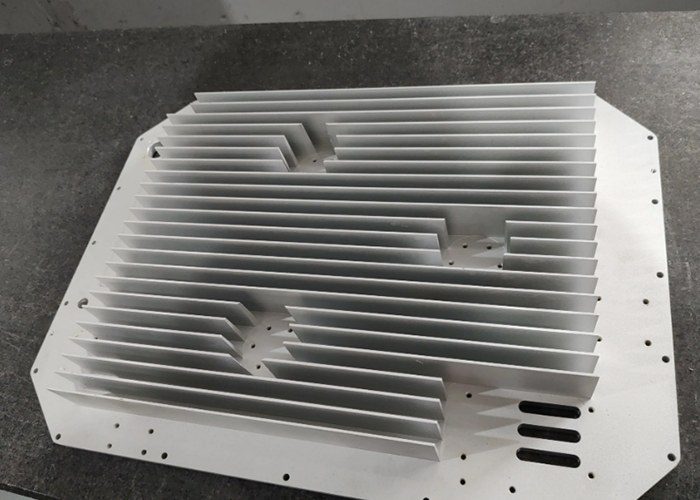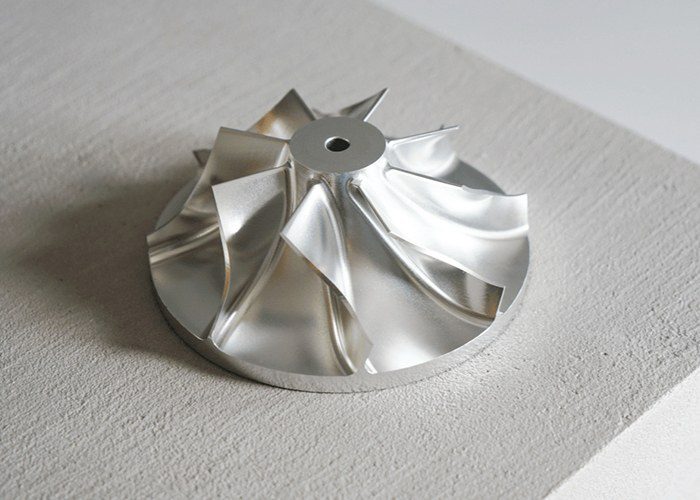
In the vast landscape of modern manufacturing, the components that hold our world together often go unnoticed. We walk past bridges, drive cars, and use electronic devices without considering the millions of individual parts that make these everyday miracles possible. Most of these parts are standard — screws, bolts, bearings, and brackets that you can buy from any catalog. But behind every technological leap, every piece of high-performance machinery, and every custom-built innovation, there lies a critical enabler: the Custom Non-Standard Part.
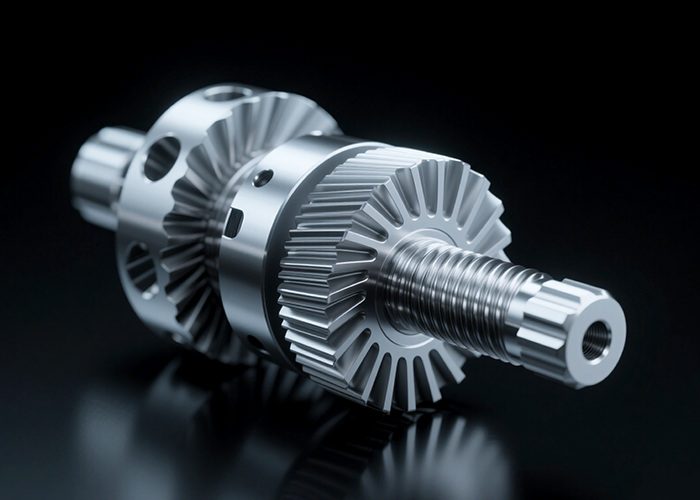
A custom non-standard part is exactly what it sounds like — a component that does not conform to pre-established industry standards or catalog listings. Unlike standard parts, which are mass-produced according to universal specifications (such as DIN or ISO standards), non-standard parts are engineered to meet specific, often unique, requirements. They are the problem-solvers of the mechanical world, born from the limitations of off-the-shelf solutions.
The “Why” Behind Customization
The decision to commission a custom non-standard part typically arises from a simple reality: standard parts are not enough. When an aerospace engineer designs a new flight control system for a rotorcraft, they cannot rely on a generic rod end from a hardware store. The stresses, the environmental factors, and the spatial constraints are too severe. Similarly, when a team of automotive designers creates a limited-edition hypercar, the aerodynamics and weight distribution required for the front splitter demand a geometry and material composition — often carbon fiber — that simply does not exist in any standard catalog.
The driving force behind these parts is specificity. It might be a unique bore size, an unusual thread configuration, a requirement for a non-magnetic material, or the need to fit a component into a space that was designed around other non-standard geometries. In the petrochemical industry, for example, fabricators might require ultra-long, thin-gauge beams with asymmetrical geometries that standard rolling mills cannot produce. In these cases, the project halts without a custom solution.
From Concept to Reality: The Journey of a Non-Standard Part
Creating a custom non-standard part is a collaborative journey between the client and the manufacturer. It usually begins with a problem and a blank sheet of paper — or more accurately, a CAD model. Engineers must translate performance requirements into tangible geometries. This process, often referred to as “build-to-print” or “build-to-specification,” involves defining every aspect of the part, from the metallurgy of the raw material to the exact micron-level tolerance of a mating surface.
The manufacturing process itself can vary wildly depending on the material and function. For metallic components, the journey might involve CNC machining, where solid blocks of aluminum, titanium, or steel are carved into precise shapes by computer-controlled spindles. For complex linkage assemblies, it might involve welding constructions or precision bending, where enormous presses shape 8-meter-long steel beams with a margin of error measured in fractions of a millimeter.
However, one of the most illustrative examples of the non-standard process lies in the world of advanced composites. Creating a custom carbon fiber part — such as a car’s rear wing or a drone fuselage — is a testament to human ingenuity. It begins with a digital design, which is used to CNC machine a mold with tolerances as tight as ±0.05 mm. Then, layer by layer, sheets of carbon fiber “prepreg” are carefully laid into the mold, with each fiber orientation calculated to handle specific stress loads. The part is then vacuum-sealed and “cooked” in a pressurized oven called an autoclave, where heat and pressure fuse the layers into a solid, lightweight structure that is stronger than steel.
The Economic Equation
There is a persistent myth that custom parts are always prohibitively expensive. While it is true that the initial unit cost of a non-standard part is higher than a mass-produced standard part, this view misses the bigger picture. The value of a custom part is measured not just in material cost, but in performance and fit.
When a custom part allows a machine to operate with less friction, last longer in a corrosive environment, or simply fit into an assembly without the need for bulky adapters, it reduces total system cost. In high-stakes industries like aerospace or medical equipment, the cost of failure for a standard part is so high that the precision of a custom solution becomes a necessity, not a luxury.
Moreover, the market for custom manufacturing is booming. Recent forecasts estimate the global market for parts custom manufacturing services to grow from $4.53 billion in 2024 to $7.53 billion by 2031. This growth is fueled by digital platforms that connect buyers with suppliers, making it easier than ever to source a single prototype or a medium-sized production run.
Conclusion
In a world increasingly defined by mass production, the custom non-standard part stands as a symbol of engineering individualism. It represents the refusal to compromise. Whether it is a tiny titanium bracket saving grams on a satellite or a massive steel beam forming the backbone of a unique piece of infrastructure, these components are the physical manifestation of specific intent.
As technology advances and the demand for personalization grows across industries — from automotive aftermarket modifications to cutting-edge robotics — the reliance on custom non-standard parts will only deepen. They are the unsung heroes of the mechanical world, proving that sometimes, the best solution is the one that has never been made before.