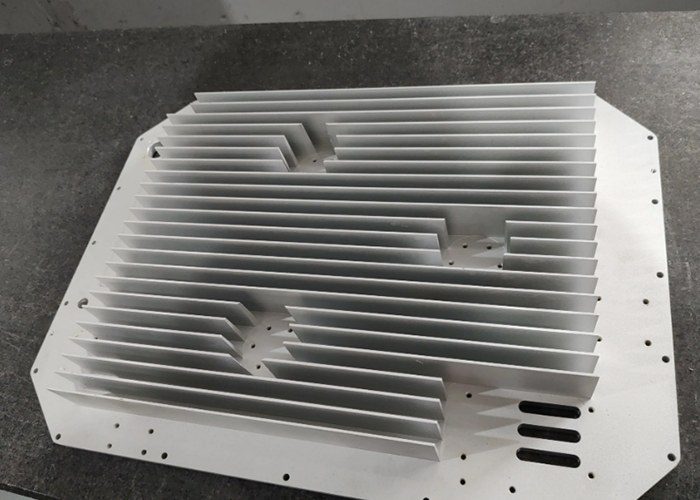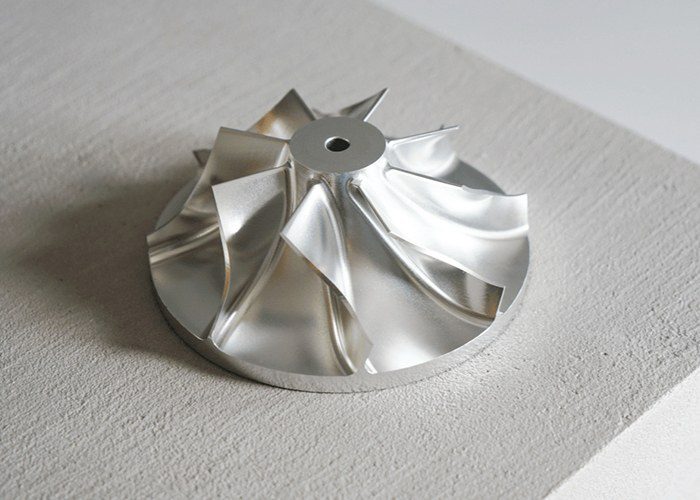
In the landscape of modern manufacturing, few technologies are as foundational and transformative as CNC metal milling. The term “CNC Metal Milling parts” refers to components manufactured through a Computer Numerical Control (CNC) milling process, where automated, rotating cutting tools remove material from a metal block to create a precise, custom-designed piece. This subtractive manufacturing method has become the workhorse of industries ranging from aerospace to medical devices, prized for its unrivaled accuracy, repeatability, and material versatility.
The Process: From Digital Blueprint to Physical Component
The journey of a CNC-milled part begins not on the shop floor, but in a digital environment. Engineers design a 3D model of the component using Computer-Aided Design (CAD) software. This digital blueprint is then converted into a series of machine-readable instructions, typically G-code, using Computer-Aided Manufacturing (CAM) software. This code dictates every movement of the machine: the path of the cutting tool, its speed (spindle speed), the depth of cut, and the feed rate at which the material is presented to the cutter.
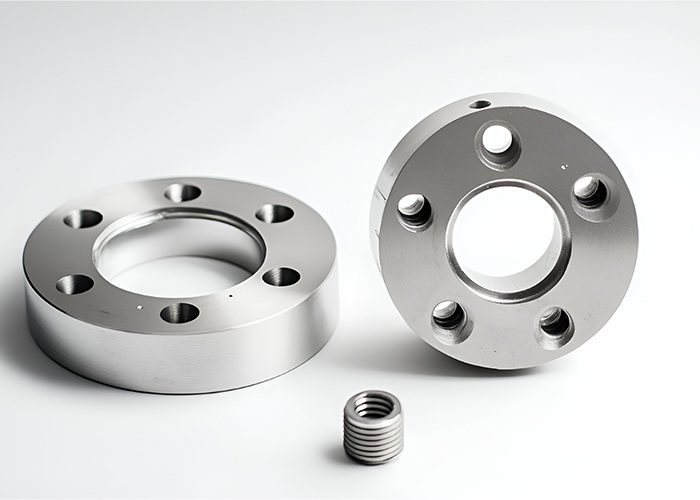
Once the program is loaded, the CNC milling machine takes over. The metal workpiece is securely fastened to the machine table, often within a vise or custom fixture. The spindle, holding the cutting tool, rotates at high speed and moves along multiple axes to sculpt the raw material into the finished part. While traditional 3-axis machines move linearly on the X, Y, and Z planes, advanced 4-axis and 5-axis CNC mills add rotational and tilting movements. This multi-axis capability allows for the creation of incredibly complex geometries, deep cavities, and undercuts in a single setup, eliminating errors that can occur when a part must be manually repositioned.
The Critical Role of Material and Tooling
The selection of raw material is a primary determinant of a part’s function, cost, and machinability. CNC milling is compatible with an extensive range of metals, each offering distinct properties. Aluminum alloys, particularly 6061 and the high-strength 7075, are among the most commonly machined materials due to their excellent strength-to-weight ratio and good machinability. For applications requiring corrosion resistance, stainless steels like 303 (easy to machine) and 316L (superior chemical resistance) are often specified, despite being more challenging to cut. In the demanding environments of aerospace and high-performance automotive, titanium alloys such as Grade 5 are indispensable for their exceptional strength and biocompatibility, though they require specialized tooling and slower cutting speeds to manage heat. Other common materials include brass for electrical components and various tool steels for parts requiring extreme wear resistance.
The success of machining these materials hinges on the cutting tools. Solid carbide end mills are industry favorites for their hardness and heat resistance. Coatings like TiAlN (Titanium Aluminum Nitride) further enhance tool life by reducing friction and dissipating heat, which is crucial when machining tough alloys like stainless steel and Inconel.
Precision, Quality, and Applications
The defining characteristic of CNC metal milling parts is their precision. Modern machining centers can hold dimensional tolerances as tight as ±0.0001 inches, a necessity for components that must fit together perfectly in complex assemblies. However, achieving this level of accuracy requires more than just a sophisticated machine; it demands rigorous quality control. Reputable manufacturers employ a multi-layered inspection strategy, using tools like CMMs, micrometers, and calipers to verify critical dimensions throughout the production process.
This unwavering precision makes CNC milled parts essential across a vast spectrum of industries. In aerospace and defense, they form the structural airframes, turbine blades, and critical control system mounts where failure is not an option. The automotive industry relies on them for engine blocks, pistons, and suspension components. In the medical field, the technology enables the production of customized orthopedic implants and surgical instruments that must meet stringent biocompatibility and regulatory standards.
Designing for Success and Future Trends
The most successful CNC parts are designed with the manufacturing process in mind—a concept known as Design for Manufacturability (DFM). To control costs and ensure quality, designers must respect certain geometric limitations. For instance, internal vertical corners cannot be perfectly sharp because a rotating end mill creates a radius; specifying a larger radius allows for a stronger tool and faster machining. Similarly, deep, thin walls are prone to vibration and must be carefully designed to avoid warping.
Looking ahead, the world of CNC metal milling parts is evolving towards greater automation and complexity. The integration of robotic loading systems and palletized cells enables “lights-out” manufacturing, where machines run unattended for 24 hours a day, dramatically increasing throughput. As software and machine capabilities advance, the ability to machine increasingly intricate parts from difficult materials will only expand, solidifying CNC milling’s role as the precision backbone of modern industry for decades to come.