
In an era defined by mass production and off-the-shelf solutions, the demand for custom metal processing stands as a testament to industry’s enduring need for precision, individuality, and performance. Custom metal parts are the unseen backbone of countless industries, transforming raw materials into specialized components that power everything from aircraft engines to life-saving medical devices. Custom metal fabrication refers to specially tailored metal parts and components that meet specific design and engineering requirements. As global manufacturing becomes increasingly complex, the ability to produce bespoke metal components with exacting tolerances has never been more critical.
The Scale of the Industry
The custom metal fabrication market is experiencing robust growth, driven by increasing demand from construction, industrial automation, and the rising need for customized solutions. The global market is expected to grow at a compound annual growth rate of 6.1% from 2025 to 2031. The custom metal stamping and fabrication segment alone was valued at approximately $3.54 billion in 2024 and is forecast to reach $4.85 billion by 2031. The broader metalworking market, which encompasses a wide range of processing services, is projected to grow from $11.61 billion in 2025 to $14.49 billion by 2030. This growth trajectory reflects the indispensable role that custom metal parts play across virtually every sector of the global economy.
Core Manufacturing Processes
The creation of custom metal parts relies on a diverse array of manufacturing processes, each suited to different materials, geometries, and production volumes.
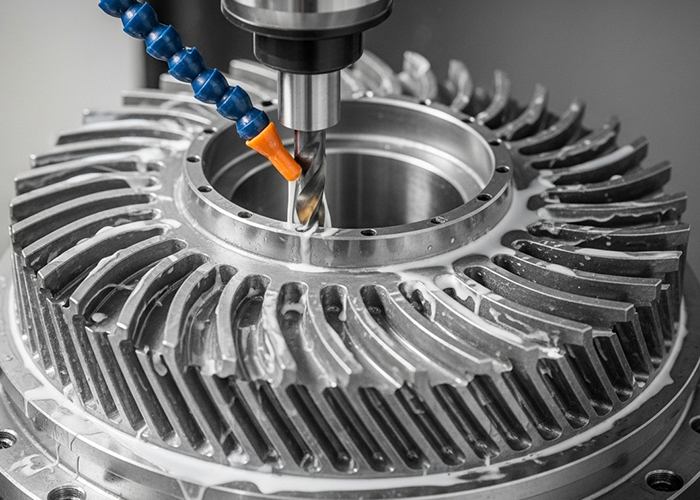
CNC machining remains the workhorse of custom metal processing. CNC milling and turning utilize computer-controlled cutting tools to remove material from solid metal blocks with extraordinary precision. Modern 5-axis machining centers can produce highly complex components with tolerances as tight as ±0.01mm, making them ideal for aerospace brackets, medical implants, and high-performance automotive parts. CNC lathes, including Swiss-type machines, excel at producing small, intricate parts with cylindrical features.
Sheet metal fabrication encompasses cutting, bending, and stamping of metal sheets. Advanced techniques such as laser cutting, turret punching, and press brake forming enable the production of enclosures, brackets, frames, and structural components. For high-volume production, stamping delivers consistent, cost-effective results.
Metal casting and forging offer distinct advantages for custom parts requiring specific material properties. Casting involves pouring molten metal into molds, allowing for complex geometries that would be difficult to achieve through machining alone. Forging, which shapes metal through compressive forces, produces components with superior strength and grain structure. Metal injection molding combines the design freedom of plastic injection molding with the material properties of metal, enabling the production of small, intricate parts in high volumes.
Additive manufacturing, or metal 3D printing, represents a paradigm shift in custom metal processing. This technology builds parts layer by layer directly from digital designs, eliminating the need for costly tooling and enabling the production of geometries that traditional methods cannot achieve. For complex, low-volume parts, additive manufacturing can reduce lead times from months to weeks and dramatically cut material waste.
Applications Across Industries
Custom metal parts are vital across a remarkable range of industries. In aerospace, custom components including engine turbine blades, fuel systems, and guide vanes must withstand extreme conditions while minimizing weight. The industry’s demand for lightweight materials continues to drive innovation in custom metal processing.
The automotive sector relies heavily on custom metal parts for everything from engine components to body panels. Custom sheet metal allows manufacturers to create prototypes and production vehicles with the exact specifications required for performance and safety.
Precision and biocompatibility are paramount in medical applications. Custom metal parts are essential for surgical tools, implants, and orthopedic devices. The ability to produce patient-specific implants through advanced manufacturing techniques is transforming healthcare.
In electronics and telecommunications, custom metal components provide the structural integrity and thermal management essential for modern devices. The oil and gas industry uses custom fabricated parts for infrastructure and extraction equipment. Civil engineering projects frequently require bespoke metal components that standard products cannot provide.
Emerging Trends Shaping the Future
Several transformative trends are reshaping custom metal processing. Smart manufacturing and automation are elevating accuracy, minimizing human error, and accelerating production rates. The integration of robotics, artificial intelligence, and real-time sensors is creating more efficient and interconnected production systems.
Sustainability has become a focal point, with companies implementing green measures such as scrap metal recycling, energy reduction, and adoption of environmentally friendly materials. The push for electric vehicles and renewable energy technologies is driving demand for lightweight, recyclable metals.
The trend toward customization and on-demand manufacturing continues to accelerate. Digital design and fabrication technologies now enable metals to be custom-fabricated more easily than ever before, resulting in more adaptable production lines capable of responding quickly to changing customer needs.
Challenges and Opportunities
The industry faces significant challenges, including intense competition from low-cost manufacturers, fluctuating raw material prices, and the need for continuous investment in advanced technologies. Skilled labor shortages pose another critical concern, as there is a growing need for highly trained workers to operate sophisticated machinery.
Despite these challenges, the future of custom metal processing is exceptionally bright. The rising adoption of advanced cutting and forming technologies, increased use of automation, and growing demand for high-precision, complex metal components point to sustained growth. Companies that embrace innovation, invest in advanced capabilities, and build strong customer partnerships will be well-positioned to thrive in this dynamic and essential industry.
Custom metal processing is not merely a manufacturing service—it is the foundation upon which modern industry is built, enabling the creation of the specialized components that drive progress across every sector of the global economy.


