In the landscape of modern manufacturing, few processes are as foundational—or as transformative—as CNC lathe turning. From the shafts that spin inside automotive engines to the miniature connectors that enable life-saving medical devices, CNC lathe turning parts are everywhere. Yet their ubiquity often masks the remarkable sophistication behind their production. This article explores what CNC lathe turning parts are, how they are made, the materials that shape them, the industries that depend on them, and why they remain indispensable in an era of ever-advancing manufacturing technology.

What Are CNC Lathe Turning Parts?
CNC lathe turning parts are components manufactured through a subtractive machining process known as CNC turning. In this process, a cylindrical workpiece is clamped into a lathe and rotated at high speed while computer-controlled cutting tools remove material to shape the part to precise specifications. The “CNC” designation—Computer Numerical Control—means that every movement of the tool, every rotation of the spindle, and every depth of cut is dictated by a digital program rather than manual manipulation. This automation transforms what was once a craft dependent on human skill into a science of repeatable, micron-level precision.
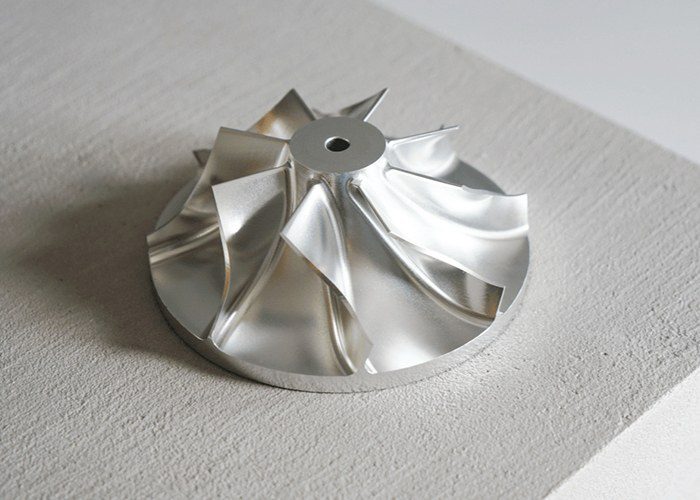
The parts produced through this method are characterized by rotational symmetry—they are cylindrical, conical, or threaded components whose geometry is defined around a central axis. Typical examples include shafts, bushings, pins, pulleys, connectors, and threaded fittings. However, modern CNC lathes are far from limited to simple cylinders. With live tooling, multi-axis capabilities, and secondary operations integrated into a single setup, these machines can produce complex features such as grooves, undercuts, tapers, and even off-axis holes.
The Journey from Raw Material to Finished Part
The production of a CNC lathe turning part follows a carefully orchestrated digital workflow. It begins with computer-aided design (CAD) software, where engineers create a 2D or 3D digital model of the desired component. This design is then imported into computer-aided manufacturing (CAM) software, which translates the geometry into tool paths and machining instructions. The CAM software generates G-code—the programming language that tells the CNC machine exactly where to move, how fast to rotate, and how deep to cut.
Once the program is loaded, the physical setup begins. The raw material—typically a cylindrical bar or tube—is secured in a rotating chuck. The appropriate cutting tools are mounted in the tool turret, which can hold multiple tools and index them automatically as needed. The machine then executes the program, performing a sequence of operations that may include facing, rough turning, finishing, grooving, threading, knurling, drilling, and parting. Many modern turning centers can complete an entire part in a single cycle, eliminating the need to transfer the workpiece to another machine for secondary operations.
Materials: The Foundation of Performance
One of the great strengths of CNC lathe turning is its extraordinary material versatility. The process can accommodate virtually any machinable material, from common metals to advanced engineering plastics. The top specified metals include stainless steel, aluminum, brass, copper, titanium, and carbon steel. For demanding applications—aerospace turbine components or medical implants, for instance—exotic alloys such as Inconel, titanium, and magnesium are routinely machined. Engineering plastics like PEEK, PTFE, nylon, and Delrin offer lightweight, corrosion-resistant alternatives for specialized applications.
The choice of material directly influences tool selection, cutting parameters, and ultimately, the cost and performance of the finished part. Manufacturers must balance machinability against mechanical properties such as strength, hardness, corrosion resistance, and biocompatibility.
Industries That Depend on Turned Parts
The applications of CNC lathe turning parts span virtually every sector of modern industry. In automotive manufacturing, turned components are essential to engine assemblies, braking systems, steering mechanisms, and transmission units. The rapid adoption of electric vehicles is fueling significant demand for compact, high-conductivity turned components across power electronics, battery modules, and thermal management systems.
In aerospace, the stakes are even higher. Hydraulic fittings, fuel system connectors, actuator pins, and sensor housings must meet exceptional standards of consistency and material traceability. A single failed component can have catastrophic consequences, which is why aerospace suppliers demand the tightest tolerances and the most rigorous quality control.
The medical device industry relies on CNC turning for implants, prosthetics, bone screws, and surgical instruments. These parts must satisfy stringent requirements for surface finish, biocompatibility, and sterilization. Even a microscopic burr or surface irregularity can compromise a device’s performance in the human body.
Beyond these flagship industries, turned parts are indispensable in electronics, industrial machinery, hydraulic and pneumatic systems, telecommunications, defense, and optics. The global market for metal precision turned products was valued at US$93.2 billion in 2024 and is projected to reach US$128.3 billion by 2030—a testament to the enduring relevance of this technology.
Why CNC Turning Endures
In an age of additive manufacturing and rapid prototyping, one might wonder why CNC turning remains so dominant. The answer lies in a combination of advantages that few other processes can match.
First, there is precision and accuracy. CNC turning can achieve tolerances as tight as 0.0001 inches (approximately 0.0025 mm), with some specialized operations reaching ±0.001 mm. This level of precision is essential for components that must mate perfectly with other parts in complex assemblies.
Second, there is repeatability. Once a CNC program is proven, it can produce identical parts indefinitely, batch after batch. This consistency is the bedrock of mass production and quality assurance.
Third, there is efficiency. Modern turning centers operate at spindle speeds of several thousand revolutions per minute, combining high material removal rates with exceptional surface finishes. Automated tool changes, in-process measurement, and lights-out operation further drive down cycle times and labor costs.
Fourth, there is versatility. The same machine that produces a simple bushing can, with a different program and tool set, produce a complex threaded fitting with grooves, tapers, and cross-holes—all in a single setup.
Finally, there is quality control. Advanced CNC turning integrates in-process inspection using touch probes and automated optical systems, allowing real-time correction of deviations. Post-process inspection using coordinate measuring machines (CMMs), surface roughness testers, and visual examination ensures that every part meets its specifications.
Conclusion
CNC lathe turning parts are far more than simple metal cylinders. They are the product of a sophisticated digital manufacturing ecosystem that combines design software, precision machinery, advanced materials, and rigorous quality control. From the engine in your car to the instruments in your doctor’s office, turned parts enable the technologies that define modern life. As CNC technology continues to evolve—with greater automation, smarter controls, and ever-tighter tolerances—the parts it produces will only become more critical to the industries that rely on them. In the world of precision manufacturing, the lathe is not a relic of the past; it is a cornerstone of the future.