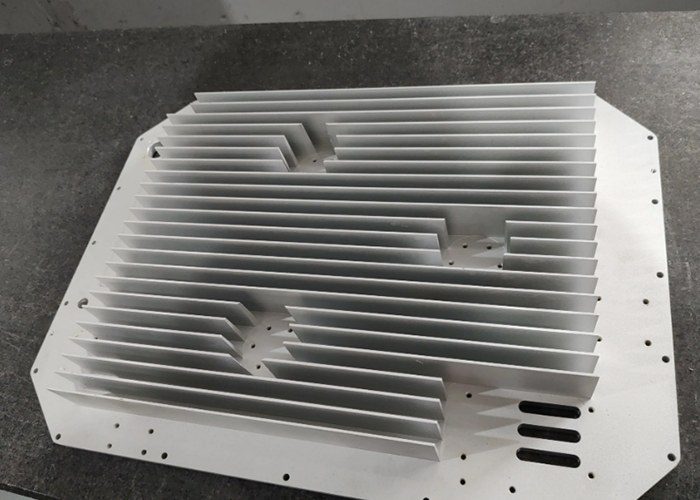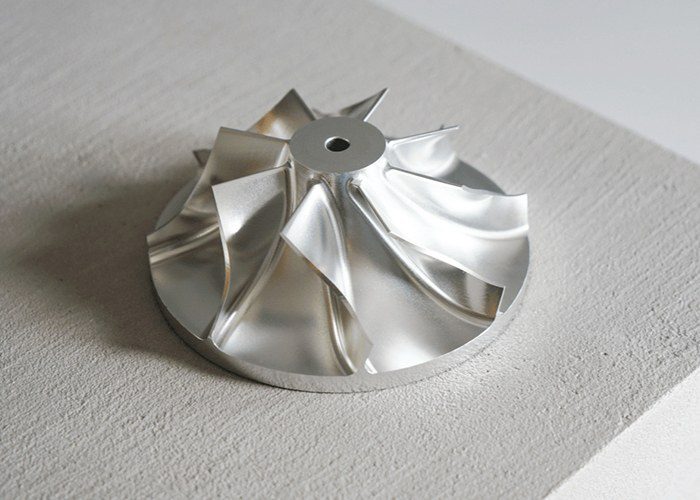
CNC lathe turning machining stands as one of the most fundamental and versatile processes in modern manufacturing. From the shafts that power automotive engines to the surgical instruments that save lives, CNC turning shapes the cylindrical components that keep our world in motion. This article explores the technology behind CNC turning, its advantages, its evolution into a multi-functional process, and its critical role across industries.
Understanding the Fundamentals
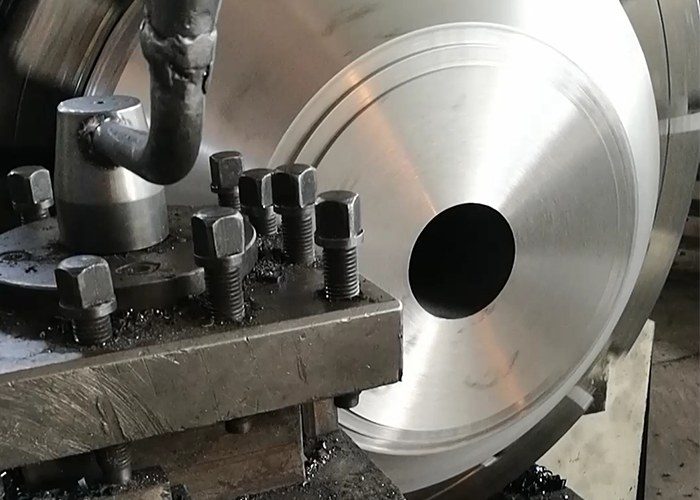
At its core, CNC turning is a subtractive manufacturing process in which a workpiece rotates at high speed while a stationary cutting tool removes material to achieve precise dimensions and surface finishes. A CNC lathe is a computer-controlled machining system that rotates the workpiece while cutting tools shape the material. Unlike manual lathes that depend entirely on operator skill, CNC systems follow digital instructions—known as G-code—that guide spindle speed, tool movement, and cutting depth with unwavering precision.
The process begins with a cylindrical blank clamped securely in a chuck. As the spindle rotates the workpiece at thousands of revolutions per minute, cutting tools move along linear axes—the X axis for radial movement and the Z axis for longitudinal movement—to carve out the programmed design. Machining typically occurs in two stages: roughing passes quickly remove excess material to establish the general shape, followed by finishing passes that fine-tune details to achieve tight tolerances and smooth surface finishes.
Key Advantages of CNC Turning
CNC turning offers distinct advantages that make it indispensable in precision manufacturing. First and foremost is accuracy. CNC turning can achieve extremely tight tolerances—often within ±0.01 mm or even ±0.005 mm—and produce parts with very high dimensional accuracy. The continuous rotation of the workpiece allows the cutting tool to engage the material evenly along its circumference, enabling consistent surface finishes and high levels of roundness that are difficult to replicate with other machining methods.
Equally important is consistency and repeatability. Once a program is validated, a CNC lathe can produce identical parts across thousands of cycles with minimal variation. This makes the technology ideal for high-volume production runs where quality cannot be compromised. Furthermore, CNC turning delivers fast cycle times and high productivity, particularly for cylindrical parts such as shafts, pins, and threaded components. The automation reduces idle time and supports multi-step machining in a single setup, significantly increasing output per unit time.
The Evolution: From Simple Lathes to Multi-Axis Powerhouses
Turning is one of the oldest manufacturing processes, with roots dating back to the Bronze Age. However, today’s CNC turning centers bear little resemblance to their historical predecessors. Modern turning centers have evolved far beyond simple two-axis lathes into multi-functional, multi-axis machining platforms.
Today’s advanced turning centers incorporate live tooling, which enables drilling, milling, tapping, and engraving on the same setup without moving the workpiece to a different machine. They feature rotary positioning with precise C-axis control and off-center Y-axis movement. Dual turrets and dual spindles make it possible to machine both ends of a part simultaneously. Powerful turn-mill spindles that can rotate around the B-axis bring five-axis simultaneous machining to the work area of lathes. This equipment enables the production of complex turned parts in one work area, in many cases making additional milling machines superfluous.
The result is increased complexity, reduced cycle times, and higher precision—all while minimizing handling and setup changes. Modern turning centers now consolidate the production of contoured surfaces, grooves, and non-symmetrical geometries into a single automated setup, significantly streamlining complex part manufacturing.
Materials and Applications
CNC turning is suitable for a wide variety of materials, including metals such as aluminum, steel, brass, copper, titanium, and superalloys, as well as engineering plastics like PEEK, nylon, and Delrin. This material versatility, combined with the process’s precision and efficiency, makes CNC turning essential across numerous industries.
In aerospace, turning produces shafts, fittings, bushings, and turbine components that must withstand extreme conditions. In the medical field, CNC turning creates surgical tools, implants, and orthopedic screws with micron-level precision. The automotive industry relies on turning for axles, fasteners, and engine parts. Electronics manufacturers use turning for miniature housings, connectors, and custom pins. The global precision turned product manufacturing market was valued at USD 96.7 billion in 2025 and is projected to reach USD 187.6 billion by 2034, reflecting the sustained and growing demand for these components.
Process Integration and the Future of Turning
The integration of processes is a defining trend in modern CNC turning. Complete machining—performing all operations in a single setup—reduces throughput times to a minimum while freeing up capacity on other machines. In-process measurement allows tolerances to be checked throughout the machining cycle, minimizing the effort involved in final quality control. This approach not only improves efficiency but also eliminates the errors that can arise from repeated clamping and repositioning.
Looking ahead, the CNC lathe machine market is expected to grow at a CAGR of 6.2% from 2025 to 2031, driven by increasing demand for precision parts, rising adoption of automation technologies, and the growing need for efficient manufacturing. The integration of Industry 4.0 principles is turning standalone machines into intelligent, networked assets capable of predictive maintenance and real-time process optimization. Employing real-time feedback for adaptive control, intelligent turning systems optimize machining conditions in-process, thereby significantly improving operational stability and deterministic controllability.
Conclusion
CNC lathe turning machining has come a long way from its ancient origins. What began as a simple method for shaping rotationally symmetrical components has evolved into a sophisticated, multi-axis, process-integrated manufacturing technology that lies at the heart of modern industry. Its ability to deliver exceptional precision, repeatability, and efficiency across a wide range of materials makes it indispensable in aerospace, medical, automotive, electronics, and beyond. As automation and digitalization continue to advance, CNC turning will undoubtedly remain a cornerstone of precision manufacturing for generations to come.