In the modern manufacturing landscape, the ability to produce components with microscopic accuracy is not just a competitive advantage—it is a fundamental necessity. CNC (Computer Numerical Control) machining for precision machine parts represents the pinnacle of subtractive manufacturing, a process where computer-controlled tools meticulously carve raw material into finished components with tolerances that were unimaginable just a generation ago. This article provides a comprehensive examination of precision CNC machining, covering the fundamental technologies, mission-critical applications, and future outlook of this essential industry.
Defining Precision in the Digital Age
At its core, precision CNC machining is a sophisticated subtractive process that uses pre-programmed software to dictate the movement of factory tools and machinery. While standard CNC machining might achieve tolerances of around 0.12 to 0.2 mm, precision machining pushes the boundaries much further. For CNC specialists, true precision is defined by the technical capability to consistently hit tolerances of 0.01 millimeters or tighter. In the most demanding sectors, such as aerospace and medical device manufacturing, tolerances can be held to an astounding ±0.002 to 0.003 mm. This precision is the product of a dynamic interplay between structural rigidity, tool integrity, and ambient thermal stability. As metals expand and contract with temperature changes, even a climate-controlled workshop is essential to prevent dimensional drift.
The Process: From Digital Design to Physical Reality
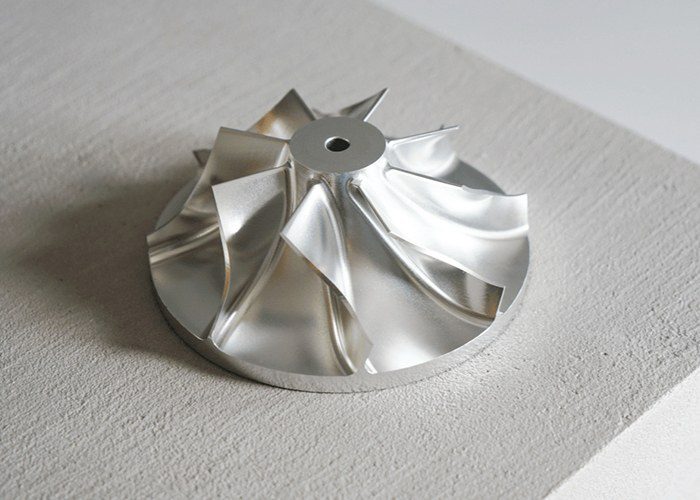
The journey of a precision machined part begins not on the shop floor, but in the digital realm. Engineers create detailed 3D models using Computer-Aided Design (CAD) software, capturing every dimension, tolerance, and surface finish requirement. This model is then translated into machining instructions via Computer-Aided Manufacturing (CAM) software, which generates the G-code that guides the CNC machine. The actual machining process can involve a variety of operations, including milling, turning, drilling, and grinding. Multi-axis machines, particularly 5-axis configurations, are indispensable for high-precision applications. These advanced machines can complete complex geometries in a single setup, eliminating the inaccuracies that accumulate each time a part is repositioned. Automation further enhances this process, enabling machines to run continuously with minimal human intervention, thereby boosting productivity and eliminating the risk of human error.
Materials and Applications Across Industries
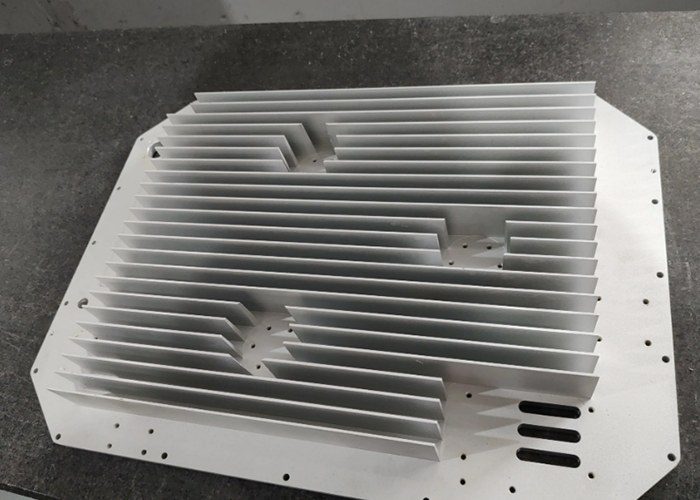
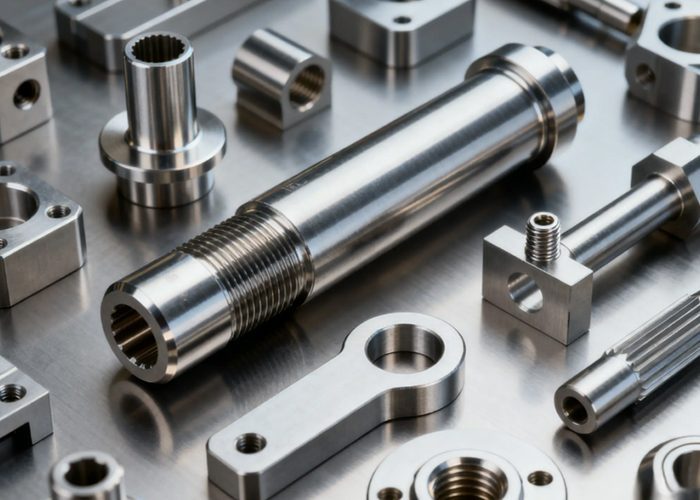
The choice of material is critical in precision machining, as it directly impacts the achievable tolerances and the part’s performance. Aluminum is often favored for its ability to hold tight tolerances due to lower cutting forces, while materials like stainless steel and titanium, though harder to machine, offer superior strength and corrosion resistance. The applications for these precision components are vast and vital. In the aerospace and defense industries, they form the backbone of mission-critical systems, from satellite brackets to jet engine blades. The medical sector relies on CNC machining to produce surgical instruments, implants, and device components that must meet stringent health and safety standards. The automotive industry uses these parts for engine components and complex systems where reliability is paramount. Even in consumer electronics and robotics, precision-machined parts are essential for enclosures, heat sinks, and custom gear systems that demand consistent, repeatable motion.
Quality Control: The Final Frontier
Given the critical nature of these components, rigorous quality control is non-negotiable. The process often begins with a First Article Inspection (FAI) to verify that the initial part meets all specifications. Advanced inspection tools, such as Coordinate Measuring Machines (CMMs), are then used to perform full dimensional layouts. Modern quality control is also increasingly leveraging technology like Automatic Optical Inspection (AOI) systems, which use image processing and machine learning to detect defects, ensuring that every part leaving the factory is flawless.
The Future of Precision Manufacturing
The precision machining industry is not static; it is evolving rapidly. The market for high-speed precision CNC machine tools is projected to grow significantly, driven by advancements in automation and the rise of smart factories. Key trends include the integration of AI-powered systems that can optimize toolpaths and predict tool wear in real-time, as well as the emergence of hybrid machines that combine additive manufacturing (3D printing) with subtractive CNC processes. As the demand for high-precision components continues to grow across all sectors of the economy, CNC precision machining will remain at the forefront of innovation, turning ambitious designs into reliable, high-performance reality.