
In the relentless pursuit of innovation, the journey from a conceptual design to a tangible, high-performance product is fraught with challenges. For decades, the manufacturing industry has sought a method that offers not only precision and repeatability but also the flexibility to bring even the most ambitious designs to life. Custom CNC (Computer Numerical Control) machining has emerged as the definitive answer to this call, serving as a cornerstone of modern manufacturing. It is a process that transcends standard production, offering tailored solutions where off-the-shelf components fall short.
The Essence of Customization
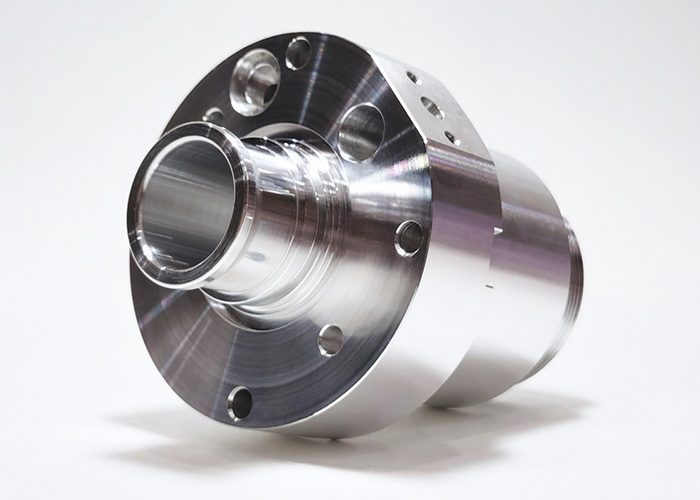
At its core, custom CNC machining is a subtractive manufacturing process where computer-guided tools carve, mill, or turn a solid block of material—known as a billet—into a finished part. What distinguishes custom machining from standard CNC work is the level of personalization it affords. This process empowers engineers to define every minute detail: from exact dimensions and complex geometries to specific tolerances and material properties. This ensures that the final component is not just a part but an exacting solution, perfectly integrated into a larger, high-performance system.
A Technological Powerhouse
A digital CAD (Computer-Aided Design) model serves as the starting point, from which the system generates a corresponding CAM (Computer-Aided Manufacturing) program. This digital DNA dictates the machine’s every move, from tool paths and cutting speeds to spindle rotations. The result is a level of precision that is simply unattainable through manual machining. These machines can achieve extremely tight tolerances, often down to microns, ensuring that every part meets exacting specifications. In critical applications, a deviation of even a fraction of a millimeter can mean the difference between seamless functionality and catastrophic failure.
Unmatched Material Versatility
One of the most significant advantages of custom CNC machining is its astonishing material versatility. Unlike many other manufacturing processes, CNC can work with an extensive range of materials. This includes robust metals such as aluminum, stainless steel, titanium, and brass, which offer strength, corrosion resistance, and thermal stability. It is equally adept at machining various engineering plastics like ABS and polycarbonate, as well as advanced composites. This flexibility allows manufacturers to select the optimal material for the part’s specific functional requirements, ensuring durability, weight, and performance.
Driving Innovation Across Industries
The impact of custom CNC machined parts is felt across virtually every sector of the global economy. In the aerospace industry, the technology is indispensable for creating lightweight, high-strength components like engine parts, landing gear, and structural elements that must endure extreme conditions. The automotive sector relies on it for high-performance parts, including engine blocks, transmission components, and specialized racing fixtures. In the medical field, custom CNC machining produces life-saving surgical instruments, orthopedic implants, and prosthetics with the intricate details and biocompatible materials required for safety and efficacy. Furthermore, it is fundamental to the electronics and defense industries, where precision and reliability are non-negotiable.
The Future of Manufacturing
As we look toward the future, custom CNC machining is not standing still. The industry is being reshaped by powerful trends, including the integration of artificial intelligence (AI) for predictive maintenance and optimized toolpaths. The rise of “hybrid manufacturing,” which combines additive (3D printing) and subtractive (CNC) processes in a single machine, is unlocking new possibilities for creating parts with unparalleled complexity. Furthermore, the push for sustainability is driving the development of greener machining practices that minimize waste and energy consumption.
Conclusion
Custom CNC machined parts represent the pinnacle of precision engineering. They bridge the gap between digital design and physical reality, providing the accuracy, complexity, and material integrity that modern innovation demands. Whether it’s a prototype for a groundbreaking consumer product, a critical component for a spacecraft, or a life-saving medical device, custom CNC machining is the engine that turns visionary concepts into functional, reliable, and high-performing realities.


