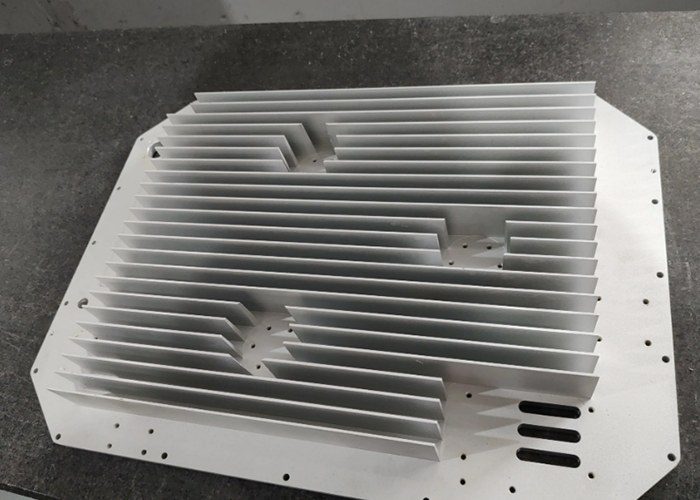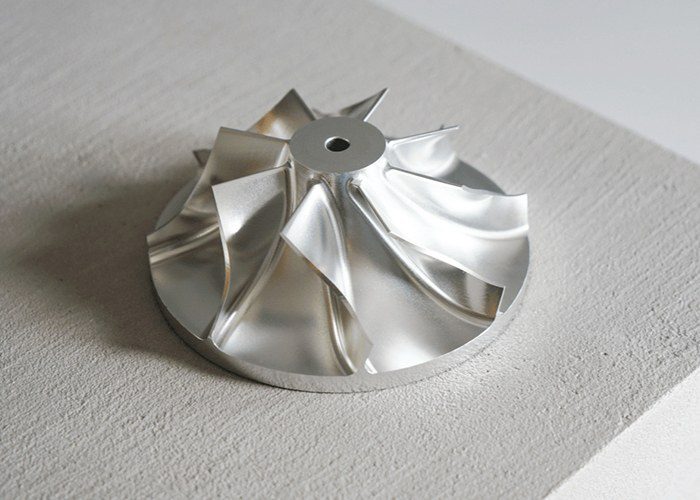
In an age defined by mass production and standardized components, it is easy to assume that off-the-shelf solutions can meet every engineering need. Yet, when precision, durability, and unique specifications are required, the industry quietly relies on a deeper level of manufacturing: custom metal parts. From the intricate gears in a surgical robot to the high-strength brackets in an aerospace fuselage, custom metal fabrication is the invisible backbone of modern innovation. These are not merely components; they are problem-solving artifacts tailored to bridge the gap between design theory and physical reality.
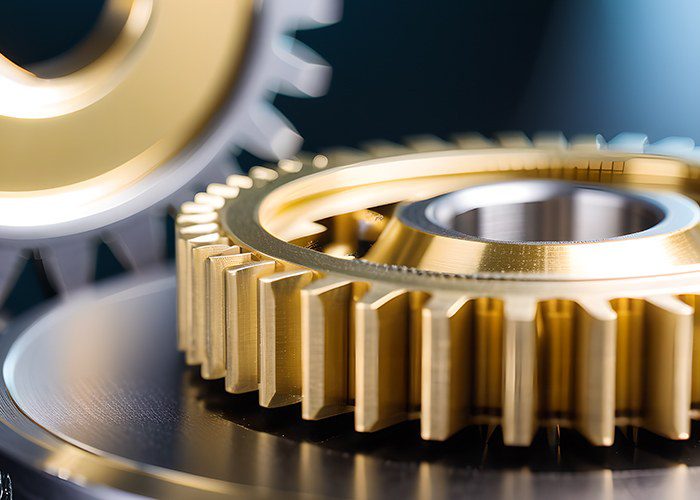
The journey of a custom metal part begins not on a factory floor, but in the mind of an engineer facing a challenge. Standard parts have fixed dimensions, pre-determined materials, and rigid tolerances. They are the “one-size-fits-all” of the mechanical world. However, real-world machinery often exists in cramped spaces, extreme temperatures, or under unique loads. A custom metal part is born from the necessity to fit a specific form, withstand a calculated stress, or interact with other moving parts in a way that a catalog cannot provide. In sectors like medical devices, automotive racing, or defense, compromise is not an option; a part that is 99% right is entirely wrong. It is here that custom metal parts transition from a luxury to a necessity.
Creating a custom metal part requires a symphony of modern manufacturing technologies, each chosen based on complexity, quantity, and material. For low-volume, high-complexity parts, CNC machining remains the gold standard. Using mills, lathes, and routers controlled by computer code, solid blocks of aluminum, stainless steel, titanium, or brass are carved into precise geometries with tolerances measured in thousandths of an inch. The advantage is material integrity—since the part is cut from a solid billet, it retains the full mechanical properties of the raw stock.
When internal complexity or weight reduction is critical, 3D metal printing (additive manufacturing) has revolutionized the field. Using lasers to fuse fine metal powder layer by layer, this process can create lattice structures and internal channels impossible to achieve with subtractive methods. While traditionally slower, it is ideal for prototyping and high-value, low-volume parts like turbine blades or custom orthopedic implants.
For medium to high volumes, sheet metal fabrication—including laser cutting, punching, bending, and welding—offers efficiency. A custom bracket or enclosure can be cut from a flat sheet, formed on a press brake, and welded into a three-dimensional assembly. In all cases, secondary processes like heat treatment, anodizing, plating, or powder coating add corrosion resistance, hardness, or aesthetic finish.
The applications of custom metal parts span virtually every industry, yet three sectors demonstrate their transformative power most vividly. In aerospace, weight is the enemy and failure is not an option. Custom titanium and Inconel parts are engineered to be simultaneously lightweight and heat-resistant. A single engine may contain thousands of custom parts, each designed to survive vibrations, temperature swings, and aerodynamic loads that would shatter standard components.
In the medical field, customization has become a matter of life and precision. Orthopedic implants—such as hip or knee replacements—are now routinely designed as custom metal parts based on a patient’s own CT scans. Using titanium powder bed fusion, surgeons can implant a device that matches the patient’s anatomy exactly, leading to faster recovery and better outcomes. Similarly, custom surgical tools allow for patient-specific procedures.
In automotive and motorsport, custom parts separate winners from spectators. A Formula 1 car is essentially a collection of thousands of bespoke metal components, from suspension arms to gearbox casings. Even in the consumer world, restorers of classic cars rely on custom fabrication to reproduce parts that are no longer manufactured, keeping automotive history alive.
Beyond the technical advantages, there are compelling economic and logistical reasons to invest in custom metal parts. Modern just-in-time manufacturing has reduced warehousing costs, meaning companies no longer want to stock thousands of standard parts “just in case.” Instead, they order custom runs precisely when needed. Furthermore, when a machine breaks down, waiting weeks for an overseas standard part is unacceptable. Local CNC machine shops can often reverse-engineer a broken metal part from a sample or drawing and produce a replacement within 24 hours, minimizing costly downtime.
Sustainability is another emerging driver. Custom parts can be optimized for material efficiency, reducing waste compared to modifying standard parts. Additive manufacturing, in particular, produces far less scrap than traditional machining. Moreover, when a custom metal part reaches end-of-life, metals are infinitely recyclable without degradation, closing the loop in a circular economy.
However, the path to a perfect custom part is not without challenges. Design for manufacturability (DFM) is critical. A part that looks perfect on a CAD screen may be impossible to machine due to a deep, narrow internal corner. The choice of material affects everything from cost to weight to corrosion resistance. And while CNC and 3D printing have lowered the bar for entry, high precision still requires skilled machinists and programmers who understand tool speeds, feeds, and material behavior.
Looking forward, the future of custom metal parts is driven by digital integration. Online instant-quoting platforms allow engineers to upload a 3D model and receive a price and lead time within hours. Artificial intelligence is beginning to optimize toolpaths, reducing machining time by 20% or more. As 5D and 6-axis CNC machines become more common, even the most complex geometries can be produced in a single setup, improving accuracy and speed.
In conclusion, custom metal parts are far more than niche industrial products. They are the tangible expression of engineering creativity—solutions that fit precisely where nothing else can. Whether keeping an MRI machine running, enabling a mars rover to survive another sol, or simply holding two pieces of a restored motorcycle together, these parts embody the principle that sometimes, the standard answer is not the right answer. In a world that values both consistency and innovation, custom metal parts provide the unique interface where design intent meets physical reality, one precise cut, weld, or printed layer at a time.