
Mechanical engineering is one of the oldest, broadest, and most essential disciplines in the world of engineering. At its core, it applies the principles of physics, mathematics, and materials science to the design, analysis, manufacturing, and maintenance of mechanical systems. In simple terms, mechanical engineers make things move – from the tiniest micro-sensors to colossal power plants, and from a simple gear train to complex robotic arms. It is often called the “mother of engineering” because it underpins virtually every other engineering field, providing foundational knowledge in forces, energy, motion, and material behavior.
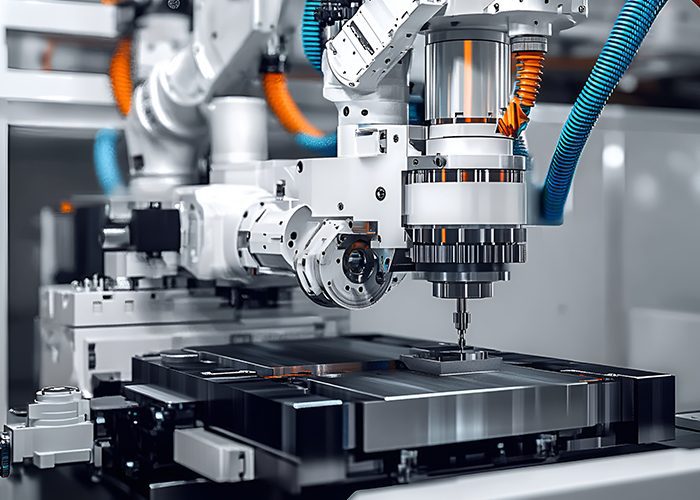
To understand what mechanical engineering truly is, we can break it down into four fundamental pillars: mechanics, thermodynamics, fluid mechanics, and material science. Mechanics deals with forces and the motion of solid bodies – whether a bridge stays standing or a piston slides inside an engine cylinder. Thermodynamics governs the transfer of heat and its conversion into useful work, powering everything from internal combustion engines to refrigeration cycles. Fluid mechanics explains how liquids and gases flow, enabling the design of pipelines, aircraft wings, and hydraulic systems. Material science provides insight into the properties of metals, polymers, ceramics, and composites, allowing engineers to select the right substance for each specific task – something stiff yet light for an airplane wing, or tough and heat-resistant for a turbine blade.
Historically, mechanical engineering emerged during the Industrial Revolution in the 18th and 19th centuries. Pioneers like James Watt, George Stephenson, and Nikola Tesla harnessed steam, coal, and electricity to create locomotives, factories, and generators. But the roots go deeper: Archimedes’ screw, the Roman aqueducts, and medieval water wheels all represent early mechanical innovations. Today, the field has expanded into highly specialized areas such as robotics, mechatronics (the fusion of mechanical and electronic systems), computational fluid dynamics, nanomechanics, and renewable energy systems.
One of the most remarkable aspects of modern mechanical engineering is its sheer scope of applications. In the automotive industry, mechanical engineers design engines, transmissions, chassis, and safety systems like airbags and anti-lock brakes. In aerospace, they develop jet engines, satellite deployments, and life-support systems for spacecraft. The energy sector relies on them for wind turbines, solar tracking mechanisms, gas turbines, and nuclear reactor components. In biomedical engineering, mechanical principles are used to create prosthetic limbs, artificial heart valves, MRI machines, and surgical robots. Even everyday objects – refrigerators, elevators, printers, fitness equipment – owe their existence to mechanical design and manufacturing.
The tools and methods of mechanical engineering have evolved dramatically. While slide rules and drafting boards were once standard, today’s engineers use sophisticated software for Computer-Aided Design (CAD) such as SolidWorks, CATIA, or AutoCAD. They simulate real-world forces with Finite Element Analysis (FEA) to predict stress, vibration, and deformation before a single physical prototype is built. Computational Fluid Dynamics (CFD) allows them to model airflow over a car body or blood flow through an artery. Moreover, the rise of additive manufacturing (3D printing) has revolutionized prototyping and small-batch production, enabling geometries impossible with traditional machining.
Looking ahead, mechanical engineering is at the forefront of solving humanity’s grand challenges. Climate change demands more efficient engines, lighter electric vehicle chassis, and innovative energy storage systems. The transition to renewable sources – wind, solar, tidal – requires robust mechanical designs that withstand harsh environments while maximizing conversion efficiency. Meanwhile, the fusion of mechanical engineering with artificial intelligence and the Internet of Things is giving rise to smart mechanical systems: self-diagnosing industrial pumps, adaptive bridge dampers that counteract wind vibrations, or collaborative robots (cobots) that work safely alongside humans. In medicine, the next generation of micro-robots could navigate through blood vessels to deliver drugs or perform micro-surgeries.
Another growing frontier is nanomechanics – understanding and manipulating matter at scales of billionths of a meter. At this size, classical mechanics gives way to quantum effects, yet the fundamental need to design, measure, and control motion remains. Carbon nanotubes, graphene-based actuators, and nanoelectromechanical systems (NEMS) promise ultra-sensitive sensors and ultra-low-power devices.
Despite its high-tech veneer, mechanical engineering remains deeply practical. A mechanical engineer must not only be fluent in calculus and differential equations but also possess hands-on intuition – how much clearance a bearing needs, why a weld might crack under cyclic load, or how to lubricate a gearbox for Arctic cold. Ethics and safety are paramount: a faulty mechanical design can lead to collapsed bridges, exploding boilers, or runaway trains.
In conclusion, mechanical engineering is far more than a collection of formulas and machines. It is a way of thinking systematically about forces, energy, and matter to create tangible solutions that improve life. From the wheel to the wind turbine, from steam engines to space rovers, mechanical engineers have continuously shaped civilization. As we face the complexities of the 21st century – sustainable energy, automation, healthcare, and space exploration – the demand for creative, skilled mechanical engineers will only grow. To study or practice mechanical engineering is to join a legacy of problem-solvers who look at the physical world and ask, “How can we make it better, safer, and more efficient?” That question, asked every day in labs and workshops around the world, is the true essence of mechanical engineering.


