
In a world increasingly defined by mass production and one-size-fits-all solutions, the humble metal component often becomes the silent bottleneck in engineering innovation. Off-the-shelf parts are convenient, but they rarely fit perfectly. They force designers to adapt their visions to existing limitations, trading optimal performance for compromise. Enter the realm of custom metal components—a sector where metallurgy meets exacting specifications, and where the difference between a working machine and a masterpiece of engineering is measured in microns.
Beyond the Catalog: The Essence of Customization
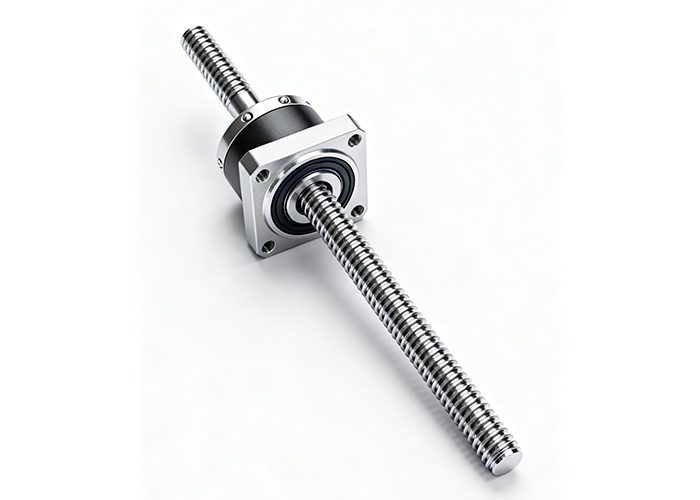
At its core, a custom metal component is any part—bracket, casing, gear, or fastener—manufactured to unique client specifications rather than pulled from a standard inventory. The “custom” label implies a departure from the generic. It means that an engineer does not have to redesign a mounting system to fit a pre-existing bolt; rather, the bolt is designed to fit the system. This philosophy fundamentally alters the design workflow, enabling lighter, stronger, and more efficient assemblies.
The demand for these bespoke pieces has exploded across industries. From the aerospace sector, where a titanium turbine blade must withstand extreme thermal cycling, to the medical field, where a stainless-steel spinal implant demands flawless biocompatibility and surface finish, custom components are the unsung pillars of modern technology.
The Alchemy of Fabrication: Methods That Matter
Creating a custom metal component is not a single process but a family of sophisticated techniques. The choice of method depends on geometry, material, volume, and tolerance requirements.
CNC Machining remains the gold standard for precision. Computer Numerical Control mills and lathes carve components from solid blocks of aluminum, brass, steel, or exotics like Inconel. For low-to-medium volumes, CNC offers unparalleled accuracy—often holding tolerances of ±0.005 inches or tighter.
For high-volume production or complex internal geometries, Investment Casting (lost-wax casting) shines. A wax pattern is coated in ceramic, melted away, and molten metal is poured into the cavity. This process produces near-net-shape parts that require minimal finishing, ideal for intricate components like surgical instruments or aerospace brackets.
Sheet Metal Fabrication covers the gamut of laser cutting, punching, bending, and welding. This is the domain of chassis, enclosures, and structural frames. Modern fiber lasers can cut through half-inch steel plates with a kerf width thinner than a human hair, allowing for intricate interlocking designs that snap together without secondary hardware.
Finally, Metal Additive Manufacturing (3D printing) is rewriting the rules. Using laser powder bed fusion, manufacturers can grow components layer by layer from titanium or aluminum powder. This allows for lattice structures and organic shapes that are impossible to machine or cast, reducing weight by 50% while maintaining strength.
The Material Palette: Choosing the Right Alloy
The phrase “metal component” is a deceptive oversimplification. The choice of alloy dictates performance. For corrosion resistance and hygiene, 300-series stainless steel (304, 316) is king in food processing and marine environments. When hardness and wear resistance are paramount—think hydraulic valves or industrial cutters—tool steels like D2 or O1 are specified.
In the race for lightweight strength, 7075 aluminum offers a tensile strength comparable to many mild steels at one-third the weight. For extreme environments, Grade 5 titanium (Ti-6Al-4V) provides an exceptional strength-to-weight ratio and immunity to saltwater corrosion, justifying its high cost in aerospace and high-performance automotive applications.
The Quality Imperative: Tolerance and Traceability
Custom work is worthless if it cannot be verified. Reputable manufacturers operate under rigorous Quality Management Systems, typically ISO 9001 or industry-specific standards like AS9100 (aerospace) or ISO 13485 (medical). Each component often travels with a Certificate of Conformance and may be subjected to non-destructive testing (NDT)—X-ray, dye penetrant, or ultrasonic inspection—to detect internal flaws invisible to the naked eye.
Coordinate Measuring Machines (CMMs) and optical scanners compare the finished part to the original CAD model in milliseconds, generating detailed inspection reports. This level of traceability ensures that a custom bracket produced today will be identical to one produced a year from now, batch after batch.
Industry Applications in Action
Consider the automotive world: A race team needs a custom suspension knuckle. The OEM part is heavy and restrictive. Using custom 6061 aluminum on a 5-axis CNC, the engineer integrates the ball joint seat, the damper mount, and the anti-roll bar link into a single, topology-optimized piece. Weight drops by 40%, stiffness increases by 30%, and the car gains valuable tenths of a second per lap.
In robotics, custom sheet metal brackets and laser-cut gears allow startup companies to prototype new locomotion designs without waiting months for tooling. A simple online CAD upload can yield physical parts in days, accelerating the design-test-iterate cycle.
The Future: Smarter, Faster, Greener
The future of custom metal components is digital and sustainable. We are seeing the rise of on-demand manufacturing platforms that instantly quote and schedule production across a distributed network of shops, eliminating the need for huge inventories. Furthermore, green metal initiatives—using recycled alloys and hydrogen-fired furnaces—are reducing the carbon footprint of custom parts without sacrificing performance.
In conclusion, custom metal components are far more than just “parts.” They are solutions to specific problems, enablers of innovation, and testaments to human precision. Whether carved from solid billet or grown from powdered alloy, a well-made custom metal component fits so perfectly that it becomes invisible—which, in engineering, is the highest compliment of all. For any designer or engineer facing the constraints of the catalog, the path to excellence begins with a single, custom-drawn line.


