In a world increasingly defined by mass production and off-the-shelf solutions, there exists a parallel universe of precision engineering where components are born not from a catalogue, but from a blueprint. This is the domain of the custom metal part. While standard screws, brackets, and beams serve the general needs of industry, custom metal fabrication is the quiet engine of innovation, providing the unique skeleton and musculature for the specialized machines, structures, and technologies that define the modern age.
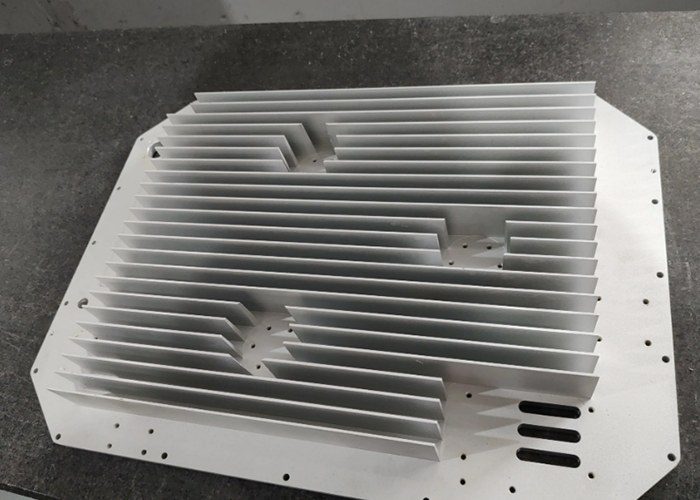
A custom metal part is, at its core, a manufactured component designed and produced to meet a specific set of requirements that cannot be fulfilled by a standard, stock item. It is a solution forged from necessity, whether that necessity is a unique shape, a specific material property, an unusual tolerance, or the need for a particular aesthetic. From the titanium alloy hip implant that restores mobility to a patient to the intricate heat sink that cools a revolutionary new computer processor, these parts are the physical manifestation of problem-solving.
The Genesis of Customization: Why “Standard” Isn’t Enough
The decision to commission a custom metal part is rarely taken lightly. It is a path chosen when the limitations of standard components become a barrier to progress. Several key drivers push engineers and designers toward this bespoke route:
- Geometric Complexity: Many modern designs, particularly in industries like aerospace and automotive racing, feature organic shapes, internal lattices, and complex curves optimized by computational design. These geometries are impossible to find in a standard parts bin. A custom bracket for a race car’s suspension, for example, must be both lightweight and strong, fitting into a tight, irregular space that a standard L-bracket could never accommodate.
- Material Specificity: Performance demands often dictate the use of specialized materials. A component for a chemical processing plant might require the corrosion resistance of Hastelloy. A part for a high-temperature furnace might need Inconel. A medical implant demands the biocompatibility of specific titanium or cobalt-chrome alloys. Standard parts are typically made from common, cost-effective materials, making them unsuitable for such extreme environments.
- Precision and Tolerance: In high-stakes applications, a millimeter can be the difference between success and catastrophic failure. The moving parts of a high-speed packaging machine, the components of a robotic surgical arm, or the fittings in a satellite fuel line require tolerances measured in microns. Custom fabrication allows manufacturers to hold these ultra-tight tolerances, ensuring perfect fit, function, and reliability.
- Function Integration: A well-designed custom part can often replace an assembly of several standard parts. This process, known as part consolidation, reduces weight, eliminates potential failure points at joints, and simplifies assembly. A single custom-machined pump housing, for instance, can integrate mounting flanges, fluid channels, and bearing seats that would otherwise require dozens of separate pieces.
The Fabricator’s Toolkit: Bringing Designs to Life
The creation of a custom metal part is a dance between digital design and physical manipulation. The chosen manufacturing process depends on the part’s geometry, the material, the required quantity, and the budget. The modern metal fabricator has a powerful and diverse arsenal at their disposal:
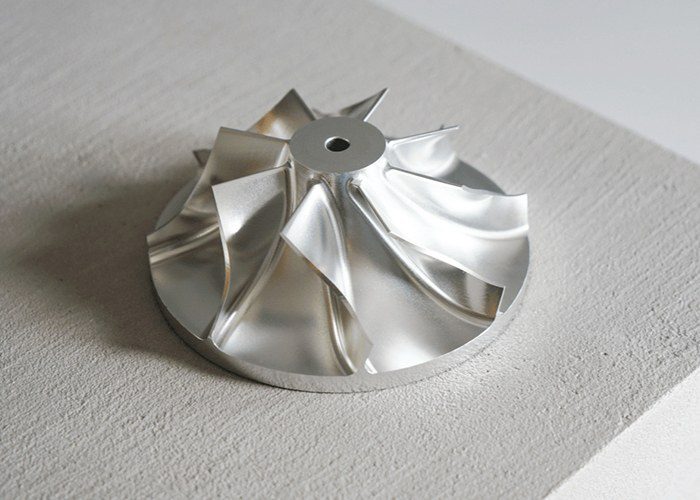
- CNC Machining (Subtractive): For parts requiring high precision and tight tolerances, Computer Numerical Control (CNC) machining is often the gold standard. A solid block of metal is carefully carved away by rotating cutting tools or a moving lathe, guided by a digital file. This process is ideal for creating prototypes, jigs, fixtures, and end-use production parts with excellent surface finish and dimensional accuracy.
- Sheet Metal Fabrication: When parts are derived from flat stock, processes like laser cutting, punching, bending, and welding come into play. Laser cutting excels in the high-speed, high-precision fabrication of intricate 2D profiles. Precision press brakes then fold these profiles into 3D enclosures, brackets, and chassis. This is the backbone of industries ranging from electronics enclosures to heavy machinery cabins.
- 3D Printing (Additive): The newest and most revolutionary addition to the toolkit is additive manufacturing. Instead of removing material, 3D printing builds parts layer by layer from metal powder. This technology unlocks previously impossible geometries, such as internal conformal cooling channels in injection molds or lightweight lattice structures in aerospace components. While historically used for prototyping, it is rapidly becoming a viable production method for complex, low-volume custom parts.
Material Selection: The Foundation of Performance
Choosing the right metal is as critical as choosing the right manufacturing process. The material dictates the part’s strength, weight, corrosion resistance, thermal and electrical conductivity, and cost.
- Steel and Stainless Steel: The workhorses of industry. Carbon steel offers high strength at a low cost, while stainless steel provides excellent corrosion resistance for medical, food service, and marine applications.
- Aluminum: Prized for its high strength-to-weight ratio and natural corrosion resistance. It is the material of choice for aerospace structures, automotive parts, and heat sinks.
- Copper and Brass: Selected for their exceptional electrical and thermal conductivity. They are essential for electrical components, terminals, and heat exchangers.
- Exotic Alloys (Titanium, Inconel): These high-performance materials are reserved for the most demanding applications, where their ability to withstand extreme temperatures, corrosion, and stress justifies their significant cost.
The Future of Custom Metal Parts
As we move further into the era of Industry 4.0, the demand for customization is only growing. The rise of on-demand manufacturing, powered by digital inventory and distributed production networks, means that a custom part can be designed in one country and manufactured in another within days. This reduces the need for large, costly warehouses full of standard parts that may never be used. Instead, a digital file for a custom metal part becomes the inventory itself, ready to be produced exactly when and where it is needed.
In conclusion, the custom metal part is far more than a simple component. It is a testament to human ingenuity, a tangible solution to a unique problem. It represents the shift from a one-size-fits-all industrial model to a future of precision, performance, and personalization. From the depths of the ocean to the vacuum of space, custom metal parts are the silent, strong, and specialized building blocks that allow innovation to take shape.