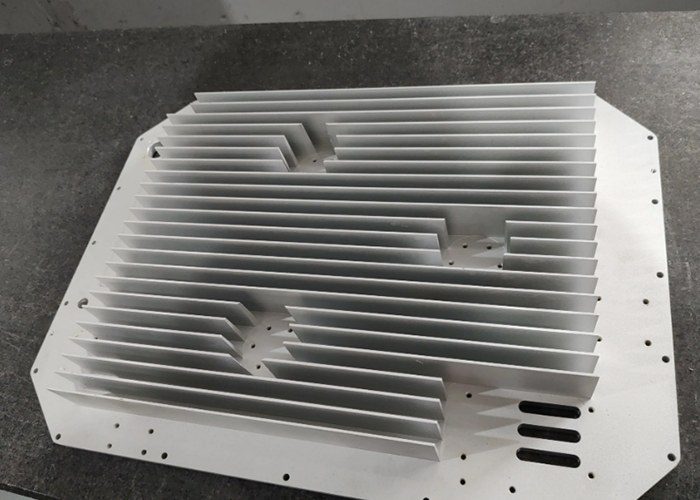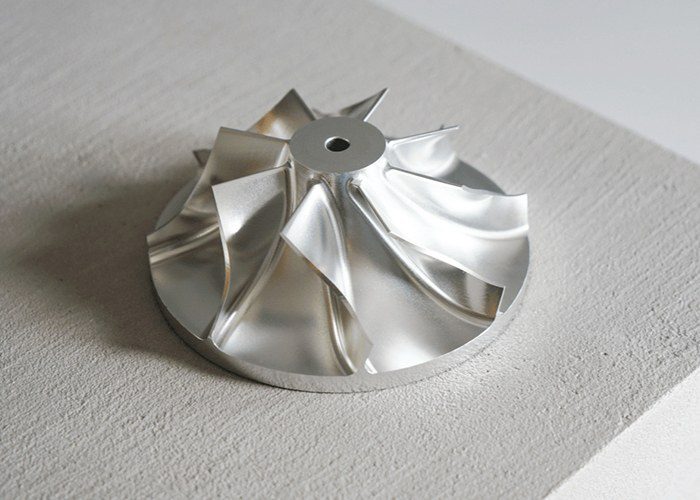
In an age dominated by mass production and standardized components, the unsung hero enabling cutting-edge innovation is often custom mechanical machining. While assembly lines excel at producing millions of identical parts, they falter when faced with unique challenges: a one-off prototype for a aerospace hinge, a specialized implant for orthopedic surgery, or a bespoke gear for a vintage mining machine. Custom mechanical machining fills this critical gap, offering tailored solutions where precision, material integrity, and design specificity are paramount. It is not merely a manufacturing process; it is a collaborative art form that transforms raw stock into functional excellence.
Defining the Process
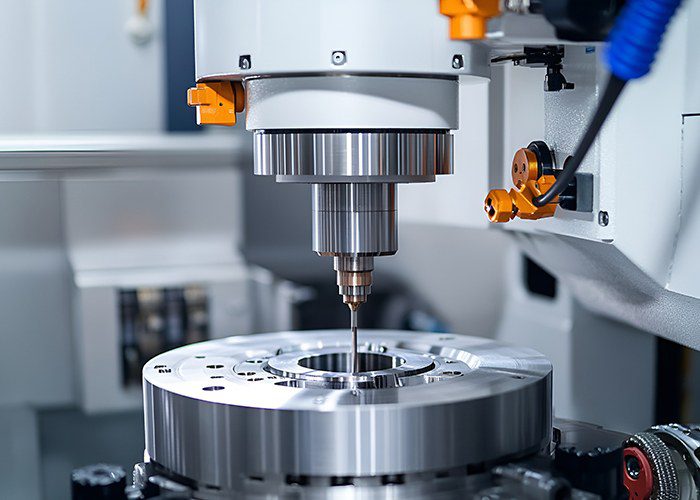
At its core, custom mechanical machining is the subtractive manufacturing process of removing material from a solid workpiece to achieve a client’s exact geometrical specifications. Unlike 3D printing (additive), which builds parts layer by layer, machining carves away excess material using sharp cutting tools. The “custom” aspect means that every toolpath, every tolerance, and every surface finish is dictated by a unique engineering drawing, not a production catalog. This process leverages a suite of conventional machines—lathes, milling machines, drill presses, and grinders—alongside advanced Computer Numerical Control (CNC) equipment. In a custom shop, a skilled machinist might spend hours programming a five-axis CNC mill to create a single, intricate turbine blade with tolerances measured in microns—a feat impossible on a standard production line.
The Unmatched Advantages of Customization
Why choose custom machining over off-the-shelf parts? The answer lies in three distinct advantages: precision, material flexibility, and design freedom.
First, precision is the currency of modern engineering. Tolerances of ±0.0001 inches (0.00254 mm) are routinely achieved with custom machining. This level of accuracy ensures that components fit perfectly, move smoothly, and withstand extreme stresses. For industries like semiconductor manufacturing or medical devices, a fraction of a millimeter error can mean catastrophic failure.
Second, custom shops are not limited by the material constraints of injection molding or casting. They can machine virtually any solid material: from hardened tool steels, titanium, and Inconel (a superalloy resistant to extreme heat) to engineering plastics like PEEK, Delrin, and Teflon. This versatility allows engineers to select the optimal material for the application—whether it’s biocompatibility for a bone screw or corrosion resistance for a marine propeller shaft.
Third, design freedom unlocks innovation. Mass production often forces designers to simplify geometries for molding or stamping. Custom machining imposes no such penalty. Undercuts, deep pockets, non-standard threads, and complex freeform surfaces are all achievable. This freedom is crucial for R&D departments prototyping a radical new design; they can iterate rapidly without waiting for expensive molds to be retooled.
The Machinist’s Role: From Code to Craft
Despite the rise of automation, the human machinist remains the soul of custom work. CNC machines provide robotic consistency, but it is the machinist’s expertise that determines feed rates, tool selection, work-holding strategies, and in-process inspection. A custom machining project begins with an in-depth consultation: understanding the part’s function, expected loads, thermal expansion requirements, and assembly fit. The machinist then translates a CAD model into G-code (the language of CNC), selects the perfect carbide end mill, and often writes macro programs to optimize cycle times. They are part programmer, part metrologist, and part detective—constantly measuring, adjusting, and compensating for tool wear or material anomalies. This high-touch approach is what separates a job-shop machinist from a factory operator.
Industries Powered by Custom Machining
The reach of custom mechanical machining is vast and varied. In aerospace, it produces structural brackets, landing gear components, and fuel system fittings that must withstand violent vibrations and temperature swings. In medical technology, it crafts surgical guides, spinal cages, and dental abutments—often from titanium or stainless steel, with mirror finishes to prevent bacterial adhesion. The automotive racing sector relies on custom machining for one-off pistons, intake manifolds, and suspension knuckles that push the envelope of performance. Even the energy sector uses large-scale custom machining to repair and replicate wind turbine shafts or hydraulic fracturing components that are no longer manufactured.
The Digital Transformation: CAD/CAM and Beyond
Modern custom machining is increasingly digital. The workflow begins with Computer-Aided Design (CAD) software, where the engineer creates a 3D solid model. This file is imported into Computer-Aided Manufacturing (CAM) software, which simulates the entire machining process, detecting collisions and optimizing toolpaths before a single chip is cut. Today’s advanced shops employ high-speed machining (HSM), which uses light radial cuts at extremely high spindle speeds to reduce heat and improve finish. Multi-tasking machines combine milling, turning, and even grinding in one setup, eliminating errors from re-fixturing. Furthermore, the integration of probing systems allows a machine to measure a part mid-process and automatically compensate for any deviation—a technology known as adaptive machining.
Challenges and Considerations
Custom machining is not a panacea. It is inherently more expensive per part than mass production because setup time, programming, and unique tooling are amortized over a small quantity (often just one to a hundred pieces). Lead times can be longer due to the intense labor involved. Moreover, not all designs are machinable; sharp internal corners, extremely deep narrow slots, or thin walls can defy even the best tools. A skilled design engineer learns to practice “Design for Manufacturability” (DFM), consulting with the machinist early to add radii in corners or adjust wall thicknesses.
Conclusion
Custom mechanical machining stands as the backbone of industrial innovation. In a world racing toward automation, this discipline stays profoundly human-centric—demanding creativity, patience, and precision. Whether crafting a prototype for a clean energy startup or recreating a legacy part for a historic locomotive, custom machining provides the bridge between an idea and a tangible, working reality. As digital tools evolve, the precision and possibilities will only expand, but the core mission will remain unchanged: to deliver the perfect part, exactly as imagined, no matter how unique the challenge. For engineers, inventors, and repair specialists, custom machining is not just a service; it is the key that unlocks potential.