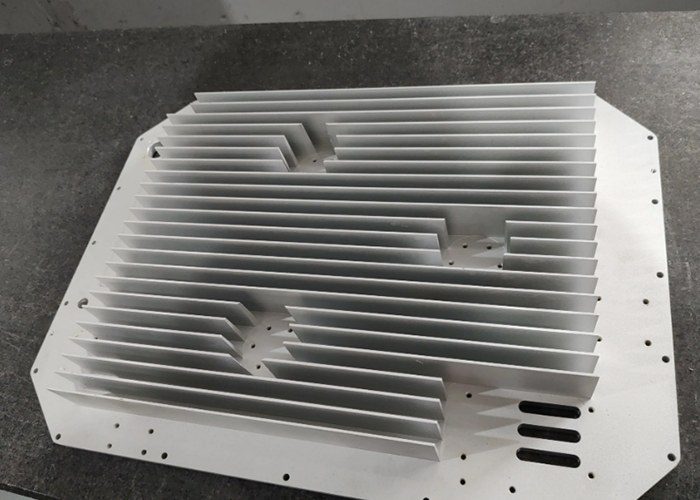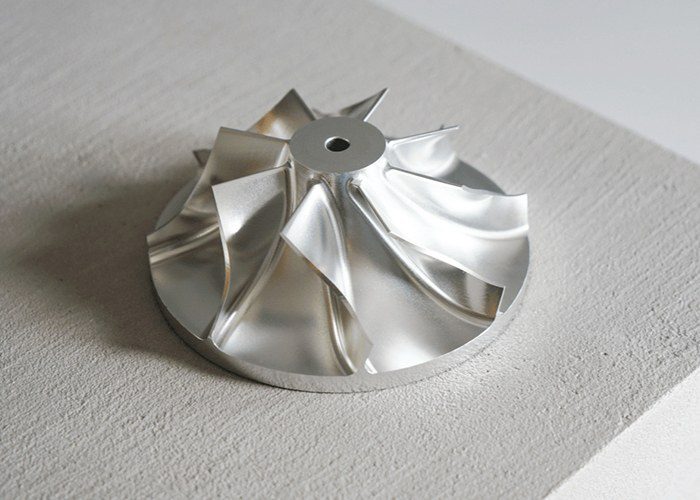
In the relentless pursuit of miniaturization, durability, and efficiency, modern engineering places immense demands on the components that make up our machines, vehicles, and devices. At the heart of this industrial evolution lies a technology that has redefined the boundaries of possibility: CNC Precision Metal Parts. Whether it’s the turbine blade in a jet engine, a surgical implant, or a critical housing in an electric vehicle, these components are the unsung heroes of the physical world. This article explores the intricacies, advantages, and applications of manufacturing metal parts with Computer Numerical Control (CNC) technology.
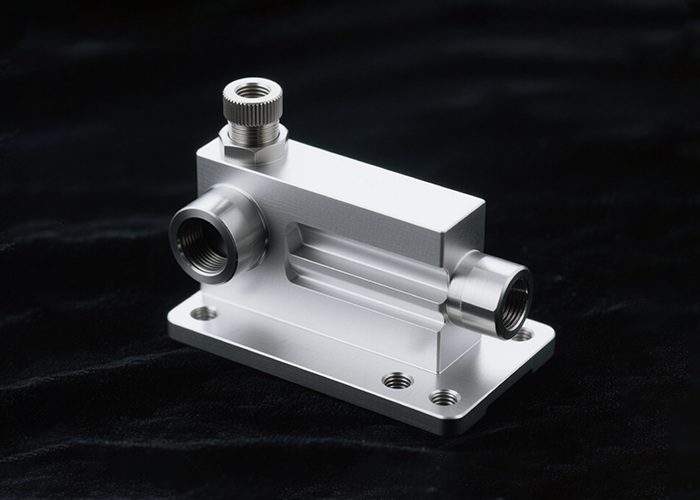
What Are CNC Precision Metal Parts?
CNC precision metal parts are components machined from solid metal blocks (or “blanks”) using automated, computer-guided cutting tools. Unlike manual machining, where a human operator controls levers and wheels, CNC machines follow precise lines of G-code—mathematical coordinates translated into mechanical motion. The “precision” aspect refers to tolerances; while standard machining might achieve ±0.005 inches, high-end CNC machining routinely hits tolerances of ±0.0001 inches (or 0.00254 mm). That is roughly 1/10th the thickness of a human hair.
Common base materials include aluminum (6061, 7075), stainless steel (304, 316), brass, copper, titanium, and specialty alloys like Inconel or Monel. Each material presents unique challenges: aluminum cuts fast and easily, while titanium requires rigid setups and specialized tooling to manage heat and work hardening.
The Manufacturing Process: From Solid to Supreme
The journey of a CNC precision metal part begins not on the shop floor, but in a computer-aided design (CAD) software. After the engineer finalizes the 3D model, a CAM (computer-aided manufacturing) program generates the toolpaths. These paths are then uploaded to one of several machine types:
- CNC Mills (Machining Centers): Rotating cutting tools remove material from a stationary workpiece. These are ideal for creating flat surfaces, slots, holes, and complex 3D contours.
- CNC Lathes (Turning Centers): The workpiece rotates while a stationary tool cuts it. Lathes excel at producing cylindrical parts like shafts, bushings, and threaded connectors.
- Multi-Axis Machines (5-Axis): The gold standard in precision. A 5-axis machine can move the tool and the part simultaneously along five different axes, allowing machinists to machine a complex part from five sides in a single setup. This eliminates multiple clamping errors and drastically increases accuracy.
The actual cutting is performed using end mills, drills, reamers, and taps, often coated with titanium aluminum nitride (TiAlN) or diamond to withstand extreme temperatures (up to 1500°F). Throughout the process, a coolant or lubricant floods the cutting zone to reduce friction, flush away chips, and maintain thermal stability.
Why Choose CNC for Metal Parts? The Unmatched Advantages
Why has CNC machining become the default choice for mission-critical metal components?
- Unwavering Repeatability: If you need 10,000 identical parts, a CNC machine will produce the first and the ten-thousandth with microscopic consistency. This is vital for automotive and aerospace assembly lines.
- Complex Geometries: CNC can produce internal undercuts, stepped holes, deep ribs, and organic curves that would be impossible with manual machining or prohibitively expensive with casting.
- Material Versatility: Unlike additive manufacturing (3D printing), which has limited metal options, CNC can process virtually any conductive metal, from soft brass to hardened tool steel.
- Superior Mechanical Properties: Because CNC is a subtractive process starting from wrought or forged stock, the final part retains the grain structure and integrity of the original material. There are no porosity issues (common in casting) or layer adhesion weaknesses (common in 3D printing).
- Excellent Surface Finishes: CNC can achieve surface finishes down to 16 Ra (microinches) or even mirror finishes through specialized ball-nose end mills and polishing passes.
Quality Control and Post-Processing
A “precision” part is only as good as its verification. Reputable CNC shops employ rigorous inspection protocols. This includes in-process probing (where the machine measures a feature mid-cycle and auto-corrects), and post-process inspection using Coordinate Measuring Machines (CMMs), optical comparators, and laser micrometers.
After machining, metal parts often undergo secondary processes:
- Deburring and Tumbling: Removing sharp edges.
- Heat Treatment: Relieving residual stresses from cutting.
- Surface Finishing: Anodizing (for aluminum), passivation (for stainless steel), plating, or powder coating can be applied to achieve corrosion and wear resistance.
Real-World Applications Across Industries
CNC precision metal parts are everywhere, though often invisible:
- Aerospace: Landing gear brackets, hydraulic manifold blocks, engine mounts. Failure is not an option, hence the need for 100% inspectable parts with traceable material certifications.
- Medical: Orthopedic bone screws, surgical guide tools, dental implant abutments. Here, biocompatibility (e.g., titanium) and micron-level accuracy are paramount.
- Automotive (EVs): Battery enclosure cooling plates, motor housings, and brake system components. The shift to EVs has increased demand for lightweight, complex aluminum parts.
- Robotics & Automation: Robotic gripper finger joints, precision gearboxes, and end-of-arm tooling.
- Defense: Firearm receivers, optic mounts, drone chassis.
The Future: Automation and Micro-Machining
The field of CNC precision metal parts is not static. We are witnessing a surge in hybrid manufacturing—machines that combine 5-axis milling with laser metal deposition (LMD). Moreover, the rise of “lights-out manufacturing”—fully automated factories that operate overnight—is driving productivity gains. On the extreme end, micro-CNC machines can now produce parts smaller than a grain of rice with tolerances measured in microns for medical and electronics applications.
Conclusion
CNC precision metal parts represent the intersection of art and arithmetic. They are the tangible result of billions of dollars in software, metallurgy, and mechanical engineering evolution. As industries push toward net-zero emissions, autonomous transport, and personalized medicine, the demand for custom, high-performance metal components will only grow. For engineers and buyers alike, understanding the capabilities of modern CNC machining is not just a technical advantage—it is a competitive necessity. Whether you need one prototype or a million, precision metal parts remain the gold standard of reliable manufacturing.