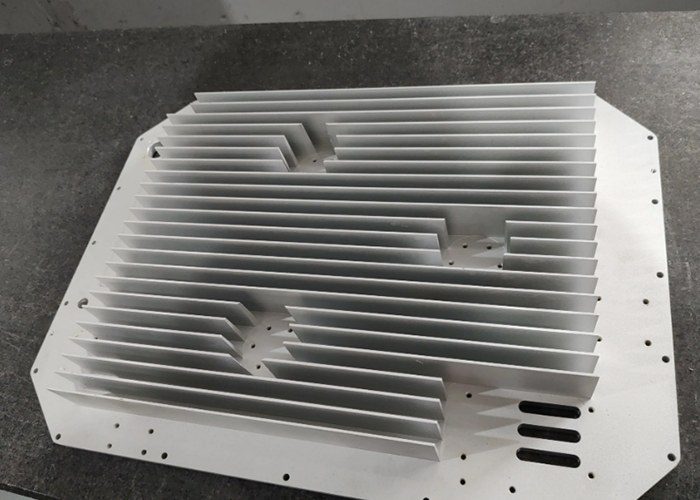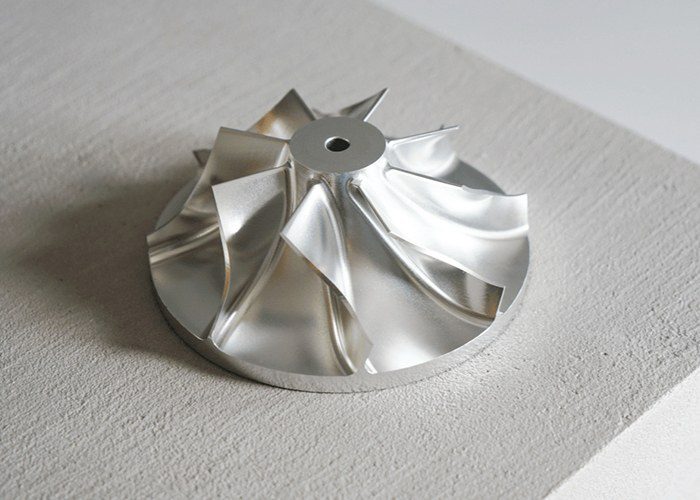
In modern manufacturing, the ability to produce precise, complex, and reliable components on demand has become a cornerstone of industrial progress. Custom made CNC machining parts represent the perfect synergy between advanced software control and physical material removal, offering engineers and designers a flexible pathway from digital blueprint to physical reality. Unlike mass-produced standardized components, custom CNC parts are tailored to exact specifications, enabling innovation across virtually every sector—from aerospace and medical devices to automotive and consumer electronics.
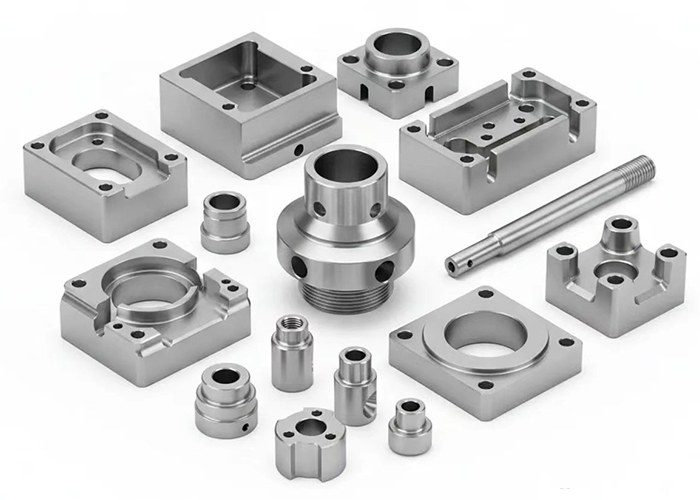
What Are Custom CNC Machining Parts?
Custom CNC (Computer Numerical Control) machining parts are components manufactured using automated machine tools that follow programmed instructions to cut, drill, mill, or turn raw material into a finished product. The “custom” aspect means each part is produced according to unique design files, typically 2D drawings or 3D CAD models, rather than coming from a pre-existing catalog. This approach allows for unlimited variation in geometry, size, material, and surface finish. Whether it is a one-off prototype or a batch of several thousand units, custom CNC machining delivers consistent results with tolerances as tight as ±0.005 mm—equivalent to a fraction of a human hair.
The Unmatched Advantages of Going Custom
Why choose custom CNC machining over injection molding, casting, or 3D printing? The answer lies in a unique set of benefits. First and foremost is precision and repeatability. Once a CNC program is verified, the machine can produce hundreds or thousands of identical parts with minimal deviation, ensuring interchangeability and assembly reliability. Second is material versatility. CNC machines handle metals like aluminum 6061, stainless steel 304/316, brass, copper, titanium, and Inconel, as well as engineering plastics such as PEEK, Delrin, nylon, and ABS. This wide range allows parts to meet specific mechanical, thermal, or chemical resistance requirements.
Third, geometric complexity is no obstacle. With multi-axis CNC machining centers (3, 4, and 5 axes), you can achieve undercuts, angled features, curved surfaces, and internal cavities—geometries that manual machining or even many additive processes cannot realize. Fourth, lead times for custom parts are often surprisingly short—prototypes can be delivered in days, not weeks, thanks to automated tool changers and high-speed spindles. Finally, there is no tooling cost for simple geometries, making low-volume production economically feasible. Unlike injection molding, which requires expensive molds upfront, CNC machining only needs the workpiece and a cutting tool.
Applications Across Industries
The versatility of custom CNC parts has made them indispensable in demanding fields. In aerospace, components like turbine blades, structural brackets, and fuel system fittings require extreme reliability and lightweight design—properties achieved through precision CNC machining of aluminum and titanium alloys. In the medical sector, surgical instruments, orthopedic implants (such as hip stems and spinal cages), and dental abutments are routinely machined from biocompatible materials like stainless steel and titanium, often with complex surface textures that promote osseointegration.
The automotive industry relies on custom CNC parts for engine blocks, transmission housings, suspension components, and even one-off racing parts where performance dictates unconventional geometries. Electronics benefit from heat sinks, enclosures, and connectors machined from copper or aluminum for optimal thermal management. Industrial machinery uses custom gears, shafts, jigs, and fixtures that must withstand repetitive stresses. Even niche areas like robotics, renewable energy, and defense depend on custom CNC parts for both prototyping and production runs.
The Manufacturing Workflow
Creating a custom CNC machined part follows a disciplined process. It begins with a CAD model—a solid 3D representation of the desired part, complete with all dimensions and tolerances. This file is then converted into CAM (Computer-Aided Manufacturing) data, in which a programmer defines toolpaths, cutting speeds, feed rates, and tool selections for each operation. After simulation to detect collisions or errors, the G-code is loaded into the CNC controller. The raw material, often a bar, block, or sheet, is securely clamped on the machine bed. Next, rotating at thousands of RPM, the cutting tools (e.g., end mills, drills, reamers, taps, or lathe inserts) trace their programmed paths, progressively removing material layer by layer.
Post-machining operations may include deburring, surface finishing (anodizing, powder coating, or plating), heat treatment, or assembly. Finally, each part or sample batch is inspected using calipers, micrometers, CMM (coordinate measuring machines), or optical comparators to ensure compliance with the drawing. Any deviation triggers a recalibration or program adjustment.
Materials and Surface Finishes
Material selection is as critical as geometry. For high strength-to-weight ratio, 7075 aluminum is a favorite in aerospace and racing. 316 stainless steel offers excellent corrosion resistance, making it ideal for marine and medical applications. For high-temperature strength, Inconel 718 excels in jet engines. Among plastics, PEEK offers chemical resistance and dimensional stability under heat, while Delrin provides low friction and excellent machinability.
Surface finishes enhance performance and aesthetics. As-machined surfaces have visible tool marks but are functional. Bead blasting creates a uniform matte texture. Anodizing (Type II or Type III hard coat) adds wear resistance and color options for aluminum. Electropolishing smoothes stainless steel at a microscopic level, reducing bacterial adhesion—critical for medical tools. Powder coating offers thick, durable colors for industrial parts.
Quality Control and Tolerances
Precision is not accidental; it is engineered through rigorous quality management. Reputable custom CNC shops operate under ISO 9001 or AS9100 (aerospace) certifications. They use in-process inspection (e.g., tool breakage detection, laser measurement of cut surfaces) and final inspection with calibrated equipment. Typical tolerances range from ±0.025 mm for general engineering to ±0.005 mm for precision components like hydraulic spools or gauge pins. For exceptionally demanding applications, specialized machines with thermal compensation and vibration damping achieve even tighter limits.
Conclusion
Custom made CNC machining parts bridge the gap between imagination and tangible reality. They empower innovators to build without compromise, whether designing a life-saving surgical implant, a high-performance racing car, or a durable factory automation component. The combination of digital precision, material freedom, and rapid turnaround makes CNC machining a go-to solution for prototyping and production alike. As technology advances—with more intelligent toolpaths, hybrid additive-subtractive machines, and real-time adaptive control—the possibilities for custom parts will only expand. For anyone seeking to turn a unique design into a reliable physical part, custom CNC machining remains an unrivaled choice.