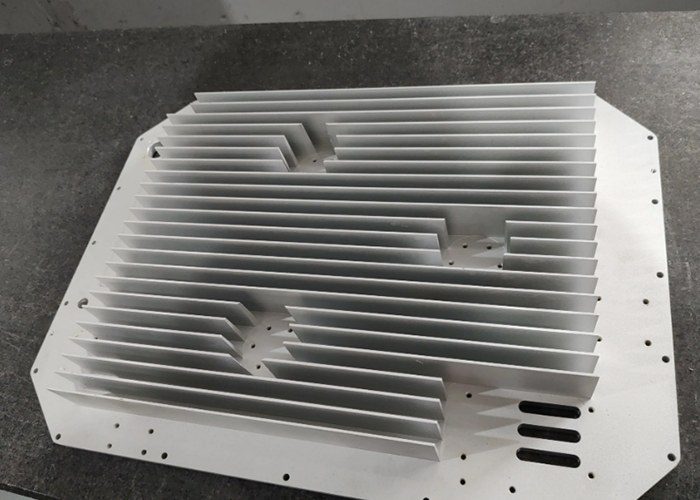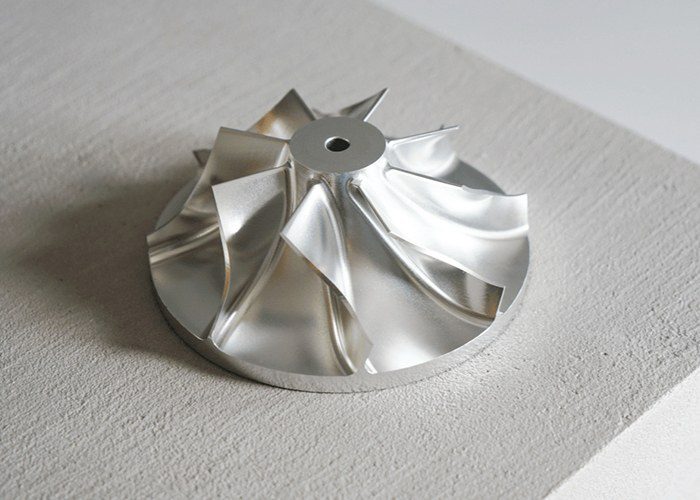
In an era dominated by mass production and just-in-time inventory, the idea of “one-size-fits-all” has become deeply ingrained in the manufacturing industry. Walk into any hardware store, and you will find standardized nuts, bolts, brackets, and hinges. For basic repairs and generic assembly lines, these off-the-shelf components are sufficient. However, when engineering projects push the boundaries of performance, weight, space, or environment, standard parts fall short. This is the domain of custom hardware parts—components designed and fabricated to meet exact specifications that no catalog product can fulfill.
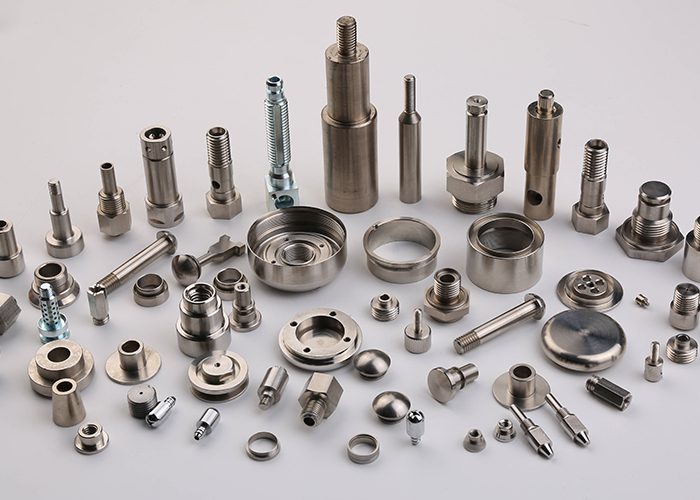
What Defines a Custom Hardware Part?
A custom hardware part is any physical component—whether a fastener, bracket, hinge, clamp, spacer, or structural connector—that is engineered for a specific application rather than taken from a mass-produced inventory. Unlike standard parts that conform to industry norms like ANSI, DIN, or ISO, custom parts are defined by a unique set of parameters: material grade, dimensional tolerances, thread pitch, surface finish, load capacity, and often a proprietary geometry. They are the silent enablers of innovation in aerospace, medical devices, robotics, automotive racing, and specialized industrial machinery.
The Three Pillars of Customization
Why do engineers choose custom over standard? The answer lies in three critical advantages: optimization, integration, and problem-solving.
- Optimization of Form and Function
Standard parts are designed to serve the widest possible audience. Consequently, they are often heavier, larger, or weaker than necessary for a particular job. Custom hardware allows engineers to strip away every unnecessary gram and millimeter. For example, in a drone or a satellite, reducing the mass of a single mounting bracket by just two grams can translate into extended flight time or lower launch costs. Custom parts can be precisely shaped to fit into tight cavities, navigate around other components, or provide exactly the required clamping force without over-engineering. - Seamless Integration into Complex Assemblies
Today’s products are more compact—and more complex—than ever before. A smartphone’s hinge, a prosthetic knee’s pivot, or a Formula 1 car’s suspension linkage often requires hardware that performs multiple roles simultaneously—conducting electricity, providing a bearing surface, resisting corrosion, and maintaining a low profile. Custom parts can integrate features that would otherwise require multiple standard components, reducing assembly time and eliminating potential failure points. - Solving Unique Environmental Challenges
Standard hardware is typically made of common steel, stainless, or brass alloys. But what if your application requires operation at cryogenic temperatures, exposure to seawater, or high-frequency vibration? Custom parts can be manufactured from exotic materials such as Inconel, titanium, Monel, or specialized polymers. Coatings like DLC (diamond-like carbon), anodizing, or electroless nickel can be applied to precise thicknesses. Thread-locking features, self-lubricating surfaces, or non-magnetic properties can be built into the part itself.
The Journey from Concept to Component
Creating a custom hardware part is not a simple purchase; it is an engineering collaboration. The process typically follows several stages:
- Requirement Definition: The engineer provides a detailed specification: loads, environment, mating components, service life, and cost targets.
- Design and Simulation: CAD models are created. Finite Element Analysis (FEA) simulates stress, fatigue, and thermal expansion to validate the design before any metal is cut.
- Material Selection and Prototyping: Based on the analysis, a material is chosen. Prototypes are often produced via CNC machining (for metal) or 3D printing (for polymers or even sintered metal). These prototypes undergo rigorous testing.
- Production Process Selection: The required volume dictates the method. For low volumes (10–1000 units), CNC machining or wire EDM is economical. For high volumes (10,000+ units), cold heading, investment casting, or powder metallurgy becomes cost-effective.
- Quality Assurance: Every custom part must meet its print. This includes CMM (coordinate measuring machine) inspection, hardness testing, and frequently non-destructive tests like dye penetrant or X-ray.
Challenges and Trade-offs
Despite its advantages, custom hardware comes with inherent challenges. The most obvious is cost. A single custom bolt can cost 10 to 100 times more than an off-the-shelf equivalent, largely due to setup time, programming, and small batch runs. Lead time is another factor—standard parts ship overnight; custom parts may take 4–8 weeks. There is also the risk of design error: a custom part that fails in the field cannot be instantly replaced from a bin; it must be re-engineered and remanufactured.
Therefore, the decision to go custom should be deliberate. It is justified when the cost of failure or the opportunity cost of not optimizing outweighs the higher component price.
The Future: On-Demand Customization
Advancements in digital manufacturing are democratizing custom hardware. Additive manufacturing (metal 3D printing) now allows complex lattice structures and topologically optimized geometries that were impossible to machine. Online platforms with instant quoting and automated CNC machining have reduced lead times from months to days. In the near future, artificial intelligence may help engineers automatically redesign standard parts into custom, optimized versions with minimal human input.
Conclusion
Custom hardware parts are the unsung heroes of high-performance engineering. They do not appear in catalogs, nor do they carry brand names. Yet without them, a surgical robot would lack precision, a race car would carry dead weight, and a spacecraft would fail in orbit. To abandon off-the-shelf solutions and embrace custom design is to commit to excellence—because in the most demanding applications, the perfect fit can only be achieved by building the part itself.