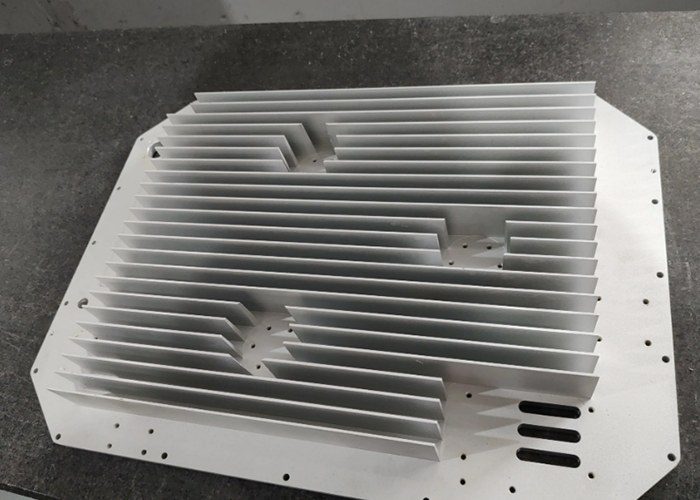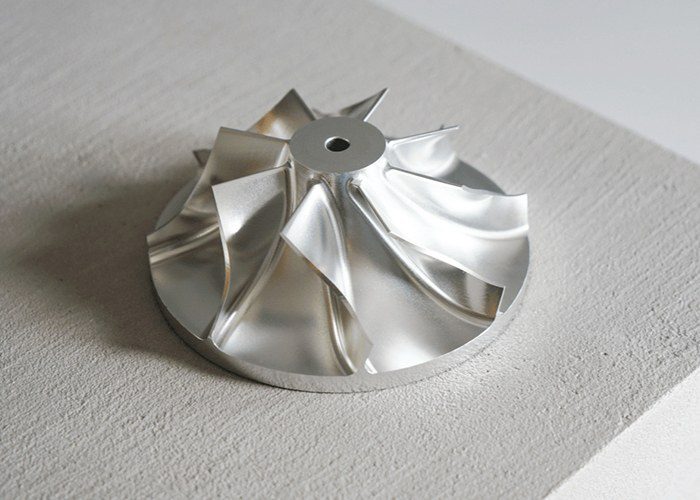
In an age defined by mass production and rapid prototyping, the demand for custom machined metal parts has never been more critical. These components—crafted to exacting specifications through subtractive manufacturing processes—serve as the silent workhorses of virtually every advanced sector, from aerospace and medical devices to automotive, robotics, and energy infrastructure. Unlike off‑the‑shelf standard fasteners or generic brackets, custom machined parts are engineered for a single purpose: to fit, function, and perform flawlessly within a unique assembly, under specific loads, temperatures, and environmental conditions. This article explores the technologies, materials, quality paradigms, and evolving trends that make custom metal machining an indispensable pillar of modern manufacturing.
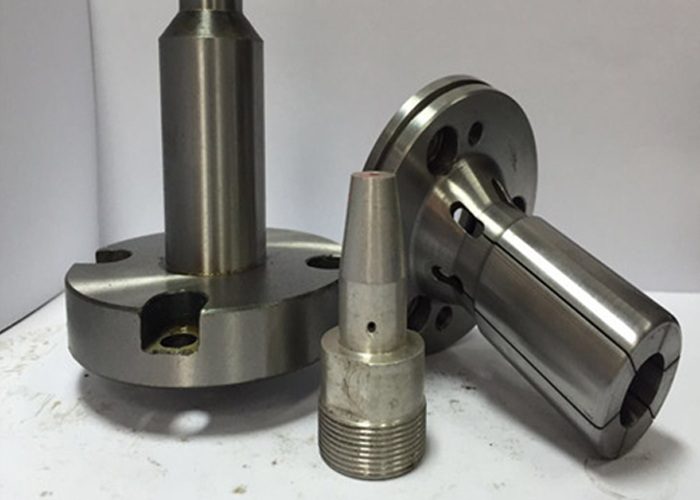
The Core Processes: From Blueprint to Reality
Custom machining is not a single operation but a family of precision techniques. Computer Numerical Control (CNC) milling remains the most versatile workhorse, using rotating multi‑point cutters to remove material from a solid block—or “blank”—to create complex geometries with flat surfaces, slots, holes, and contoured 3D profiles. CNC turning, on the other hand, rotates the workpiece against a stationary cutting tool, producing cylindrical or conical features ideal for shafts, bushings, and threaded fittings. For parts that demand micron‑level tolerances and mirror‑like surface finishes, CNC grinding and electrical discharge machining (EDM) step in. EDM, in particular, can erode extremely hard metals using controlled spark erosion, making it invaluable for die and mold components that would otherwise shatter conventional cutters.
Modern machining centers often combine multiple operations in a single setup, using live tooling and sub‑spindles to reduce handling errors and cycle times. This “done‑in‑one” approach, paired with advanced CAD/CAM software, allows engineers to simulate the entire cutting path virtually, detecting collisions and optimizing feed rates before a single chip is ever produced. The result is not just a part, but a digital thread—a complete traceable history from design model to final inspection.
Material Selection: The Art of Matching Metal to Mission
No two applications demand the same alloy. Custom machined parts can be hewn from aluminum (6061, 7075), stainless steel (303, 304, 17‑4 PH), titanium (Grade 5), brass, copper, Inconel, Monel, and even high‑temperature superalloys. Each material brings a distinct trade‑off: aluminum offers lightweight machinability and good corrosion resistance, making it a favorite for aerospace housings and electronic enclosures; stainless steel provides superior strength and hygiene, ideal for surgical instruments and food‑processing valves; titanium combines exceptional strength‑to‑weight ratio with biocompatibility, hence its use in orthopedic implants and airframe structures; while Inconel retains its mechanical properties at red‑heat temperatures, essential for turbine blades and exhaust manifolds.
Skilled machinists know that material behavior governs every parameter—cutting speed, depth of cut, coolant type, and tool coating. For example, gummy materials like pure copper require sharp, polished edges and high‑pressure lubricant to prevent built‑up edge, while hardened tool steels demand ceramic or cubic boron nitride inserts and rigid, vibration‑damped setups. The selection process is collaborative: design engineers, metallurgists, and machinists confer early to ensure the chosen alloy not only meets functional requirements but can also be produced economically and consistently.
Tolerances, Surface Finish, and Quality Assurance
The defining hallmark of custom machining is precision. While standard parts might accept ±0.005 inches, custom orders routinely call for ±0.0002 inches (5 microns) or better, with concentricity, roundness, and parallelism meticulously controlled. Such tight tolerances are not optional—they dictate whether a hydraulic spool valve seals without leakage, whether a bearing journal runs without vibration, or whether a missile guidance gimbal tracks true at supersonic speeds.
Achieving these specs demands a closed‑loop quality system. In‑process probing on the machine table measures critical features while the part is still chucked, allowing automatic tool offset corrections. Post‑process inspection often employs coordinate measuring machines (CMMs), optical comparators, laser micrometers, and surface roughness testers. Statistical process control (SPC) charts track every batch, and many shops now offer full material certification with mill test reports, hardness verification, and non‑destructive testing (e.g., dye penetrant or ultrasonic) for safety‑critical components. This rigorous documentation is not a bureaucratic burden; it is the currency of trust in industries where failure is not an option.
Why Custom? The Competitive Edge of Tailored Solutions
Despite the allure of standardized catalogs, original equipment manufacturers increasingly turn to custom machining for three compelling reasons. First, performance optimization: a custom bracket can be sculpted to save 40% weight compared to an off‑the‑shelf angle, improving fuel efficiency and dynamic response. Second, through system integration, custom features like cooling channels, threaded bosses, datum surfaces, and labyrinth seals obviate secondary assembly and reduce component counts, resulting in a more streamlined supply chain. Third, product differentiation: in consumer electronics or high‑end sporting goods, a uniquely machined bezel or chassis sets a brand apart, conveying quality and design sophistication that cannot be replicated by stamped or cast alternatives.
Moreover, the shift toward smaller lot sizes and just‑in‑time production has made custom machining more accessible than ever. With automated tool changers, pallet pools, and robotic tending, a single CNC cell can economically produce runs from one prototype to thousands of pieces, switching between jobs with minimal changeover. This agility is a lifesaver for medical device startups iterating on implant geometries or for motorsport teams racing against a deadline to test new suspension kinematics.
Emerging Trends: Digital Twins, Hybrid Manufacturing, and Sustainability
The custom machining sector is not static. Digital twin technology now allows machinists to mirror the physical cutting process in a virtual environment, predicting thermal growth, tool wear, and vibration harmonics in real time. Adaptive control algorithms then tweak spindle speeds and feed rates on the fly, compensating for material inconsistencies or dulling edges, thus boosting tool life and surface integrity.
Hybrid manufacturing—combining additive layer deposition (metal 3D printing) with subsequent CNC finishing—is gaining traction for complex internal lattice structures that are then precision‑machined on critical mating surfaces. Integrating near‑net shape techniques with subtractive accuracy drastically minimizes material waste, thereby advancing broader sustainability targets. Indeed, many custom machine shops now recycle swarf and coolant, employ energy‑efficient servo drives, and select eco‑friendly cutting fluids, proving that precision and environmental stewardship can coexist.
Conclusion
Custom machined metal parts are far more than chips and blueprints; they are the tangible expression of human ingenuity applied to the physical world. Whether holding together a jet engine at 35,000 feet, guiding a surgical robot in a delicate procedure, or transferring torque in an electric vehicle drivetrain, these components embody the relentless pursuit of better—better fit, better function, better durability. As digitalization, materials science, and automation continue to evolve, the capability of custom machining will only expand, offering designers a canvas limited not by tooling constraints, but by imagination. In a future where one‑size‑fits‑all grows ever more obsolete, the bespoke machined metal part stands as a testament to the enduring value of craftsmanship, powered by data and driven by precision.