In the vast and intricate world of modern manufacturing, few processes are as fundamental—or as transformative—as CNC turning. While milling often steals the spotlight for complex 3D geometries, turning remains the unsung hero of high-volume, high-precision cylindrical production. Today, CNC turning machined parts are the backbone of industries ranging from aerospace and automotive to medical devices and oil and gas. Understanding this process is not merely about appreciating a machine; it is about recognizing a symphony of precision, speed, and material science that drives global industry forward.
The Anatomy of the Process
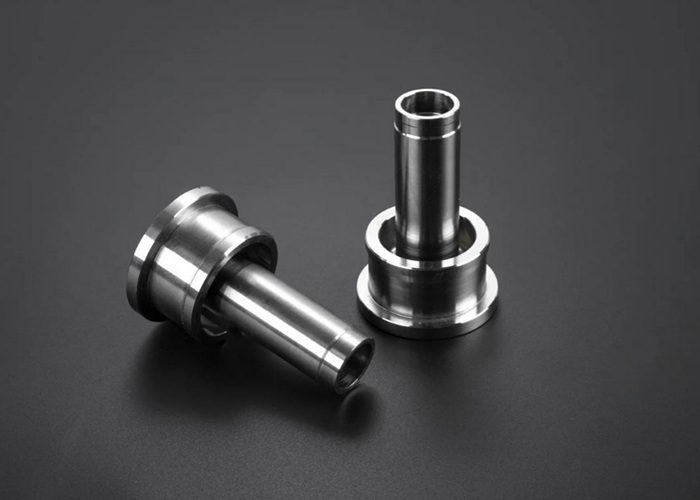
At its core, CNC (Computer Numerical Control) turning is a subtractive manufacturing process. Unlike milling, where the cutting tool rotates against a stationary workpiece, turning involves the rotation of the workpiece itself. A bar of material—often aluminum, stainless steel, brass, or high-grade engineering plastics—is clamped into a spindle and spun at high speeds while a stationary cutting tool traverses along the axis to remove material.
This fundamental difference gives turned parts their characteristic symmetry. Components such as shafts, bushings, pulleys, and threaded fasteners are born from this process. Modern CNC lathes, however, have evolved far beyond simple 2-axis machines. Today’s multi-axis turning centers, equipped with live tooling and Y-axis capabilities, can mill, drill, and tap simultaneously without removing the workpiece from the chuck. This “done-in-one” capability significantly reduces cycle times and eliminates the positional errors that occur when transferring parts between different machines.
The Uncompromising Quest for Precision
The primary value proposition of CNC turning lies in its ability to hold exceptionally tight tolerances. While conventional manual lathes rely on the steady hand and keen eye of a machinist, CNC turning operates on closed-loop feedback systems. These systems continuously compare the actual position of the cutting tool against the programmed coordinates, adjusting in real-time to compensate for tool wear, thermal expansion, and material inconsistencies.
For critical applications—such as fuel injection nozzles in automotive engines or bone screws in orthopedic surgery—tolerances of ±0.0002 inches (5 microns) are not just desirable; they are mandatory. This level of precision ensures that parts fit together seamlessly, reducing friction, wear, and the risk of catastrophic failure. Furthermore, CNC turning produces superior surface finishes. While secondary polishing or grinding might be required for optical or sealing surfaces, a well-tuned turning operation often produces a finish smooth enough to serve as a final surface, reducing post-processing costs.
Material Versatility and Optimization
One of the most compelling aspects of CNC turning is its remarkable material versatility. Whether machining soft brass for electronic connectors or tough Inconel for jet engine turbine shafts, modern turning tools—coated with advanced materials like cubic boron nitride (CBN) or polycrystalline diamond (PCD)—can handle the challenge.
However, material removal is not just about cutting; it is about optimization. A skilled CNC programmer must calculate the ideal “chip load”—the amount of material each cutting edge removes per revolution. Running too slow wastes time; running too fast generates excessive heat, which can prematurely wear out the tool and distort the workpiece. This delicate balance of speed, feed, and depth of cut is what separates a cost-effective operation from one plagued by scrap and downtime. Additionally, the process inherently produces continuous chips, which are more challenging to manage than the fractured chips of milling. Modern machines employ high-pressure coolant systems specifically designed to break these chips, ensuring they are safely evacuated from the cutting zone.
The Shift Toward “Green” and Smart Manufacturing
Sustainability has evolved from corporate buzzword to commercial necessity. CNC turning contributes to greener manufacturing in two significant ways. First, the “near-net-shape” nature of bar-fed turning means that material waste is minimized compared to processes that start from large blocks. Secondly, modern machines are energy-efficient, utilizing servo-driven hydraulics and regenerative braking systems that consume significantly less power.
The future of CNC turning is deeply intertwined with Industry 4.0—the digitalization of manufacturing. Modern turning centers are now equipped with an array of sensors that monitor vibration, temperature, and cutting forces. This data feeds into predictive maintenance algorithms that alert operators to potential tool failures before they occur, drastically reducing unplanned downtime. Furthermore, this data is used to create “digital twins” of the physical parts. By simulating the turning process in a virtual environment, engineers can identify potential issues—such as tool collisions or excessive deflection—without wasting a single bar of expensive material.
Selecting the Right Partner for Your Turned Parts
For businesses seeking to procure CNC turning machined parts, the choice of partner is often as critical as the design itself. Beyond the obvious requirement of a well-maintained machine fleet, buyers should evaluate a supplier’s capabilities in toolpath optimization, inspection, and material sourcing. Do they offer in-process gauging to ensure quality without stopping production? Can they support complex geometries that require live tooling? Do they have the expertise to recommend design modifications that reduce cycle times while maintaining form and function?
In conclusion, CNC turning machined parts are much more than metal components; they are the result of a highly sophisticated dance between code, mechanics, and materials science. As the manufacturing landscape continues to evolve—embracing automation, sustainability, and real-time data—the art of turning remains a cornerstone of industrial capability. For engineers and procurement professionals, understanding the nuances of this process is the first step toward achieving parts that are not just dimensionally accurate, but optimized for performance, cost, and the future of intelligent manufacturing.