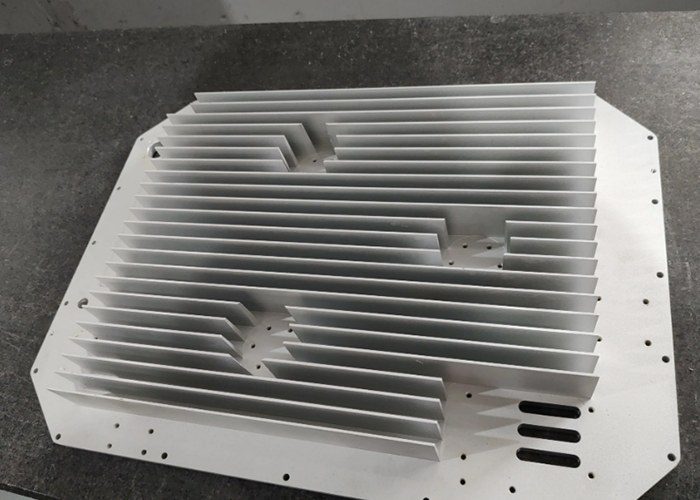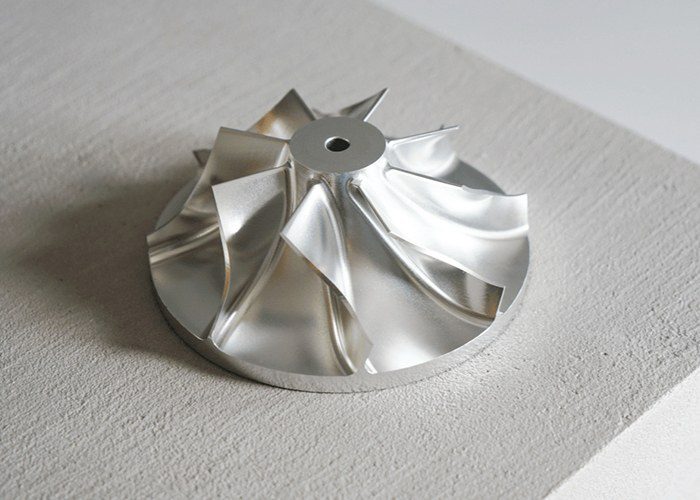
In today’s demanding industrial landscape, manufacturers across medical equipment, aerospace, automotive, and electronics are pushing for tighter tolerances, improved surface finishing, and rapid turnaround in custom metal parts. Among the various machining technologies available, custom CNC precision turned parts have become indispensable in modern supply chains due to their exceptional repeatability, consistency, and ability to meet the most stringent quality requirements.
What Are Custom CNC Precision Turned Parts?
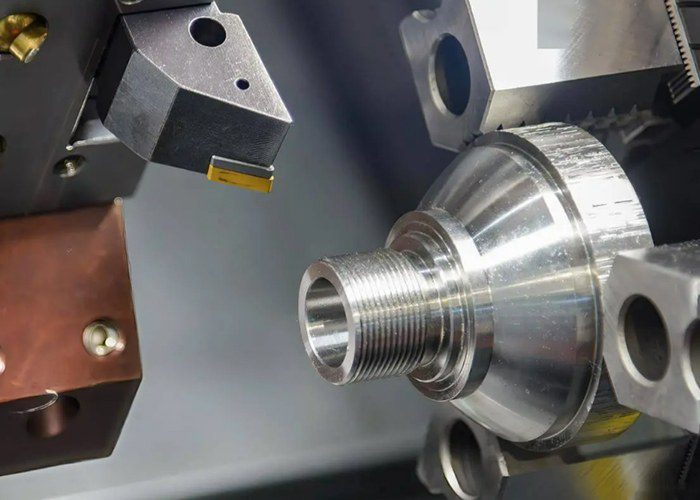
Custom CNC precision turned parts are components created using a computer numerical control (CNC) turning process. In this subtractive manufacturing method, the workpiece is secured by a chuck and rotated at high speed while cutting tools, mounted on a slide or turret, are fed toward it to remove excess material. This process forms symmetrical cylindrical shapes with remarkable dimensional accuracy. The term “custom” signifies that each component is manufactured to exact customer specifications, from geometry and material selection to surface finish and tolerance requirements.
The Manufacturing Process
The journey from concept to finished component follows a structured workflow. It begins with CAD to CAM conversion, where engineers build a digital 3D model and transform the geometry into machining commands. The accuracy of this digital file directly affects stability during turning. Next, operators select appropriate cutting tools based on material hardness, surface finishing requirements, and the chosen machining method. The machine then removes material layer by layer, ensuring consistency through real-time tool compensation.
Modern CNC turning centers feature live tooling, double spindles, and multi-axis capabilities up to five axes, enabling manufacturers to turn and mill components in the same operation. This integration significantly reduces setup time and improves overall part accuracy. For small-diameter, long, and slender parts with demanding tolerances, Swiss-type CNC turning offers additional advantages by feeding bar stock through a guide bushing and cutting directly adjacent to that support point, preventing chatter and distortion.
Key Advantages
With unmatched precision and consistency, custom CNC turned parts provide the critical edge that engineers trust for high-stakes environments. First and foremost is exceptional accuracy and precision. Leveraging software-driven automation for equipment control, this process delivers outstanding repeatability, enabling turned components to consistently meet stringent tolerances with negligible deviation, irrespective of batch sizes up to thousands of pieces. Many manufacturers routinely achieve tolerances of ±0.01 mm or better.
Production speed and efficiency represent another significant advantage. CNC turning operations can be performed much faster than manual turning without sacrificing quality, enabling high-volume orders to be fulfilled in reduced timeframes. The process also offers greater design flexibility, handling a variety of component designs and easily creating asymmetrical features that would typically require additional machining sequences.
Material versatility further distinguishes CNC turning as a manufacturing solution. The process works effectively with metals including aluminum alloys, stainless steel, brass, copper, titanium, and various steel grades, as well as engineering plastics such as PEEK, ABS, and PTFE. This adaptability enables OEM buyers to select the optimal material for their specific application without redesigning the machining strategy.
Materials and Surface Finishes
While the choice of material ultimately depends on the end-use and performance goals, aluminum alloys stand out for their exceptional strength-to-weight ratio and corrosion resistance—attributes that render them indispensable across the aerospace and automotive sectors. Stainless steel provides superior durability and corrosion resistance for medical and marine applications. Brass and copper are valued for their electrical conductivity and machinability in electronics applications. Titanium, though more challenging to machine, offers exceptional strength and biocompatibility for medical implants.
Surface finishing options further enhance part performance and aesthetics. Common treatments include anodizing, powder coating, electroplating, passivation, polishing, and bead blasting. These finishes improve corrosion resistance, hardness, chemical resistance, and cosmetic appearance. Typical as-machined surface roughness for turning ranges from Ra 0.8 to 3.2 μm, with grinding and polishing achieving Ra 0.1 to 0.8 μm.
Industrial Applications
Custom CNC precision turned parts find application across virtually every industry that requires cylindrical components. In medical and laboratory equipment, they are used for customized connectors, miniature threaded parts, surgical instrument components, dental and orthopedic implants, and precision interfaces. The aerospace and aviation sector relies on these components for highly stable fastening components, sensor housings, and lightweight structural inserts. In automotive and mobility applications, they are essential in engines, drive systems, powertrain assemblies, and electric vehicle components. Industrial automation and smart equipment utilize them in linear motion units, pneumatic fittings, and custom machine assemblies. The watchmaking and electronics industries also depend on precision turned parts for miniature components requiring micron-level accuracy.
Quality Assurance
Quality control is paramount in custom CNC precision turning. Reputable manufacturers implement comprehensive inspection protocols including incoming raw material checks, in-process monitoring, and final compliance verification. Advanced coordinate measuring machines (CMM), automated data logging, and statistical process control (SPC) ensure every part meets specified tolerances. Many facilities maintain ISO 9001, IATF 16949, or ISO 13485 certifications, demonstrating commitment to quality management systems.
The Future of Custom CNC Precision Turning
The global precision turned product manufacturing market continues to expand, driven by increasing demand for complex and customized components with tight tolerances. Key trends include the growing adoption of multi-axis turning centers, expansion of precision turned parts in automotive and aerospace applications, and higher focus on process consistency and repeatability. As industries continue to demand ever-greater precision, efficiency, and customization, custom CNC precision turned parts will remain at the forefront of advanced manufacturing, enabling innovation across the global economy.