In the vast ecosystem of modern manufacturing, few processes are as fundamental—and as transformative—as CNC machining of precision turned parts. From the tiny titanium screws that hold together a surgical implant to the high-strength shafts that transmit power in an aircraft engine, precision turned components are everywhere. Yet their ubiquity often masks the remarkable technological sophistication behind their production. Computer Numerical Control (CNC) turning has evolved far beyond the simple lathes of the past, becoming a multi-axis, highly automated, and extraordinarily precise manufacturing discipline that underpins industries ranging from aerospace to consumer electronics.
What Are Precision Turned Parts?
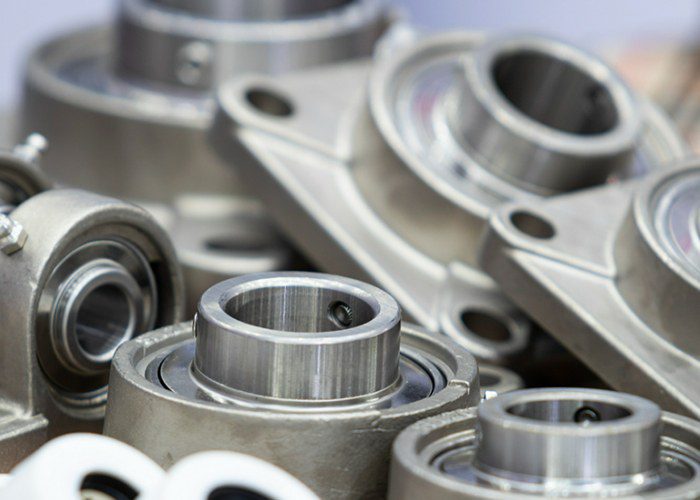
At its core, CNC turning is a subtractive manufacturing process in which a rotating workpiece is shaped by a stationary cutting tool. The workpiece—typically a cylindrical bar of metal or plastic—spins at high speed while computer-controlled tools remove material to create the desired geometry. Precision turned parts are components manufactured to extremely tight tolerances, often measured in microns. These parts include fasteners, bushings, shafts, pins, connectors, sensor housings, and countless other cylindrical or rotationally symmetrical components. What distinguishes precision turning from conventional machining is the combination of digital control, advanced tooling, and rigorous quality assurance that enables consistent production of parts with exceptional dimensional accuracy and surface finish.
The Evolution of CNC Turning Technology
The journey from manual lathes to today’s advanced CNC turning centers represents one of manufacturing’s most significant technological leaps. Traditional two-axis lathes were limited to simple cylindrical shapes. Modern turning centers, by contrast, incorporate multi-axis configurations—operating along X, Y, Z, plus A, B, and C axes—to sculpt not just cylindrical forms but intricate, multi-faceted components in a single setup.
Live tooling capabilities have been a game-changer. Powered tools mounted on the turret can rotate simultaneously, enabling drilling, milling, tapping, and engraving without removing the part from the machine. Dual turrets and dual spindles allow machining of both ends of a part simultaneously, dramatically reducing cycle times and improving accuracy by eliminating re-fixturing errors. Today’s advanced turning centers also feature bar feeders, robotic part handling, in-process measurement systems, and adaptive control algorithms that enable unattended, lights-out operations.
Materials and Capabilities
The material versatility of CNC turning is extraordinary. Precision turned parts can be manufactured from virtually any machinable material: stainless steel, carbon steel, aluminum, brass, copper, titanium, Inconel, and other superalloys, as well as engineering plastics like PEEK, acetal, and PTFE. This broad material compatibility makes CNC turning adaptable to virtually any industry requirement, from lightweight aluminum components in consumer electronics to high-strength titanium implants in medical applications.
Key Advantages of CNC Precision Turning
The advantages of CNC precision turning are compelling and multifaceted. First and foremost is unmatched accuracy. CNC machines can sustain tight tolerances across production runs of any volume, maintaining dimensional consistency throughout the entire manufacturing process. This enhances operational efficiency by cutting human error, reducing material waste, and lowering per-unit costs.
Repeatability is another critical advantage. CNC machines can produce identical parts consistently over indefinite production runs, making them ideal for mass production scenarios. Once a program is validated, every part emerging from the machine will match the specifications precisely—a requirement that is non-negotiable in industries like aerospace and medical devices.
Efficiency is equally significant. Turning remains by far the most efficient technology for machining rotationally symmetrical components. The combination of high spindle speeds—several thousand revolutions per minute—and precision tools with long tool life ensures maximum productivity and extremely precise production.
Applications Across Industries
Precision turned parts are indispensable across virtually every advanced manufacturing sector.
In the automotive industry, turned components are found in engine assemblies, braking systems, steering mechanisms, and transmission units. The rise of electric vehicles has created new demand for compact, high-conductivity turned components in power electronics, battery modules, and thermal management systems. Engine crankshafts, transmission gears, steering knuckles, and brake system components all rely on CNC turning for the precision and high-volume production that automotive manufacturing demands.
In aerospace, the stakes are even higher. Hydraulic fittings, fuel system connectors, actuator pins, and sensor housings require exceptional consistency and material traceability. These components must withstand extreme temperatures, pressures, and mechanical stresses while maintaining perfect functionality over decades of service. The aerospace industry’s growth—with U.S. aerospace and defense sales exceeding $955 billion in 2023—continues to drive demand for precision-turned products.
The medical sector represents perhaps the most demanding application of precision turning. Surgical tools, diagnostic devices, orthopedic implants, and dental instruments require micron-level precision, exceptional surface finishes, and strict biocompatibility. CNC Swiss turning, a specialized form of precision turning designed for small-diameter, slender parts, has become essential for manufacturing implantable devices and surgical instruments.
In electronics, CNC turning produces miniature components such as precision connectors, sensor housings, communication components, and miniature shafts. The ongoing trend toward miniaturization demands ever-smaller and more precise turned parts, with micron-level machining accuracy becoming the industry standard.
The Future of Precision Turning
The precision turned components sector continues on a strong growth trajectory. Valued at approximately $93–$109 billion in 2024–2025, it is projected to reach $128–$143 billion by 2030–2031, growing at compound annual rates of 5.5–6.3%. This growth is driven by increasing demand for high-precision components across automotive, aerospace, medical, and electronics sectors.
Several key trends are shaping the industry’s future. Industry 4.0 integration is connecting CNC machines to smart factory ecosystems, enabling real-time monitoring, predictive maintenance, and data-driven production optimization. Digital twins and CAD/CAM integration are enabling tighter process control and traceability. AI-native machining and lights-out manufacturing—fully automated operations that run without human intervention—are becoming mainstream. The adoption of multi-axis turning centers continues to expand, allowing manufacturers to produce increasingly complex geometries in single setups.
Perhaps most significantly, the industry is responding to the growing demand for sustainability. Manufacturers are seeking to reduce waste and energy consumption in the production of precision parts. Advanced materials, including composites and lightweight alloys, are driving demand for precision turned products in sectors such as aerospace and electric vehicles.
Conclusion
CNC machining of precision turned parts is far more than a manufacturing process—it is a foundational technology that enables modern civilization. From the cars we drive and the planes we fly to the medical devices that save lives and the electronics that connect us, precision turned components are everywhere. The technology behind them continues to evolve at a remarkable pace, embracing automation, digitalization, and artificial intelligence to achieve levels of precision, efficiency, and consistency that were unimaginable just a generation ago. As industries continue to demand smaller, more complex, and more precise components, CNC precision turning will remain at the heart of advanced manufacturing—turning raw materials into the critical parts that power our world.