
In today’s hyper-competitive industrial landscape, the demand for components manufactured to exacting specifications has never been higher. High-performance applications across aerospace, automotive, medical technology, and consumer electronics rarely accept off-the-shelf products. This is where custom CNC lathe machining emerges as the cornerstone of innovation—a subtractive manufacturing process that transforms raw material into precisely engineered cylindrical components with unparalleled accuracy and repeatability.
Understanding the Technology
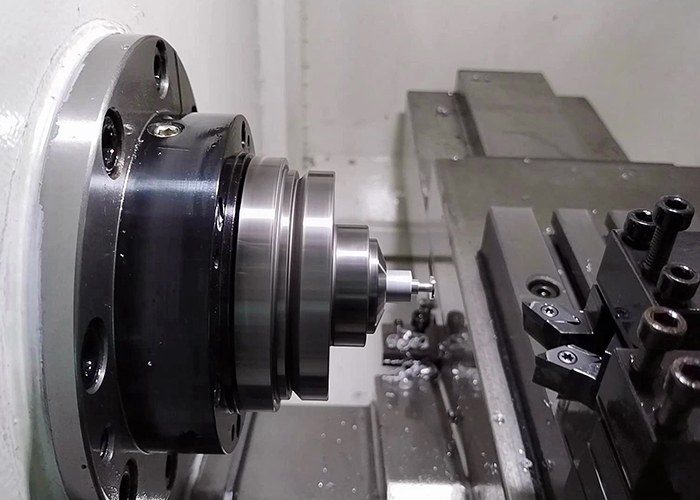
A CNC lathe is a computer-controlled machining system that rotates a workpiece while cutting tools shape the material. Unlike manual machines that rely on operator skill for each operation, CNC systems follow digital instructions that guide spindle speed, tool movement, and cutting depth. Delivering unmatched repeatability, this automation empowers manufacturers to seamlessly produce intricate parts with stringent tolerances. The fundamental principle is straightforward: the workpiece spins at controlled speeds while stationary cutting tools remove material from its outer or inner surfaces to create rotationally symmetrical parts such as shafts, pins, bushings, connectors, and threaded fittings.
Modern CNC lathes are far more sophisticated than their predecessors. Equipped with multi-axis capabilities, live tooling, and advanced CAD/CAM software, these machines can perform turning, milling, drilling, and tapping operations in a single setup. The integration of C-axis control and live tooling—powered tools mounted on the turret that can rotate simultaneously—allows manufacturers to complete complex geometries without transferring the workpiece to another machine. This capability not only reduces setup times but also eliminates the累积 errors that can occur when parts are moved between different machines.
The Advantages of Customization
The true value of custom CNC lathe machining lies in its ability to produce parts that are tailored to specific design requirements rather than limited to standard catalog offerings. Manufacturers can work from 2D drawings or 3D models, with advanced software ensuring that every detail is captured accurately. This level of customization is essential when standard components simply cannot meet the dimensional, material, or performance demands of advanced applications.
Precision is the hallmark of custom CNC turning. Leading machine shops routinely achieve tolerances of ±0.005mm, with some ultra-precision operations reaching as tight as ±0.002mm. This level of accuracy is critical for industries where component failure is not an option—aerospace fasteners, medical implants, and automotive transmission components all demand this caliber of precision. The repeatability of CNC systems ensures that every part in a production run is virtually identical to the first, providing consistency that manual machining simply cannot match.
Materials and Versatility
Custom CNC lathes are remarkably versatile in terms of material compatibility. They can handle everything from common metals like aluminum, stainless steel, and brass to high-performance alloys such as titanium and Inconel, as well as engineering plastics including PEEK, PTFE, and nylon. This material flexibility allows engineers to select the optimal material for each application—whether it’s the lightweight strength of aluminum for aerospace components, the corrosion resistance of stainless steel for medical instruments, or the biocompatibility of titanium for implantable devices.
Applications Across Industries
Custom CNC lathe machining serves as the production backbone for some of the most demanding industries in the world. In aerospace, precision-turned components are essential for aircraft programs ranging from fighter jets to cargo planes. The automotive sector relies on CNC turning for engine components, transmission parts, and suspension elements where dimensional accuracy directly impacts performance and safety. The medical device industry depends on Swiss-type CNC lathes to produce miniature, high-precision components such as surgical instruments, implantable devices, and diagnostic equipment. Other sectors benefiting from custom CNC turning include robotics, defense, telecommunications, electronics, and energy.
The Future of Custom CNC Turning
The global CNC lathe machine market is experiencing robust growth, with projections indicating a compound annual growth rate of 6.2% from 2025 to 2031. This expansion is driven by increasing demand for precision parts, rising adoption of automation technologies, and the growing need for efficient manufacturing. Recent advances in digital twinning and real-time adaptive control have expanded the envelope of precision machining, allowing manufacturers to execute complex geometries with unprecedented accuracy.
Modern CNC turning centers continue to evolve, incorporating twin spindles, multiple turrets, and intelligent technologies that transform these machines from simple cutting tools into productivity engines. The ability to perform complete machining in a single setup—eliminating secondary operations and reducing lead times—has become a critical competitive advantage for manufacturers. Some advanced configurations can reduce machining time by up to 50% through parallel processing capabilities.
Conclusion
Custom CNC lathe machining represents the intersection of precision engineering, advanced automation, and manufacturing versatility. It bridges the gap between theoretical design and physical reality, transforming raw materials into the high-strength, dimensionally precise components that power modern industry. As technology continues to advance and quality demands intensify, custom CNC turning will remain an indispensable capability for manufacturers committed to innovation and excellence. Whether producing a single prototype or millions of parts, custom CNC lathe machining delivers the accuracy, consistency, and reliability that today’s most demanding applications require.


