
In the contemporary industrial landscape, precision mechanical parts serve as the linchpin that holds together the complex machinery and systems driving progress across multiple sectors. From the tiny components inside a medical implant to the massive structural elements of an aircraft engine, these meticulously crafted parts demand exacting dimensions and tolerances measured in micrometers. At the heart of this precision manufacturing revolution stands Computer Numerical Control (CNC) machining—a technology that has fundamentally transformed how we produce the mechanical parts that power modern civilization.
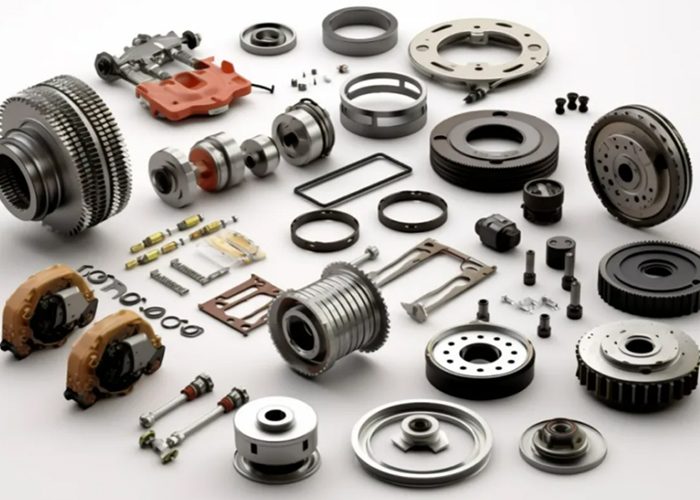
The Essence of CNC Precision Machining
CNC precision machining is a computer-controlled manufacturing process that automatically removes material from solid blocks based on uploaded digital design instructions. This subtractive approach offers distinct advantages over alternative methods. Unlike additive manufacturing or molding, CNC machining works from solid material billets, giving parts the structural integrity they need without the material inconsistencies that can appear in other processes. The result is components with exceptional dimensional accuracy, superior mechanical strength, and reliable repeatability.
What truly defines precision in CNC machining is the ability to consistently hit tolerances of 0.01 millimeters or tighter. For aerospace and medical-grade components, tolerances can reach as tight as ±0.002 to 0.003 millimeters—a level of accuracy that demands far more than just high-end equipment. True precision results from a controlled synergy between the machine, the tooling, and the environment. A rigid machine frame dampens vibrations that cause “chatter,” while high-quality tools resist deflection to ensure the cutting edge remains exactly on path. Even then, thermal stability is paramount—metals expand and contract with temperature shifts, meaning a workshop without climate control introduces constant dimensional drift.
Materials and Multi-Axis Capabilities
The versatility of CNC machining is reflected in the wide range of materials it can process. Common metals include aluminum alloys, stainless steel, titanium, brass, copper, and high-performance alloys like Inconel. Engineering plastics such as PEEK, acetal, and PTFE are also routinely machined. Each material presents unique challenges: aluminum offers excellent machinability and tight tolerance capability, while titanium and stainless steel generate more heat and require careful process control.
Modern CNC machining has evolved far beyond traditional 3-axis milling. Today’s manufacturing facilities employ 4-axis, 5-axis, and even 6-axis machining centers that can approach a part from virtually any angle. Multi-axis machining allows for the completion of complex geometries in a single setup—a critical advantage because every time a part is moved or re-fixtured, there is a risk of losing micrometers of accuracy. Swiss machining, another specialized approach, offers exceptional precision for very small or slender parts, making it a top choice for medical, aerospace, and electronics components.
Applications Across Industries
The applications of CNC-machined precision parts span virtually every sector of modern industry. In aerospace and defense, they form the backbone of mission-critical systems—from satellite brackets to jet engine blades. The production of intricate turbine blades for jet engines, for instance, requires CNC machining to create precise airfoil shapes that optimize airflow and engine performance. Aerospace components demand linear tolerances of ±0.002 to 0.01 millimeters, roughly 5 to 10 times stricter than the automotive industry standard.
In the medical field, CNC machining is indispensable for surgical tools, implant hardware, and diagnostic equipment. The technology delivers the precision, smooth finishes, and biocompatible materials these high-stakes parts require. Medical device manufacturers rely on machining to create components that meet stringent health and safety standards, often requiring certifications like ISO 13485.
The automotive industry depends on CNC machining for engine parts, suspension components, steering systems, and body components. In robotics and automation, key parts such as robot joints, drive shafts, and end-effectors demand micron-level accuracy and long-term mechanical strength. CNC machining fulfills all these requirements as one of the most reliable and scalable manufacturing methods available.
Quality Assurance and the Path Forward
Quality control in precision CNC machining is a multi-stage process. It begins with visual inspection to identify surface defects, followed by dimensional verification to ensure adherence to specified tolerances. Surface finish analysis is critical—surface roughness directly impacts friction, wear, sealing integrity, and fatigue life. Geometric accuracy assessments check attributes like concentricity, perpendicularity, and parallelism.
The future of CNC precision machining is being shaped by transformative technologies. Artificial intelligence and machine learning are being integrated to optimize toolpaths, anticipate maintenance needs, and dynamically adjust cutting parameters in real time. The Internet of Things (IoT) enables remote monitoring and real-time diagnostics, supporting the Industry 4.0 paradigm of intelligent manufacturing. Lights-out machining—where machines operate with minimal human intervention—is becoming increasingly feasible through advances in automation and robotics. Hybrid manufacturing, which combines subtractive CNC machining with additive 3D printing in a single integrated process, offers reduced material waste and greater design flexibility.
Conclusion
CNC machining precision mechanical parts represent far more than a manufacturing process—they are the foundation upon which modern industrial capability is built. With the global precision machining market projected to grow from USD 126.99 billion in 2025 to USD 224.13 billion by 2034, the importance of this technology will only continue to expand. As industries push the boundaries of what is possible—from deeper space exploration to more precise medical interventions—CNC precision machining will remain the essential technology that turns ambitious designs into reliable, high-performance reality.


