In the landscape of contemporary manufacturing, few technologies have proven as transformative as Computer Numerical Control (CNC) machining. From the smallest medical implant to the largest aerospace structural frame, CNC-machined hardware components are everywhere—shaping the products we use, the vehicles we drive, and the machines that power our world. This article explores what CNC machining hardware components are, how they are made, the materials involved, their critical applications, and the trends reshaping this essential industry.
What Are CNC Machining Hardware Components?
CNC machining hardware components are precision parts manufactured through a subtractive manufacturing process, where computer-controlled tools remove material from a solid block—known as a blank or workpiece—to create a finished part. Unlike manual machining, which relies on human operators to guide cutting tools, CNC machining uses pre-programmed software to dictate every movement of the machine with extraordinary accuracy. This automation eliminates human error, ensures repeatability across production runs, and enables the creation of complex geometries that would be impossible or prohibitively expensive to produce by hand.
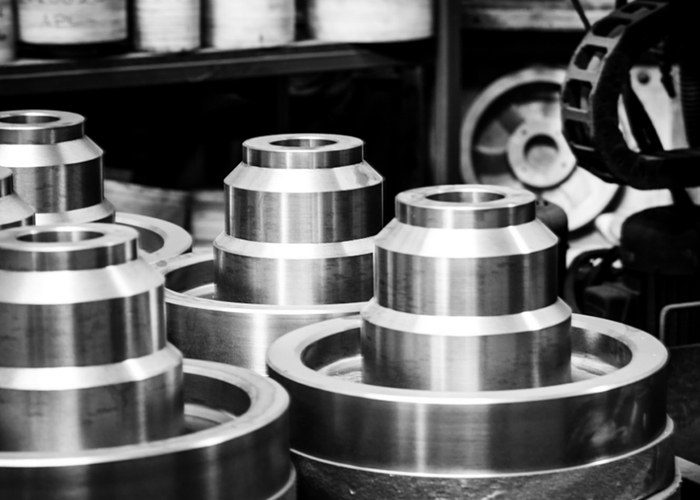
The hardware components produced through CNC machining encompass an immense variety of parts: gears, housings, engine blocks, turbine blades, surgical instruments, electronic enclosures, and countless other functional elements that form the backbone of industrial and consumer products alike.
How CNC Machining Works
The journey from design to finished hardware component follows a well-defined digital workflow. It begins with Computer-Aided Design (CAD) software, where engineers create a three-dimensional digital model of the part, defining its exact geometry, dimensions, and tolerances. This CAD model is then translated into machine-readable instructions—typically G-code and M-code—through Computer-Aided Manufacturing (CAM) software.
The CNC machine then executes these instructions, guiding cutting tools along precisely calculated toolpaths to shape the raw material. The process typically unfolds in stages: roughing passes prioritize speed to remove bulk material, followed by semi-finishing and finishing passes that achieve the final dimensional accuracy and surface quality. After machining, parts undergo deburring to remove small defects from edges and holes, followed by quality inspection to verify that critical dimensions meet specifications.
Core Components of CNC Machines
To understand CNC machining hardware components, it helps to understand the machines that produce them. A CNC machine is an integrated ecosystem of mechanical, electrical, and digital components. The Machine Control Unit (MCU) serves as the “brain,” interpreting programmed code and coordinating all machine movements. The spindle holds and rotates cutting tools at high speeds, directly influencing surface finish and machining accuracy. Linear and rotary axes—typically X, Y, and Z, with additional axes on advanced machines—move the tool or workpiece to achieve the required geometry. Other essential elements include the worktable (where the material is secured), automatic tool changers, and drive systems that ensure precise motion along each axis.
Materials for CNC Machined Hardware Components
The choice of material is critical in CNC machining, as it directly impacts machinability, tool wear, part performance, and cost. Metals remain the most commonly used materials. Aluminum and its alloys—particularly 6061 and 7075—are prized for their lightweight, corrosion resistance, and excellent machinability, making them ideal for aerospace, automotive, and consumer electronics components. Stainless steel offers high strength, ductility, and corrosion resistance, suitable for parts exposed to wear, moisture, or hygienic requirements. Titanium alloys, though more challenging to machine, deliver an exceptional strength-to-weight ratio for demanding aerospace and medical applications. Engineering plastics such as PEEK and POM, as well as composites and ceramics, are also increasingly common in specialized applications.
Precision and Quality Standards
The hallmark of CNC-machined hardware components is their precision. Modern CNC systems can achieve dimensional tolerances in the micrometre range—often ±0.05 mm or better—enabling parts to fit precisely within complex mechanical assemblies. Surface finish is equally important; a standard “as machined” finish typically achieves Ra 3.2 µm, while fine finishes reach Ra 1.6 µm, and high-precision functional surfaces can achieve Ra 0.8 µm or lower. International standards such as ISO 2768 provide frameworks for tolerances and surface roughness, ensuring consistency across global supply chains.
Quality control is integral to the process. Components undergo comprehensive dimensional inspection using coordinate measuring machines (CMM) and other precision instruments to verify conformance to specifications. This rigorous approach ensures that every part meets the demanding requirements of its intended application.
Applications Across Industries
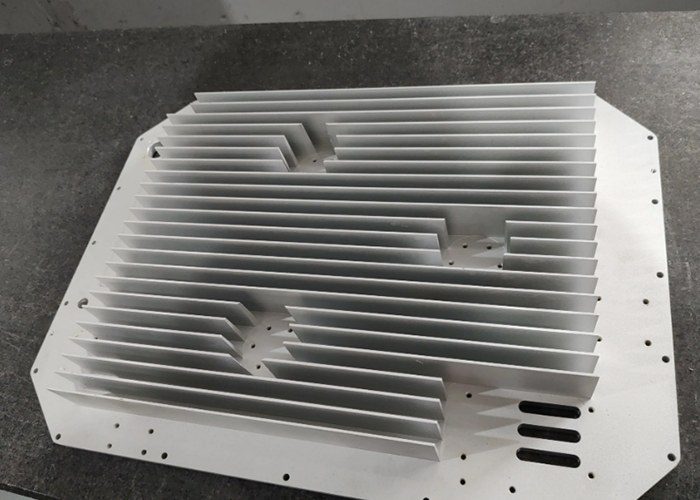
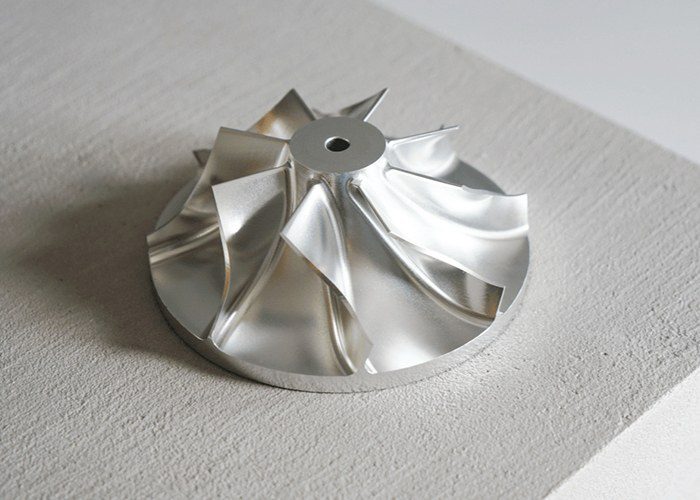
CNC-machined hardware components are indispensable across virtually every industrial sector. In aerospace, they produce critical parts such as turbine blades, engine components, landing gear, and structural elements that demand the highest levels of accuracy and reliability. The automotive industry relies on CNC machining for engine blocks, transmission parts, chassis components, and custom vehicle components, enabling both high-volume production and customization. In medical devices, CNC machining produces surgical instruments, orthopedic implants, dental components, and other parts that require biocompatible materials and exacting tolerances. The electronics sector depends on CNC-machined casings, heat sinks, connectors, and other precision components. Additional applications span defense, mining, energy, telecommunications, and industrial machinery—a testament to the technology’s versatility.
Key Advantages of CNC Machining
Several core advantages make CNC machining the preferred method for producing hardware components. Precision and accuracy are paramount—CNC machines consistently produce parts that meet exact specifications, far surpassing manual capabilities. Repeatability ensures that every part in a production run is identical, with minimal variation across batches. Complexity is no barrier; CNC machines can create intricate geometries and multi-surface features that would be impractical or impossible with conventional methods. Efficiency is another major benefit—automated operations run continuously, reducing production time and labor costs. Finally, material flexibility allows manufacturers to work with a wide range of metals, plastics, and composites, selecting the optimal material for each application.
The Future: Smart Manufacturing and Industry 4.0
The CNC machining industry is undergoing a profound transformation driven by the principles of Industry 4.0. Machine shops are moving from isolated CNC equipment toward integrated manufacturing cells that connect CNC controllers, robots, inspection systems, MES, ERP, and industrial IoT platforms. Real-time monitoring, predictive maintenance, and remote diagnostics are becoming standard capabilities, reducing unplanned downtime and optimizing production efficiency. Digital twin technology—creating virtual replicas of physical machines—enables simulation and testing before deployment, reducing costly errors and accelerating time-to-market. High-speed spindles capable of 30,000–60,000 RPM are becoming standard, while five-axis machining and AI-powered systems are pushing the boundaries of what is possible.
The global market reflects this momentum. The Computer Numerical Control equipment market is projected to grow from US$41.4 billion in 2025 to US$49.8 billion by 2031, while the CNC machine parts market is expected to reach approximately RMB 95 billion by 2032. These figures underscore the enduring importance of CNC machining hardware components in the global economy.
Conclusion
CNC machining hardware components represent the intersection of digital design, precision engineering, and advanced manufacturing. From the CAD model to the finished part, every step is guided by computer-controlled precision that ensures consistency, quality, and performance. As industries continue to demand ever-higher levels of accuracy, complexity, and efficiency, CNC machining will remain at the forefront—not merely as a manufacturing process, but as the foundational technology that turns ideas into the hardware that builds our world.