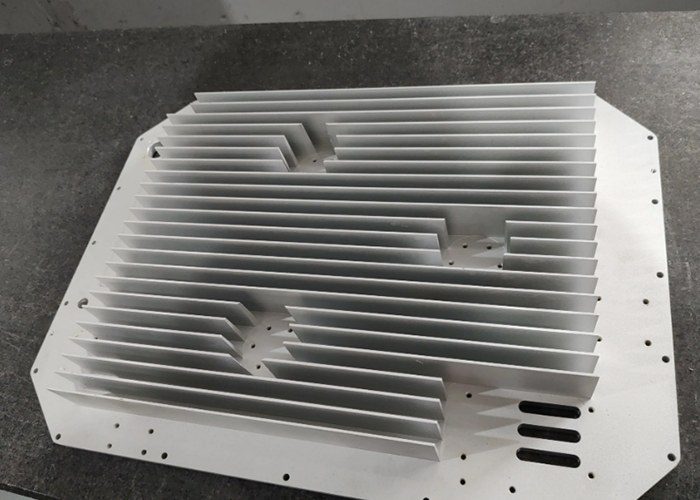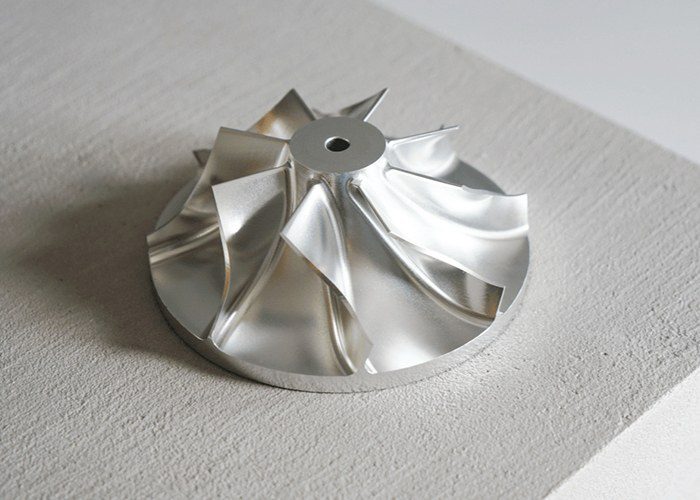
In the relentless pursuit of manufacturing excellence, the ability to produce highly complex, precision components defines industry leaders. Traditional machining techniques struggle to maintain accuracy, efficiency, and flexibility when confronted with highly complex geometric designs, often reaching their performance ceilings. Today, simultaneous 5-axis CNC milling stands as a transformative force, fundamentally reshaping the production of sophisticated parts across aerospace, automotive, medical, and energy sectors. This technology represents not a mere evolution, but a paradigm shift, delivering performance and capabilities that were previously unattainable.
Understanding 5-Axis CNC Milling
To appreciate the power of 5-axis machining, it is essential to understand its foundation. A standard 3-axis CNC machining center operates along three linear axes: X (left-right), Y (front-back), and Z (up-down). While effective for general-purpose tasks like machining flat surfaces and simple contours, its limitations become apparent when a workpiece requires machining on multiple sides or features complex angled surfaces. In such cases, the part must be manually repositioned and re-clamped, a process that increases setup time and introduces potential alignment errors.
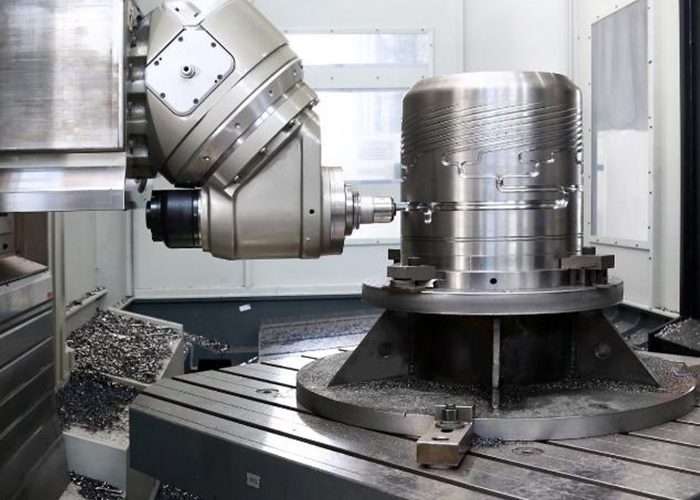
A 5-axis CNC machining center transcends these limitations by adding two rotational axes to the traditional three linear axes. This allows either the tool or the workpiece to tilt and rotate during the machining process. With simultaneous five-axis movement, the cutting tool can approach the workpiece from virtually any angle. As a result, complex multi-surface parts can be completed in a single setup, a paradigm often referred to as “Complete-in-One-Setup”.
The Core Advantages of 5-Axis Machining
The primary advantage of 5-axis CNC milling is the dramatic reduction in setups. Each setup on a machining operation adds time and risk, and these factors compound in ways that often surprise program managers. By eliminating multiple re-fixturings, manufacturers eradicate the cumulative errors inherent in traditional methods, dramatically boosting consistency and yield.
This capability translates directly into tangible benefits. For instance, using 5-axis systems enables complex contouring on impellers and turbine housings, reducing machining time by up to 40% compared to traditional methods. The technology can achieve micron-level precision (±0.005mm) for complex geometries, enabling 20% faster production than traditional 3-axis systems while maintaining tight tolerances for critical components. Furthermore, 5-axis machining allows the use of shorter tools, which reduces chatter and results in precise roughing and a smoother surface finish. It also results in increased tool life and more accurate parts.
Applications Across Industries
The versatility of custom 5-axis CNC milling makes it indispensable in a wide range of high-stakes industries.
Aerospace: In aerospace, components are growing more complex, tolerances are tightening, and program timelines are compressing. 5-axis machining is critical for manufacturing key aviation and aerospace components, including aircraft skins and structural frames, rocket fuel tanks and riveted cabin sections, and engine components such as turbine discs, casings, combustion chambers, and pump valves. The technology’s ability to produce continuous surface paths that a 3-axis tool cannot follow is essential for parts like turbine blades.
Automotive: The automotive industry leverages 5-axis machining for engine blocks, cylinder heads, gearboxes, transmission components, suspension, and steering components. The technology’s flexibility is also transforming the production of electric vehicle components, enabling the use of shorter, more rigid tools for battery enclosures.
Medical: In the medical field, 5-axis CNC machining enables the direct machining of patient-specific implants from CT scan data. This capability is crucial for producing complex, customized implants like titanium alloy bone plates, where one manufacturer reported a 70% boost in efficiency for complex porous structures and a dramatic quality leap, with first-pass yield rates soaring from 82% to 98%.
Mold and Die: The technology is also invaluable for creating injection molds, die casting dies, and forging dies.
The Strategic Investment
While 5-axis machining centers require a higher initial investment than their 3-axis counterparts, the long-term return is substantial. The return comes from reduced setup and labor costs, lower scrap rates, shorter cycle times, improved product quality, and the ability to take on higher-value projects. For many manufacturers, these benefits justify the equipment costs over a reasonable investment timeframe. Innovation in manufacturing will not wait. As the industry standard shifts, adopting 5-axis CNC milling is no longer just an advantage—it is a necessity for staying competitive in a world that demands ever-greater precision and complexity.