In the landscape of modern manufacturing, where components must fit with micron-level precision and surfaces must be flawless, few processes are as fundamental—or as evolved—as CNC turning. While often simplistically described as “spinning metal on a lathe,” modern CNC turning is a sophisticated, multi-axis process that manufactures a vast range of components, from basic automotive shafts to intricate custom medical implants. To understand its role in contemporary industry is to understand a process where the material does the moving, and precision is non-negotiable.
Defining the CNC Turning Process
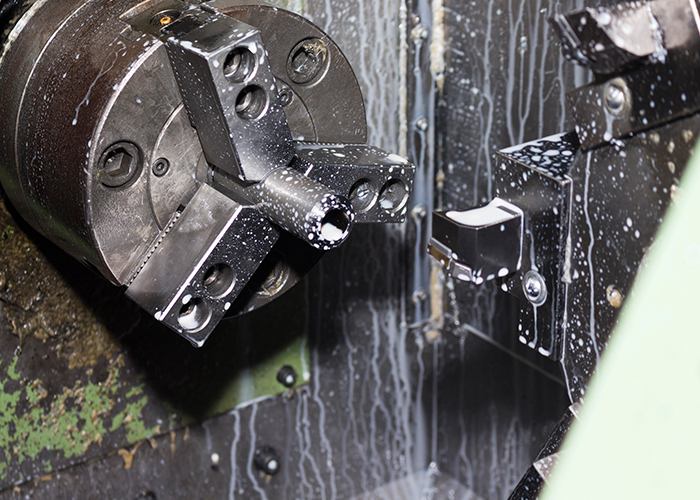
At its core, CNC turning is a subtractive manufacturing process controlled by computer numerical control (CNC) technology. Unlike CNC milling, where the cutting tool rotates, CNC turning reverses the roles by rotating the workpiece instead. Here, the workpiece rotates at high speed while a stationary cutting tool traverses along its surface, shearing away material to achieve the desired cylindrical shape.
The “CNC” aspect means that every movement—spindle speed, feed rate, and toolpath—is dictated by pre-programmed software, typically G-code. This automation ensures that once a design is finalized, the machine can reproduce it hundreds or thousands of times with identical precision, holding tolerances as tight as ±0.01 mm or even finer. This level of accuracy is often described in terms that highlight the skill involved: achieving tolerances below 10 microns means working to a precision six times thinner than a human hair.
The Core Operations: Shaping the Round
The CNC turning process encompasses a family of operations, each designed to create specific geometric features. The most common include:
- Turning and Facing: The foundational actions. Straight turning reduces the outer diameter of the part along its length, while facing creates a flat, perpendicular reference surface at the end of the component.
- Grooving and Parting: Grooving cuts narrow recesses into the part for features like O-ring seats, while parting (or cut-off) separates the finished component from the remaining raw material.
- Threading: By precisely coordinating the tool movement with the spindle rotation, the lathe can cut accurate internal or external threads, essential for fasteners and connectors .
- Boring and Drilling: While the part spins, stationary drills can create center holes, and boring bars can enlarge or refine existing holes to achieve tight internal diameters.
- Taper Turning: By adjusting the tool path at an angle to the axis, conical shapes—such as those found in machine tool spindles—are produced.
The Evolution of the Lathe: From 2-Axis to Multi-Tasking
For decades, the lathe was a 2-axis machine, moving the tool along the length (Z-axis) and in and out from the centerline (X-axis). While effective for simple cylinders, this limited complexity. Today’s CNC turning centers have shattered those boundaries.
Modern machines integrate live tooling, which means that in addition to stationary cutting tools, the lathe’s turret can hold rotating cutting tools (like drills and end mills). This allows the machine to mill flats, drill cross-holes, and cut keyways without ever removing the part from the spindle.
This capability is augmented by additional axes. The C-axis allows the spindle to stop and index the workpiece to precise angles for off-center machining. Some advanced centers even include a Y-axis, enabling the tool to move above and below the centerline for complex prismatic cuts. This convergence has blurred the line between turning and milling, giving rise to “turn-mill” centers where complex parts can be completed in a single setup, reducing lead times and eliminating the errors that come from re-clamping.
The Why: Advantages and Applications
The enduring relevance of the CNC turning process lies in its unique advantages. For rotationally symmetrical parts, it is unmatched in efficiency. The continuous cutting action removes material quickly, and the physics of rotation naturally produce excellent concentricity and surface finish.
This makes it the process of choice across critical industries. In automotive, it produces axles, pistons, and transmission shafts. In aerospace, it is trusted for landing gear components and high-strength fasteners where failure is not an option. In the medical field, it machines bone screws and surgical tools from biocompatible alloys like titanium.
Furthermore, the process is remarkably versatile with materials. While it excels with metals like aluminum, brass, and stainless steel, it also efficiently machines engineering plastics such as nylon and PTFE, adapting to the needs of electronics, oil and gas, and industrial machinery.
Conclusion
The CNC turning process is far more than a simple spinning operation. It is a testament to how precision engineering has evolved, blending mechanical force with digital intelligence. Whether operating as a standalone 2-axis lathe or as part of a multi-tasking turn-mill center, its purpose remains clear: to create precise, repeatable, and reliable cylindrical components that form the backbone of our modern world. As technology pushes toward lights-out manufacturing and harder cutting materials, the rotation of the workpiece will undoubtedly continue to be a cornerstone of industrial production