
In the vast ecosystem of modern manufacturing, few processes are as fundamental or as versatile as CNC turning. While 3D printing and laser cutting often grab the headlines, the humble CNC lathe quietly and efficiently produces the critical components that keep machines running, structures standing, and devices functioning. Whether you are looking at a stainless steel valve stem, an aluminum aerospace fitting, or a brass medical implant, you are likely looking at a CNC Turning Part.
What is CNC Turning? The Core Process
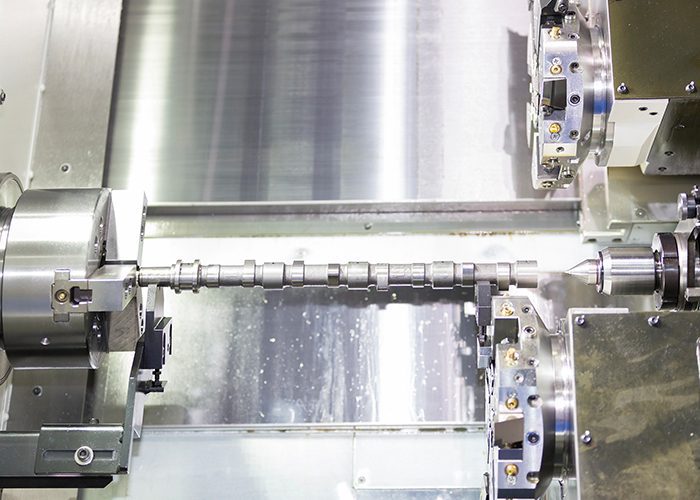
To understand the part, one must first understand the process. CNC (Computer Numerical Control) turning is a subtractive manufacturing method where a cutting tool moves linearly while the workpiece rotates rapidly on a spindle. Imagine a potter’s wheel, but instead of clay, you have steel, and instead of hands, you have a carbide tool bit driven by a computer with micron-level accuracy.
As the bar stock spins, the cutter shaves away material to create the desired external profile. However, modern CNC turning centers, often called “lathes,” are far more sophisticated than their analog ancestors. They feature live tooling (rotating tools that can drill or mill off-axis), Y-axis capabilities for off-center milling, and sub-spindles for “pick-off” operations. This allows a single CNC turning part to be 100% complete—featuring threads, cross-holes, keyways, and flats—without ever touching a separate milling machine.
The Unique Geometry of Turned Parts
What distinguishes a turned part from a milled part is its symmetry. Milling is ideal for complex, boxy shapes; turning excels at rotational symmetry.
Common features of turned parts include:
- Cylinders and Cones: The most basic forms.
- Grooves and Undercuts: Recesses used for retaining rings or oil flow.
- Threads: Internal or external helical ridges for fastening.
- Chamfers and Radii: Edge breaks to remove sharp corners and improve fatigue life.
- Knurling: A diamond-shaped pattern pressed into the surface for grip.
Because the part is spinning, the resulting surface finish is naturally smoother than many milled finishes. With proper speeds, feeds, and inserts, a turned part can achieve a mirror-like surface (Ra 0.4 µm or better) straight off the machine.
The Material Palette: Choosing the Right Stock
The versatility of CNC turning lies in its ability to digest a massive range of materials. The most common include:
- Metals: 6061 Aluminum (lightweight/easy), 12L14 and 1215 Steel (free-machining), 303 and 304 Stainless Steel (corrosion resistant), Brass C360 (high conductivity/anti-galling), and Titanium Grade 5 (medical/aerospace).
- Plastics: Delrin (Acetal), Nylon, PEEK, and Teflon are frequently turned for electrical insulators or chemical seals.
The choice of material directly impacts the cutting parameters. Turning a piece of PEEK requires sharp, polished edges to prevent melting, while turning Inconel requires slow speeds, rigid setups, and expensive ceramic inserts due to its work-hardening nature.
The “Why”: Advantages of CNC Turned Components
Why do engineers specify CNC turning over casting or forging?
- Tolerance Control: Standard CNC turning holds tolerances of +/- 0.005 inches. Precision turning holds +/- 0.0002 inches. For a mating shaft and bearing, that accuracy is non-negotiable.
- Speed of Production: Swiss-type CNC lathes can produce hundreds of small parts per hour. If you need 10,000 identical pins or bushings by next week, turning is the answer.
- Surface Integrity: Unlike EDM (which leaves a recast layer), turning creates a clean, stress-free surface that improves fatigue resistance.
- Cost Efficiency for Medium Volumes: While casting is cheap for 100,000+ units, turning has low setup costs and no tooling amortization, making it economical for prototypes and runs of 10 to 10,000 units.
Critical Applications Across Industries
You interact with CNC turning parts constantly.
- Automotive: Pistons, brake rotors, driveshaft yokes, and fuel injector nozzles.
- Aerospace: Landing gear struts, hydraulic fittings, and engine mounting rings.
- Medical: Bone screws, surgical guide pins, and orthopedic knee/hip joint trial components.
- Plumbing: Faucet stems, shower valve cores, and hose connectors.
- Electronics: Heat sinks, standoffs, and connector barrels.
Challenges in the Turning Cell
Despite the automation, turning is not without challenges. Swarf (chip) management is a constant battle; long, stringy chips can wrap around the part like a bird’s nest, damaging the surface finish. Machinists use high-pressure coolant and specialized chip breakers to shear material into small, manageable “C” or “6” shaped chips.
Furthermore, workholding is tricky. Thin-walled tubes or extremely slender rods are prone to chatter. For example, a 1/4-inch diameter rod extending 4 inches from the collet will deflect away from the cutting tool Solutions include using a tailstock, steady rest, or turning to a larger diameter in stages.
The Future: Automation and Swiss Turning
The industry is moving toward “lights-out manufacturing.” Modern CNC lathes are equipped with bar feeders (automatically feeding 12-foot bars into the spindle) and part catchers. An operator can set up a job, load the bar feeder, and leave for the night. The machine will run unattended for 8+ hours, producing hundreds of finished CNC turning parts ready for shipment.
Swiss-style turning (sliding headstock) is also revolutionizing small parts. In Swiss turning, the bar stock slides through a guide bushing. This supports the material right at the cutting edge, allowing for the production of incredibly long, slender parts (20:1 length-to-diameter ratio) that would be impossible on a conventional lathe.
Conclusion
The CNC turning part is a testament to the elegance of subtractive manufacturing. While we live in a digital age, physical precision still relies on the relationship between a spinning piece of material and a stationary cutting edge. From the valve in your shower to the pin in a jet engine, turned components provide the cylindrical precision that holds the world together. As long as machines have rotating shafts, there will be a need for the skilled work of the CNC lathe.


