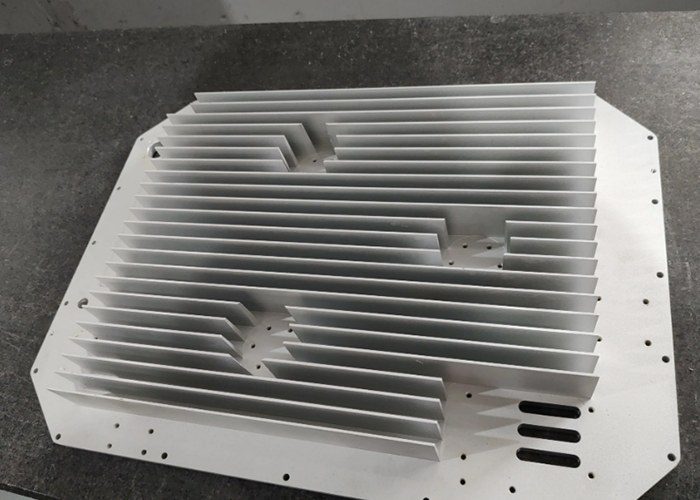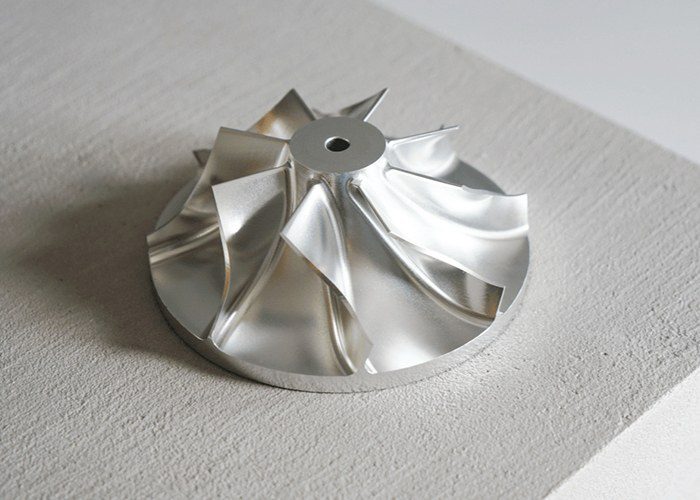
In the landscape of modern manufacturing, precision is not merely a quality benchmark — it is the very currency of competitiveness. Among the many technologies that have redefined production capabilities, CNC (Computer Numerical Control) turning milling parts stand out as a cornerstone. These components, produced through the synergistic combination of turning and milling operations within a single machine setup, have revolutionized how engineers approach complex geometries, material efficiency, and production speed. This article delves into the world of CNC turning milling parts, exploring their process, advantages, applications, and future trajectory.
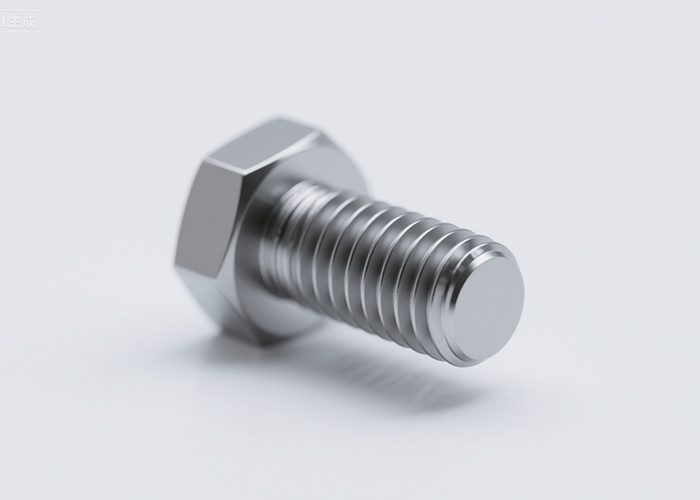
Understanding the Dual-Process Technology
Traditionally, turning and milling were separate operations carried out on different machines. Turning — typically carried out on a lathe — involves rotating the workpiece against a stationary cutting tool to create cylindrical features such as shafts, threads, or bores. Milling, conversely, uses a rotating cutting tool to remove material from a stationary workpiece, producing flats, slots, pockets, or complex 3D contours.
CNC turning milling parts are manufactured on advanced multi-tasking machines — often called turn-mills or mill-turns — that integrate both capabilities. In these machines, the workpiece can be held in a main spindle (spinning for turning) while live tooling (rotating cutters) performs milling operations without removing the part. Many machines also feature a subspindle for backworking, enabling complete machining of a part in one clamping.
This hybrid approach is ideal for components requiring both rotational symmetry and non-cylindrical features. Common examples include drive shafts with keyways, hydraulic fittings with cross holes, medical bone screws with drive recesses, and aerospace bushings with flange faces.
The Unmatched Advantages of Turn-Mill Parts
The shift from sequential to simultaneous or combined processing offers tangible benefits:
- Reduced Setup Time and Fixture Cost: In conventional methods, a part might require a lathe setup (for turning), then a milling machine setup (for milling), often with custom fixtures for each. Each setup entails alignment, calibration, and potential errors. Turn-mill machining consolidates everything into one setup — often within minutes. Fixture costs drop dramatically because the machine’s chuck or collet and subspindle handle location.
- Tighter Tolerances and Geometric Integrity: When a part is moved between machines, reference datums change. Even with precision locating, errors accumulate. By completing all operations in one clamping, the relation between turned diameters and milled flats or holes is maintained with exceptional accuracy. Concentricity, perpendicularity, and angular orientation are inherently reliable. For industries like aerospace or automotive, where tolerances often fall within ±0.005 mm, this is invaluable.
- Improved Cycle Time and Throughput: While a single turn-mill machine may cost more than a separate lathe and mill, the reduction in idle time, transport, queuing, and manual handling often yields lower cost-per-part. Complex parts that previously required two or three machines and multiple operators can be completed in a single automated cycle, sometimes unattended overnight.
- Better Surface Finishes and Tool Life: Because the part remains rigidly held, there is less vibration induced by repositioning. Additionally, advanced turn-mill centers use synchronized tool paths and high-pressure coolant to manage chip evacuation and heat. The result: smooth surface finishes (Ra 0.4 μm or better) and predictable tool wear.
Material Diversity and Applications
CNC turning milling parts are produced from an extensive range of materials: aluminum alloys (6061, 7075), stainless steels (303, 304, 17-4 PH), titanium (Grade 5), engineering plastics (PEEK, acetal), brass, copper, and even superalloys like Inconel and Monel.
Their applications span virtually every engineering sector:
- Aerospace: Actuator housings, fuel system fittings, landing gear components, and structural brackets. The emphasis is on weight reduction and fatigue resistance.
- Automotive: Helical-oil-groove turbocharger shafts, transmission valve bodies, and sensor housings. High-volume production benefits from cycle time optimization.
- Medical: Orthopedic screws, surgical instrument handles, dental implant abutments, and spinal rods. Biocompatibility and sterile surfaces are critical.
- Robotics & Automation: Gearbox shafts, joint pins, end-effector mounting plates, and motor housings — parts needing both rotation-mating surfaces and alignment features.
- Oil & Gas: Commonly crafted from corrosion-resistant alloys: downhole tool connectors, valve stems, and drilling equipment components.
Design Considerations for Turn-Mill Parts
Engineers designing for turn-mill processes should adopt specific guidelines:
- Minimize Part Flips: Design so that a single clamping from main spindle to subspindle (if needed) can access all features. Symmetrical or near-symmetrical parts are ideal.
- Use Standard Tool Access: Avoid undercuts that require custom lollipop mills unless essential. Ensure that live tooling can reach internal features without excessive overhang.
- Specify Reasonable Corner Radii: Internal corners from milling typically have a radius equal to the cutter diameter. Sharp internal corners are impossible; design with fillets where appropriate.
- Balance Material Removal: In turning, unbalanced stock can cause vibration. For asymmetric parts, consider adding temporary balancing masses or leaving extra stock for rough turning.
Quality Control and Finishing
After machining, turning milling parts often undergo secondary processes: deburring (thermal or mechanical), anodizing (for aluminum), passivation (for stainless steel), heat treatment to relieve stress, and coating (e.g., electroless nickel, DLC). Inspection typically employs coordinate measuring machines (CMM), optical comparators, and surface roughness testers. For high-volume production, in-process probing ensures real-time corrections.
Future Trends: Smart Factories and Micromachining
The field of CNC turning milling parts is evolving rapidly:
- Industrial IoT & Adaptive Control: Equipped with embedded sensors, modern turn-mill centers continuously track vibration, temperature, and cutting forces. Algorithms adjust feed rates and spindle speeds dynamically to prevent chatter or tool breakage.
- Automation with Robots and AGVs: Bar feeders, gantry loaders, and collaborative robots enable lights-out manufacturing. Finished parts are automatically deburred, washed, and measured.
- Hybrid Additive-Subtractive Machines: Some advanced turn-mill platforms now include laser or cold-spray additive heads. A near-net shape can be built, then turned and milled to final tolerances — ideal for repair of high-value parts or producing internal lattice structures.
- Micromachining: Micro turn-mill centers produce parts smaller than 1 mm — such as micro-pins for electronics, catheter tips, or watch components. These require spindle speeds above 60,000 RPM and specialized micro-tooling.
Conclusion
CNC turning milling parts represent a mature yet still advancing pillar of precision engineering. The ability to produce complete, complex components from bar stock in a single automated cycle has redefined cost structures, quality expectations, and design freedom. From surgical implants to jet engine fuel nozzles, these parts quietly enable the technologies that power modern life. As machine intelligence, sensor feedback, and additive capabilities merge with turn-mill platforms, the next decade promises even greater efficiencies — and parts that were previously impossible to manufacture will become routine. For any engineer or manufacturer committed to precision, understanding and leveraging CNC turning milling is not an option; it is a necessity.