
For the medical device industry, anything short of perfection is not an option. Every component—whether a bone screw, dental implant, surgical instrument, or implantable device—must meet exacting standards of precision, biocompatibility, and reliability. What may appear as trivial manufacturing flaws, like burrs or rough edges, can escalate into major adverse outcomes after implantation. This is where CNC turning emerges as an indispensable manufacturing process, delivering the micron-level accuracy, exceptional repeatability, and regulatory compliance that medical applications require.
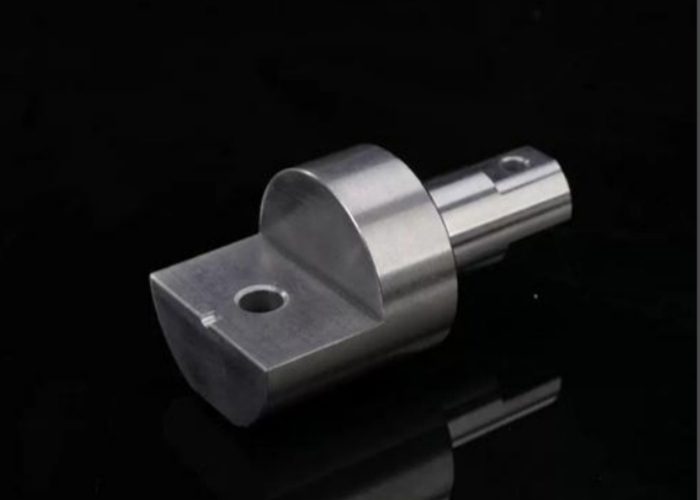
The Precision Imperative
Medical components are subject to substantially tighter tolerances than typical industrial goods. Many must sustain micron-level accuracy while guaranteeing durable assembly fit and consistent operational performance over time. CNC turning, equipped with sophisticated numerical controls, governs each machining action with fine precision, enabling the reliable production of highly accurate, uniform parts with superior repeatability.
Modern CNC turning centers equipped with precision spindles, high-performance servo systems, and advanced cutting tools consistently achieve the strict tolerances demanded by the medical industry. For critical applications such as orthopedic implants and surgical instruments, tolerances can be held to within five ten-thousandths of an inch. The process ensures that every component maintains identical dimensions and quality standards across production batches, minimizing human error and ensuring consistent quality.
Materials That Matter
The materials used in medical device manufacturing must be body-safe, corrosion-resistant, and capable of withstanding the harsh environment of the human body. CNC turning routinely processes a range of biocompatible materials including titanium and its alloys (Ti Grade 23 ELI for implants, Ti Grade 2 CP for dental abutments and pacemaker cases), 316L stainless steel for surgical instruments and bone plates, cobalt-chrome alloys for joint replacements, and PEEK for spinal cages and dental components.
These materials, while essential, present significant machining challenges. Titanium, cobalt chrome, and stainless steel are difficult to machine due to their hardness and tendency to work-harden. Advanced cutting tool geometries, specialized coatings, and optimized machining parameters are required to achieve the necessary surface finishes and dimensional accuracy while maintaining tool life and production efficiency.
Surface Finish: More Than Aesthetics
In medical applications, surface finish is about far more than appearance. Rough surfaces trap bacteria; smooth surfaces reduce infection risk and improve tissue integration. ISO 13485 sets stringent surface roughness requirements for medical CNC turned components to ensure biocompatibility, functionality, and safety in clinical applications.
Typical requirements vary by application: surgical instruments typically require 16–32 Ra with passivation; implant surfaces demand 8–16 Ra with electropolishing; and bearing surfaces may need 4–8 Ra with lapping or polishing. Critical surfaces like implantable shafts often require Ra ≤0.8μm to minimize tissue irritation. CNC turning, particularly when combined with live tooling capabilities of up to 60,000 RPM, can achieve exceptional surface finishes that meet these demanding specifications.
Swiss-Type Turning: The Gold Standard for Miniature Components
When it comes to micro-scale medical components—from bone screws and dental implants to critical pacemaker parts—Swiss-type CNC lathes are the undisputed industry choice. These machines support the workpiece with a guide bushing positioned very close to the cutting tool, providing exceptional stability that allows for the turning of long, slender parts with extremely tight tolerances.
Swiss turning is particularly well-suited for high-volume production of precision implants and minimally invasive surgical tools, with complex features achieved in a single setup. Capable of handling bar stock with diameters ranging from 2mm to 36mm, Swiss-type machines can machine parts as long as 12 feet from bar stock, delivering complete machining of complex components in a single operation.
Regulatory Compliance and Quality Systems
The regulatory frameworks governing the medical device industry are among the most exacting in all of manufacturing. ISO 13485 is the internationally agreed standard for setting up a Quality Management System (QMS) specifically for the medical industry. A shop with ISO 13485 certification has documented processes for everything from incoming material checks to final inspection.
CNC machining must comply with both FDA regulations (21 CFR Part 820) and ISO 13485 standards through comprehensive documentation and record-keeping, material control with full traceability, regular equipment calibration and preventive maintenance, process validation using IQ/OQ/PQ protocols, personnel training and competence assessment, and rigorous quality control and inspection at every stage. The FDA requires that the Unique Device Identification (UDI) be readable in plain text and use Automatic Identification and Data Capture (AIDC) technology.
Quality Control and Inspection
Quality assurance in medical CNC turning is embedded at every phase through in-process probing and post-machining validation. Inspection methods include coordinate measuring machines (CMMs) accurate to ±1.5μm, optical comparators, laser measurement systems, and surface profilometers. Each CNC-turned part undergoes rigorous quality checks from initial setup to final inspection, leveraging automated data logging, statistical process control (SPC), and traceable documentation.
Conclusion
CNC turning has become one of the most important manufacturing processes in the medical device industry because it offers exceptional machining accuracy, outstanding repeatability, automated production, and excellent efficiency for both prototype and high-volume production. As medical technology continues to advance and devices become increasingly sophisticated, the role of precision CNC turning will only grow more critical. The machines, tools, and processes continue to evolve—with multi-axis capabilities, integrated automation, and smart manufacturing technologies pushing the boundaries of what is possible. For manufacturers serving the medical device industry, mastery of CNC turning is not just a competitive advantage—it is a fundamental requirement for delivering components that can quite literally save lives.


