
In the vast landscape of modern manufacturing, few processes have proven as enduringly essential as 3-axis CNC milling machining. For decades, this technology has served as the workhorse of industrial production, offering a proven balance of precision, reliability, and cost-effectiveness that remains unmatched for a vast majority of milling operations worldwide. Despite the growing prominence of more complex multi-axis systems, 3-axis CNC milling continues to be the foundational process upon which countless industries depend.
Understanding the Core Principles
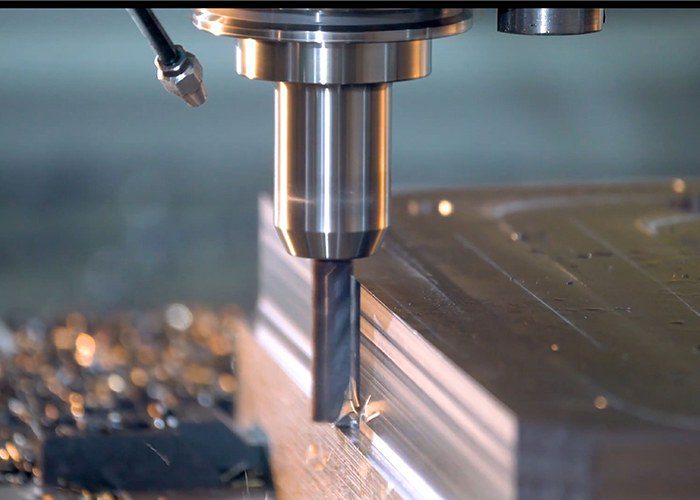
At its essence, 3-axis CNC milling is a subtractive manufacturing process in which a rotating cutting tool removes material from a solid workpiece to create a finished part. The defining characteristic of this process lies in its movement capabilities: the cutting tool moves along three linear axes—the X-axis (left to right), the Y-axis (front to back), and the Z-axis (up and down). These three Cartesian axes enable the machine to shape parts with remarkable precision, creating flat surfaces, slots, pockets, holes, and even simple three-dimensional contours.
The entire operation is orchestrated by a Computer Numerical Control (CNC) system, which continuously calculates optimal feed rates, cutting speeds, and tool movements. This automation ensures consistently high surface quality and dimensional accuracy, even when producing large quantities of identical components.
The Workflow from Design to Finished Part
The journey from concept to finished component follows a structured sequence. It begins with a detailed 3D CAD model that defines the part’s geometry, dimensions, and tolerances. Designers must carefully consider feature orientation, wall thickness, and corner radii to ensure all critical features remain accessible from a single machining direction. Next, CAM software translates the CAD model into precise toolpaths, determining tool selection, spindle speeds, feed rates, and machining strategies.
The workpiece is then securely mounted on the machine table using vises, clamps, or custom fixtures. Proper fixturing is critical—stable clamping prevents part deformation, while accurate work coordinate alignment ensures dimensional consistency. Finally, the CNC machine executes the programmed toolpaths, removing material layer by layer through operations such as face milling, pocket milling, slotting, drilling, and contouring. After machining, parts undergo inspection using coordinate measuring machines or gauges to verify dimensional accuracy and surface finish.
Applications Across Industries
The versatility of 3-axis CNC milling makes it indispensable across a remarkably broad spectrum of industries. In the automotive sector, it produces engine components, transmission parts, chassis elements, and custom components. The aerospace industry relies on 3-axis machining for precision parts, prototypes, molds, and composite material components. Medical device manufacturers use it to fabricate surgical instruments, implantable components, and dental prosthetics—one study even demonstrated that 3-axis CNC machining can effectively produce zirconia dental implant crowns with precise dimensional accuracy.
Beyond these sectors, 3-axis milling serves the electronics industry, industrial equipment manufacturing, prototyping, mold and die making, and general engineering. The process works with an extensive range of materials, including aluminum, steel, stainless steel, titanium, brass, copper, engineering plastics such as PEEK and acetal, and composites.
Advantages and Limitations
The enduring popularity of 3-axis CNC milling stems from several compelling advantages. These machines are significantly more affordable than their 4-axis and 5-axis counterparts, both in terms of initial purchase price and ongoing operational costs. Their simpler design means fewer moving parts, reduced maintenance expenses, and lower hourly operating rates. Programming and operation require less technical expertise, making 3-axis machines accessible to shops with less experienced operators. Setup times are faster, particularly for straightforward parts, helping reduce lead times and improve production efficiency.
However, 3-axis machining has inherent limitations. The tool’s vertical orientation cannot cut through undercuts or create complex contoured surfaces. Parts requiring machining on multiple sides typically need to be stopped, repositioned, and re-fixtured—a process that introduces potential alignment errors and increases production time. Complex geometries, angled holes, and deep cavities with narrow features present significant challenges. These limitations have driven the development of 4-axis and 5-axis machining technologies, which add rotational axes to access parts from multiple angles in a single setup.
The Right Choice for the Right Application
Despite the capabilities of more advanced systems, 3-axis CNC milling remains the optimal choice for a vast range of manufacturing needs. For parts with flat surfaces, prismatic geometries, and features accessible from a single direction, it offers the most cost-effective and efficient solution. The technology excels at producing enclosures, housings, brackets, flat plates, and components with 2D or 2.5D geometries. It is particularly well-suited for drilling, threading, slotting, and creating features on a single plane.
Conclusion
3 axis CNC milling machining represents the bedrock of precision manufacturing—a technology that has stood the test of time and continues to deliver exceptional value across countless industries. Its combination of precision, reliability, simplicity, and cost-effectiveness makes it an indispensable tool for engineers, manufacturers, and designers worldwide. While multi-axis systems have expanded the boundaries of what is possible, the 3-axis milling machine remains the workhorse of the shop floor, quietly and efficiently producing the components that drive modern civilization. Understanding its capabilities, limitations, and optimal applications is essential for anyone involved in the design and production of machined parts.


