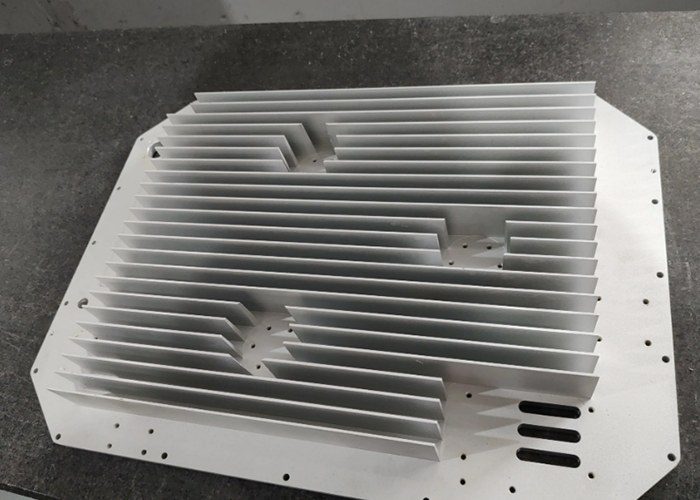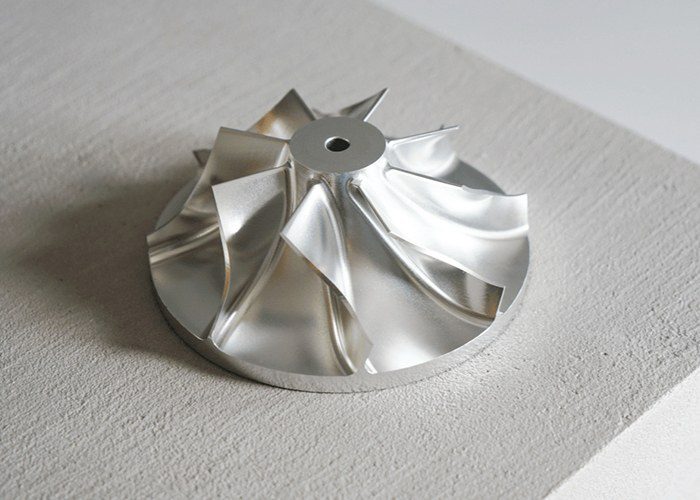
In the vast ecosystem of modern manufacturing, few processes are as fundamental—and as transformative—as CNC turning machining for metal parts. From aerospace turbines to medical implants, automotive drivetrains to hydraulic fittings, the cylindrical components that keep our world moving are often born from the precise, automated dance of a cutting tool against a spinning workpiece. Computer Numerical Control (CNC) turning has evolved far beyond the manual lathes of the Industrial Revolution, becoming a sophisticated synthesis of materials science, mechanical engineering, and digital programming. This article explores the technology, applications, and future trajectory of CNC turning as a cornerstone of industrial production.
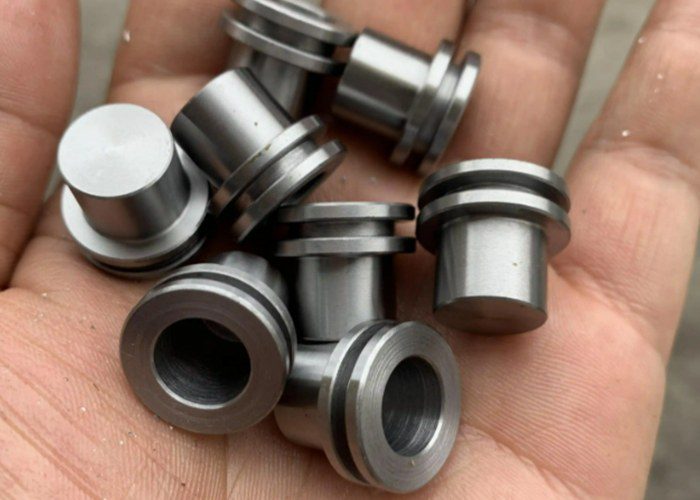
Understanding the Process
At its core, CNC turning operates on a deceptively simple principle: the workpiece rotates at high speed while a stationary cutting tool traverses along one or two axes to remove material. However, the implementation is anything but basic. Modern CNC lathes and turning centers are multi-axis marvels, capable of performing simultaneous operations—turning, facing, boring, threading, grooving, and even live tooling for milling—all within a single setup. The “CNC” element replaces manual handwheels with servo-driven precision, translating G-code instructions into movements accurate to microns. This digital control enables complex geometries that would be impossible or economically unviable with conventional methods: tapered shafts, contoured profiles, eccentric diameters, and internal splines, all produced with repeatability measured in tenths of a thousandth of an inch.
The choice of metal is critical to the outcome. Aluminum alloys offer excellent machinability and lightweight strength for automotive and consumer electronics. Stainless steels provide corrosion resistance and durability for medical and food-processing equipment. Titanium—though notoriously difficult to machine due to its low thermal conductivity and work-hardening tendency—is indispensable in aerospace for its strength-to-weight ratio. Tool materials have advanced in parallel: coated carbides, cubic boron nitride, and ceramic inserts now withstand cutting speeds exceeding 500 meters per minute, dissipating heat and resisting wear while maintaining sharp cutting edges. The interplay between workpiece material, tool geometry, feed rate, spindle speed, and coolant application is finely tuned through CAM software simulations before the first chip ever falls.
Advantages Over Other Machining Methods
Why choose turning over milling, EDM, or additive manufacturing? For rotational-symmetric parts, turning offers unmatched efficiency and surface finish. The continuous cutting action produces smooth, concentric surfaces that often require little to no secondary grinding or polishing. Single-setup machining on a turning center with live tooling can complete a part in minutes that might otherwise require multiple operations across different machines—reducing handling errors, lead times, and work-in-progress inventory. The economics are compelling: high-volume production runs amortize setup costs across thousands of identical parts, while the inherent rigidity of the turning process allows for aggressive material-removal rates without sacrificing accuracy.
Critical Applications Across Industries
The applications are ubiquitous, though often hidden from end-user view. In the automotive industry, CNC turning produces engine shafts, transmission gears, brake pistons, and suspension components, with tolerances that ensure smooth operation and fuel efficiency. Aerospace relies on turned parts for landing gear cylinders, engine mountings, and hydraulic manifold fittings—where material integrity and dimensional precision are matters of safety. The medical sector demands biocompatible metals shaped into bone screws, surgical instruments, and orthopedic implant stems, requiring surface finishes that promote tissue integration or minimize bacterial adhesion. Even the energy sector depends on turned components for oilfield drill collars, valve bodies, and renewable-energy drivetrain parts. In each case, the CNC turning process provides the dimensional accuracy and surface quality that downstream assembly and functional performance demand.
Challenges and Quality Control
Yet CNC turning is not without its challenges. Tool wear, thermal expansion, vibration (chatter), and chip management all threaten part quality and productivity. Advanced CNC systems now incorporate adaptive control, monitoring cutting forces in real time and adjusting feed rates to optimize tool life. In-process probing measures part diameters while still chucked, automatically compensating for tool wear to maintain consistency across a production run. Quality control extends beyond the machine, employing coordinate measuring machines (CMMs), laser scanners, and surface profilometers to verify every critical feature. Statistical process control (SPC) charts track dimensional trends, flagging drift before it produces scrap.
Future Trends
Looking ahead, the trajectory of CNC turning is toward greater autonomy and intelligence. The integration of Industry 4.0 principles—sensor networks, data analytics, and cloud connectivity—enables predictive maintenance and production optimization. Machine learning algorithms analyze historical machining data to recommend optimal cutting parameters for new materials, reducing trial-and-error setup time. Hybrid machines that combine additive deposition with turning are emerging, allowing repair of worn components or fabrication of near-net shapes with minimal waste. In tandem, sustainability concerns are driving innovations in dry machining, minimum-quantity lubrication, and cutting-fluid recycling, reducing environmental impact while maintaining performance.
Conclusion
CNC turning machining of metal parts is more than a production technique; it is a foundational enabler of industrial civilization. It transforms raw cylinders of metal into precision instruments that carry loads, transmit motion, and seal pressures. As materials advance, software becomes more intelligent, and machines grow more capable, the role of CNC turning will only expand—not as an obsolete craft, but as an adaptive, data-driven discipline. In an era of rapid technological change, the turned metal part remains a quiet constant: proof that when you master the art of spinning metal against a cutting edge, you can build almost anything.