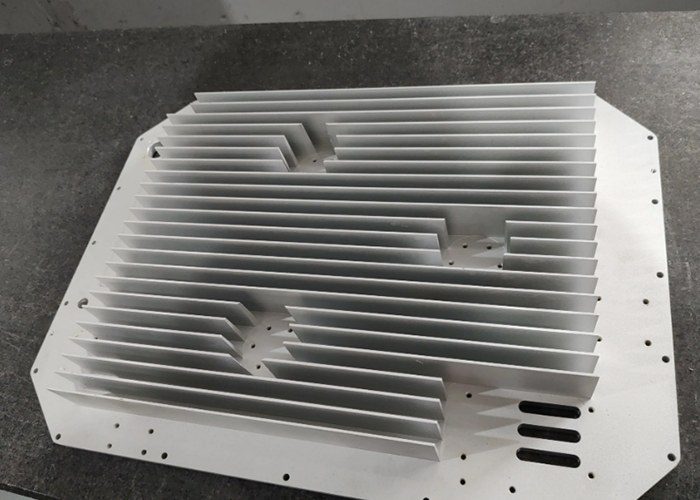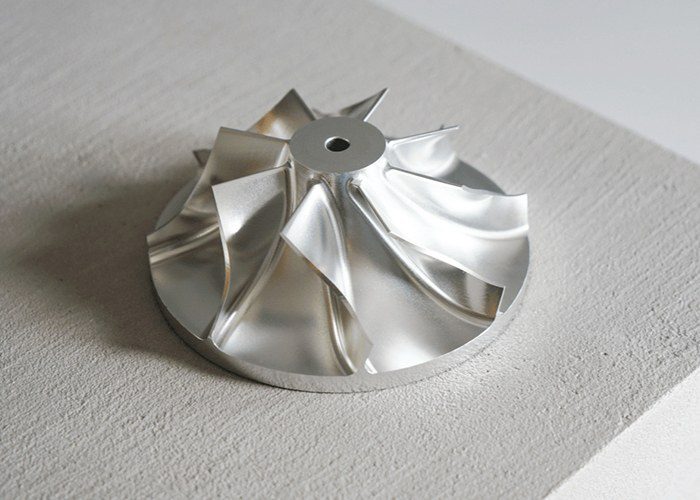
In the vast ecosystem of modern manufacturing, few processes are as foundational—or as demanding—as CNC milling of steel parts. Computer Numerical Control (CNC) milling has transformed raw blocks of alloy into critical components for aerospace, automotive, medical devices, and heavy machinery. Yet, while the concept is simple—subtractive manufacturing guided by digital code—the execution is a complex interplay of metallurgy, tooling physics, thermodynamics, and strategic programming. Milling steel is not merely cutting metal; it is a controlled battle against heat, vibration, and wear, where victory is measured in microns and surface finishes.
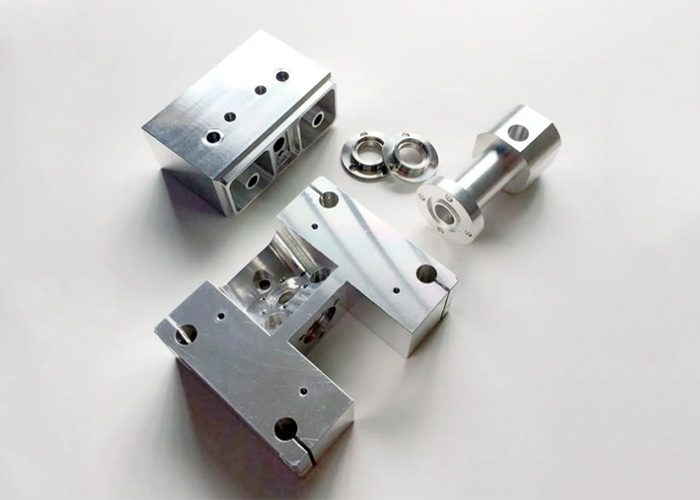
Steel, as a workpiece material, presents a dual nature. On one hand, its strength, toughness, and wear resistance make it indispensable for structural and mechanical applications. On the other, these very properties make it notoriously difficult to machine. Unlike aluminum, which shears easily and dissipates heat rapidly, steel retains thermal energy at the cutting zone, accelerating tool degradation. Furthermore, its high ductility leads to built-up edge (BUE) formation, where workpiece material welds onto the cutter, altering geometry and ruining surface quality. Therefore, successful steel milling begins not at the machine control panel, but in the material selection phase. Grades such as 4140, 4340, and stainless steel 316 each demand tailored strategies; a one-size-fits-all approach guarantees either inefficiency or failure.
The heart of any milling operation is the cutting tool, and for steel, this choice is critical. Carbide tools, particularly those with micro-grain substrates and advanced coatings like TiAlN (Titanium Aluminum Nitride) or AlCrN (Aluminum Chromium Nitride), are the industry standard. These coatings serve as thermal barriers, reflecting heat back into the chip rather than allowing it to penetrate the tool body. Yet, geometry is equally vital. Variable helix and variable pitch end mills have emerged as game-changers; by disrupting harmonic frequencies, they suppress chatter—that resonant vibration that leaves a tell-tale washboard finish on the workpiece. For roughing passes, a large-corner-radius high-feed mill spreads cutting loads over a wider cutting edge, unlocking significantly higher material removal rates. Finishing, conversely, demands sharp-edged tools with multiple flutes to produce pristine surface profiles.
However, even the finest tool will fail without a disciplined approach to cutting parameters. The triumvirate of speed, feed, and depth of cut—often referred to as the “cutting triangle”—must be balanced with mathematical rigor. For steel, the tendency is to err on the side of caution, reducing speeds and feeds to prolong tool life. Paradoxically, this often backfires. Running a carbide tool too slowly reduces chip thickness, causing the tool to rub rather than shear. This friction generates excessive heat through deformation, leading to premature flank wear. Modern machining strategies advocate for “high-efficiency milling” (HEM), which employs light radial depths of cut (around 5-10% of tool diameter) but high axial depths and aggressive feed rates. This methodology maintains a consistent chip load, minimizes thermal shock, and keeps the heat within the evacuated chip—not the tool or the workpiece.
Coolant and chip evacuation are the unsung heroes of steel milling. While through-spindle coolant is a luxury, flood coolant remains the standard. However, its application must be strategic. Inefficient coolant delivery can cause thermal cracking in carbide inserts due to intermittent heating and cooling. For high-speed operations, some machinists even opt for minimum quantity lubrication (MQL) or dry machining with compressed air, arguing that eliminating thermal shock extends tool life more than liquid cooling. Regardless of the medium, the primary objective is chip clearance. Recutting chips—where swarf is dragged back into the cut—is a primary cause of tool breakage and surface scuffing. Effective use of air blast or high-pressure coolant ensures that those blue, spiral chips are evacuated from the cutting zone as swiftly as they are formed.
Beyond the physical cutting, the digital strategy—the CAM (Computer-Aided Manufacturing) program—dictates the success of the operation. Toolpath optimization is paramount. Traditional zig-zag patterns often produce uneven tool engagement, causing sudden spikes in spindle load. Modern adaptive clearing toolpaths maintain a constant tool engagement angle, ensuring that the cutter experiences a uniform radial load throughout the roughing phase. This not only protects the tool but also allows the machine to maintain consistent feed rates, reducing cycle times significantly. Furthermore, the transition between roughing and finishing requires meticulous planning. Leaving a consistent “stock” of 0.2 to 0.5 millimeters for the semi-finish and finish passes ensures that the final cutter engages the material uniformly, preventing deflection that could compromise dimensional accuracy.
Quality control in steel milling is a multi-tiered process. In-process probing systems allow the machine to measure the part during the cycle, compensating for tool wear or thermal expansion. Post-process inspection often involves CMM (Coordinate Measuring Machine) verification, but surface roughness testers and bore gauges are equally essential. A common pitfall in steel machining is work hardening—particularly in austenitic stainless steels—where improper feeds cause the surface layer to harden, making subsequent passes nearly impossible. Thus, machinists must adopt a “constant engagement” philosophy, ensuring that the tool never lingers in the cut without making a chip.
The economic implications of milling steel parts are substantial. The project entails elevated material costs alongside considerable time investments in setup and programming. Scrapping a steel part near the end of a 20-hour cycle is not just a monetary loss; it is a failure of process integrity. This is why many shops are turning to digital twins and simulation software. By simulating the entire machining process virtually, engineers can detect collisions, verify tool paths, and analyze torque demands before the spindle even starts turning.
In conclusion, CNC milling of steel parts is far more than a mechanical operation; it is a discipline that synthesizes material science, mechanical engineering, and digital programming. It requires a respect for the metal’s stubbornness and an appreciation for the cutter’s limitations. As automation and artificial intelligence begin to infiltrate machine shops, the fundamentals remain unchanged: understanding how steel behaves under the cutting edge, managing the heat it generates, and ensuring that every chip removed brings the part closer to its intended destiny. It is a craft perfected through experience, executed with precision, and defined by the relentless pursuit of the perfect surface finish. In the hands of a skilled machinist, the CNC mill becomes not just a machine, but a symphony of controlled force.