In the realm of modern manufacturing, the margin between profitability and loss is often measured in microns and seconds. At the heart of this delicate balance lies a seemingly small but extraordinarily critical component: the CNC turning machining insert. While the CNC lathe itself serves as the backbone of rotational machining, it is the insert—the interchangeable cutting tip—that dictates the efficiency, accuracy, and economic viability of the entire operation. These inserts are not merely consumables; they are sophisticated pieces of engineering that represent the culmination of materials science, geometry optimization, and surface engineering.
To understand the significance of turning inserts, one must first appreciate the hostile environment in which they operate. During a turning operation, the insert is subjected to extreme temperatures that can exceed 1,000 degrees Celsius, immense mechanical stresses, and rapid thermal cycling. The insert must be harder than the workpiece material to cut it, yet tough enough to withstand the impact of interrupted cuts without fracturing. This seemingly paradoxical requirement is addressed through a combination of advanced substrate materials and sophisticated coating technologies.
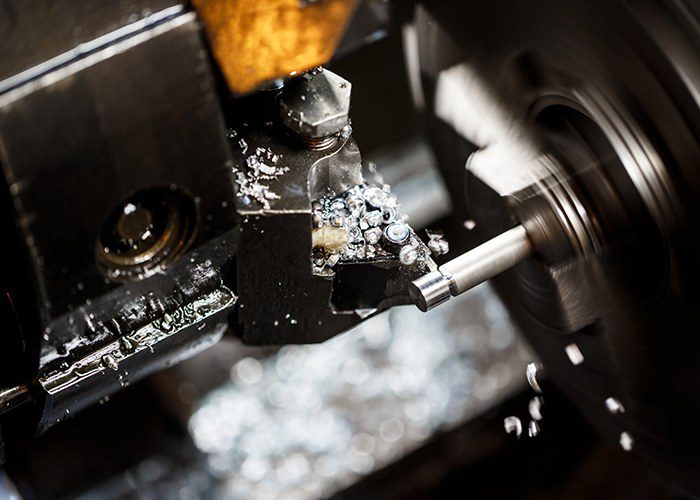
The substrate, or base material, of a typical insert is usually cemented carbide. This composite material comprises tungsten carbide (WC) particles bonded with a metallic binder, typically cobalt. The proportion of cobalt and the size of the carbide grains determine the fundamental properties of the insert. A higher cobalt content increases toughness, making the insert suitable for roughing operations or machining materials with hard skins, such as cast iron. Conversely, a lower cobalt content and finer grain structure yield higher hardness and wear resistance, ideal for finishing operations that demand tight tolerances and superior surface finishes. For more specialized applications, inserts may also utilize ceramics, cubic boron nitride (CBN), or polycrystalline diamond (PCD), each offering unique advantages for machining superalloys, hardened steels, or non-ferrous materials.
However, the substrate alone is rarely sufficient for high-performance machining. Modern CNC turning inserts are almost universally enhanced with multi-layer coatings applied through physical vapor deposition (PVD) or chemical vapor deposition (CVD). These coatings act as a thermal barrier and a chemical shield. For instance, a common coating architecture might include a base layer of titanium nitride (TiN) for adhesion, followed by a layer of aluminum oxide (Al₂O₃) to provide oxidation resistance and thermal insulation, topped with a final layer of titanium carbonitride (TiCN) to reduce friction and crater wear. This microscopic layering allows the insert to cut faster, last longer, and maintain its edge integrity far longer than uncoated tools.
The geometry of the insert is another dimension of its complexity. Unlike a solid tool bit, an insert offers multiple cutting edges; when one edge wears out, the operator simply indexes (rotates) the insert to a fresh edge. This modularity reduces downtime and ensures process consistency. The shape of the insert—whether it is a rhombic 80° (CNMG) for general turning, a triangular (TNMG) for profiling, or a round (RNMG) for heavy roughing—determines the tool’s approach angle and strength. Within these shapes, the chipbreaker geometry is arguably the most critical design feature. A well-designed chipbreaker controls the flow of the chip, breaking it into small, manageable segments. Without effective chip control, long, stringy chips can become tangled around the workpiece or turret, leading to operator safety hazards, surface finish defects, and even machine damage.
The selection process for the correct insert is a complex equation involving the workpiece material, machining operation, and desired outcome. For manufacturers, the choice is guided by standardized ISO classification codes. An insert labeled “CNMG 120408” tells a trained machinist everything they need to know: the shape (C), clearance angle (N), tolerance (M), chipbreaker style (G), size (12), thickness (04), and nose radius (08). The nose radius, in particular, is a critical trade-off. A larger nose radius distributes cutting forces over a wider area, improving tool life and surface finish but increasing radial forces, which can cause chatter in unstable setups. A smaller nose radius reduces cutting forces, allowing for machining of slender parts, but concentrates stress, leading to faster localized wear.
In recent years, the industry has witnessed a paradigm shift toward digital integration and “smart machining.” This has led to the development of inserts designed for high-feed machining and hard-turning. Hard-turning, for example, replaces the traditional grinding process for hardened steel components (above 45 HRC) using CBN inserts. This process eliminates the need for coolant, reduces cycle times by up to 60%, and is significantly more environmentally friendly than grinding.
Furthermore, the rise of Industry 4.0 has pushed tool manufacturers to develop inserts with traceability features, such as embedded QR codes, allowing for real-time monitoring of tool life and performance data. Manufacturers can now analyze when an insert is likely to fail, optimizing tool changes to prevent catastrophic failure and unplanned downtime.
Sustainability is also becoming a driving force in insert development. The push to reduce or eliminate cutting fluids—driven by both environmental regulations and cost savings—has led to the development of advanced coatings and geometries that can withstand dry machining. Additionally, the focus on recyclability is growing. Spent carbide inserts are no longer seen as scrap but as valuable raw materials. Tungsten, a critical raw material classified as such by the European Union and the United States, is expensive and energy-intensive to mine. Consequently, major manufacturers are establishing closed-loop recycling programs to reclaim carbide inserts and repurpose them into new products.
In conclusion, CNC turning machining inserts are far more than simple cutting tools; they are precision-engineered assets that embody the advancements in material science, geometric optimization, and sustainable manufacturing. For the modern machinist or manufacturing engineer, proficiency in selecting the right insert—matching the substrate, coating, and geometry to the specific application—is a critical skill that directly impacts productivity, quality, and profitability. As we move toward autonomous machining and increasingly difficult-to-cut materials become prevalent in aerospace, medical, and automotive industries, the evolution of the humble turning insert will undoubtedly remain at the forefront of manufacturing innovation.