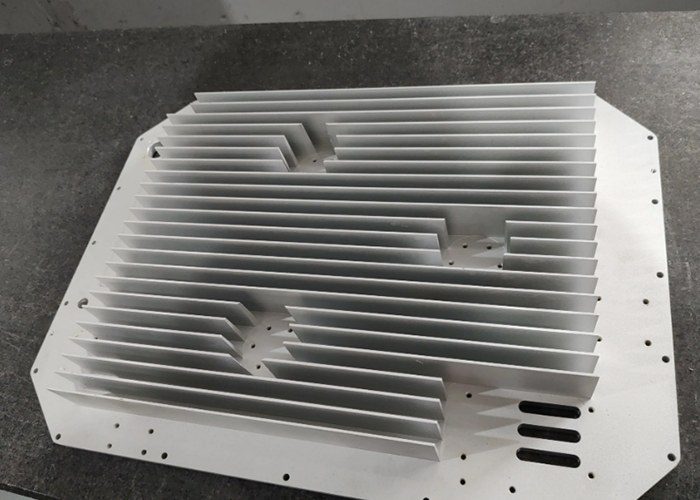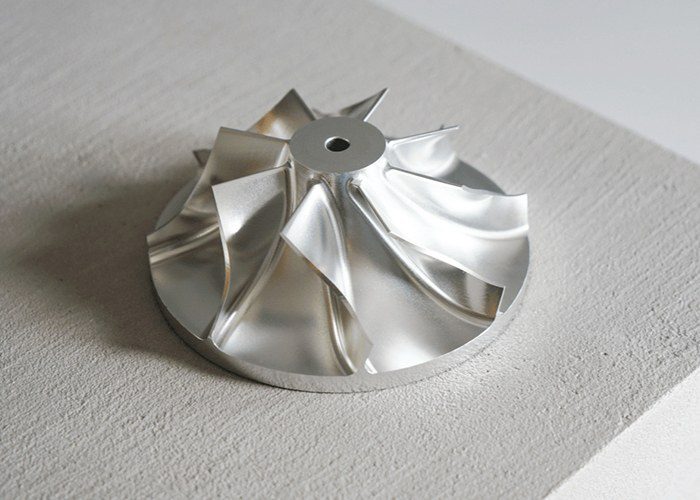
In the world of modern manufacturing, the quest for precision, efficiency, and geometric complexity is unending. As industries from aerospace to medical devices push the boundaries of what is possible, the machinery used to create components must evolve accordingly. While 3-axis machining has long been the industry standard for basic prototyping and production, 4 Axis CNC Milling Parts represent a significant leap forward in manufacturing capability. By introducing a rotational axis to the machining process, 4-axis technology bridges the gap between simple prismatic parts and highly complex geometries, offering a blend of precision and efficiency that is difficult to match.
What is 4 Axis CNC Milling?
To appreciate the value of parts produced via 4-axis milling, it is essential to understand the mechanics behind the process. Traditional 3-axis milling operates on three linear axes: X (left to right), Y (front to back), and Z (up and down). The cutting tool approaches the workpiece from a static vertical orientation. While effective for flat surfaces and simple cavities, this setup often requires multiple manual repositionings of the workpiece to machine different sides.
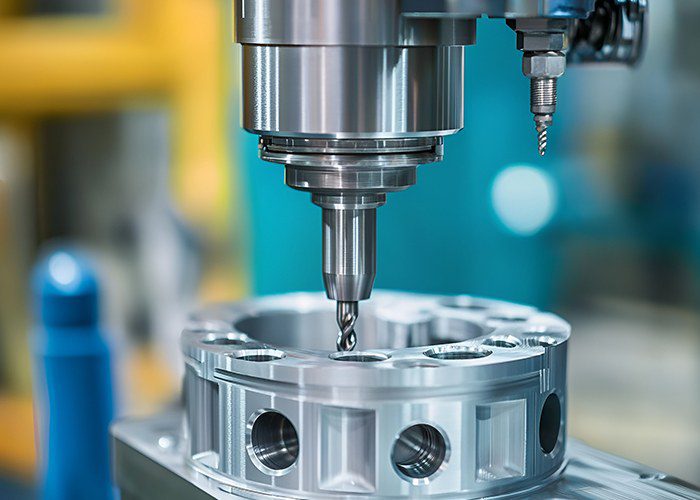
4-axis machining adds a rotational axis, typically designated as the A-axis. This axis rotates around the X-axis, allowing the workpiece to be turned and tilted while the spindle is cutting. There are two primary configurations: indexed (3+1) machining and continuous 4-axis machining. In indexed machining, the part rotates to a specific angle, stops, and then the cutting operation occurs—ideal for drilling holes at precise compound angles or machining features on multiple faces. In continuous 4-axis machining, the part rotates simultaneously with the movement of the cutting tool, allowing for the creation of intricate contours, helical features, and complex curves that would be impossible to achieve on a 3-axis mill.
The Advantages Over Traditional Machining
When manufacturers switch from 3-axis to 4-axis technology for producing parts, the benefits extend far beyond just the ability to cut at an angle.
1. Reduced Setup Time and Human Error
One of the most significant advantages of 4-axis machining is the drastic reduction in fixture setups. A part that requires machining on four sides might require four separate setups on a 3-axis machine. Each setup introduces potential for misalignment, tolerance stacking, and human error. With a 4-axis mill, the operator can machine three or four sides of a part in a single setup. By maintaining a single datum reference throughout the entire process, the positional accuracy between features—such as a hole on the top face aligning perfectly with a slot on the side—is dramatically improved.
2. Increased Geometric Complexity
For engineers designing components for aerospace or fluid dynamics, the ability to machine undercuts, angled features, and complex curves is non-negotiable. 4 Axis CNC Milling Parts often feature helical gears, cam lobes, turbine blades, and intricate port channels. The continuous rotation capability allows the end mill to maintain a tangential relationship with the workpiece surface, resulting in superior surface finishes and tighter tolerances than what could be achieved through repositioning.
3. Longer Tool Life and Better Surface Finishes
In continuous 4-axis machining, the tool can be positioned at an optimal angle relative to the cutting surface. This eliminates the need for excessively long, fragile tools that are prone to chatter. Because the tool can maintain a constant cutting pressure and optimal chip evacuation, tool wear is reduced, and surface finishes are significantly improved. This is particularly critical when working with hardened steels or exotic alloys like Inconel and Titanium, where tool stability is paramount.
Key Applications and Industries
The versatility of 4-axis technology makes it indispensable across a wide spectrum of industries. In the aerospace sector, structural components often require precise angular holes and contoured surfaces that fit within strict weight and safety margins. Hydraulic manifold blocks, landing gear components, and engine mounts frequently rely on 4-axis machining to ensure every port and fastener aligns perfectly without leaks.
The medical industry benefits greatly from the precision of 4-axis milling. Surgical instruments, bone screws, and implantable devices often feature complex geometries with helical threads and polished surfaces that must be biocompatible. The ability to produce these parts in a single operation ensures sterility and consistency.
In automotive racing and motorsports, where every component is optimized for performance, 4-axis milling is used to create intake manifolds, suspension components, and custom drivetrain parts. These parts often require a high strength-to-weight ratio and complex internal passages that are only feasible with multi-axis machining.
Design Considerations for 4 Axis Milling
To maximize the potential of 4-axis manufacturing, designers must adhere to specific best practices. While the process offers more freedom than 3-axis machining, it still has constraints. Undercut management is crucial; designers must ensure that the rotating A-axis has adequate clearance to position the part without colliding with the machine spindle or tool holder.
Furthermore, fixturing in 4-axis work usually involves specialized vises, tailstocks, or custom soft jaws. Because the part is rotating, the center of gravity shifts. A well-designed 4-axis part will have a robust setup strategy, often utilizing the existing geometry of the part to serve as a clamping point that can be machined away in the final operation.
The Cost-Benefit Analysis
A common question among purchasing managers and engineers is whether the investment in 4-axis machining is justified for their specific part runs. While the hourly machine rate for a 4-axis CNC mill is typically higher than that of a 3-axis mill, the total cost of manufacturing is often lower. By consolidating operations, manufacturers reduce the labor costs associated with moving parts between machines, decrease the risk of scrap due to misalignment, and accelerate time-to-market.
For high-volume production, the automation potential of 4-axis machines is also notable. With the ability to run “lights-out” manufacturing—where the machine operates unattended overnight—businesses can maximize throughput without increasing labor costs. For low-volume, high-mix jobs, the flexibility of quick changeovers makes 4-axis machining an agile solution.
Conclusion
4 Axis CNC Milling Parts represent the sweet spot in the machining world. They offer a sophisticated upgrade over the limitations of 3-axis technology without the steep programming complexity and machine cost associated with full 5-axis simultaneous machining. By enabling manufacturers to produce parts with complex angles, superior accuracy, and reduced lead times, 4-axis technology has become a cornerstone of modern precision manufacturing.
Whether it is a titanium aerospace bracket requiring perfect hole alignment, a medical implant demanding a mirror finish, or a custom automotive component with complex geometry, 4-axis milling delivers the precision, efficiency, and reliability that today’s competitive markets demand. As technology continues to advance, the role of 4-axis machining in producing high-quality parts will only continue to grow, solidifying its place as an essential capability for any forward-thinking machine shop.