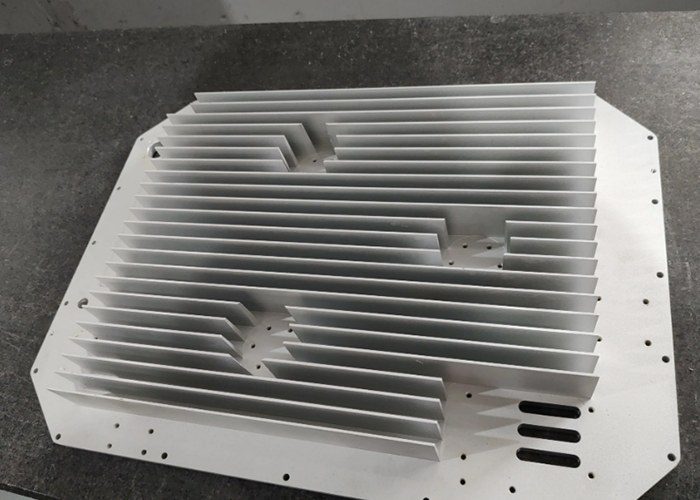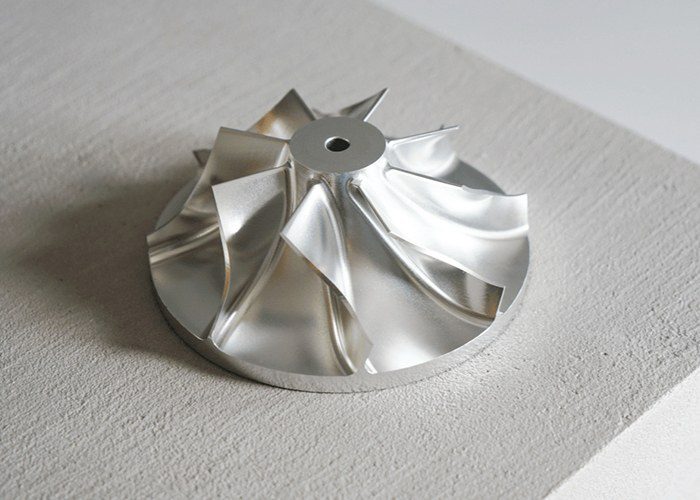
In the ever-evolving landscape of modern manufacturing, precision, efficiency, and repeatability are paramount. Among the myriad of machining processes available, 3 Axis CNC Turning stands out as one of the most fundamental and widely utilized techniques. While 4-axis and 5-axis machining centers often steal the spotlight with their complexity, the 3-axis CNC lathe remains the unsung hero of the production floor—a versatile workhorse capable of producing everything from simple bushings to complex aerospace components with remarkable accuracy.
Understanding the Basics
At its core, 3 Axis CNC Turning refers to the process of using a computer-controlled lathe with three primary axes of motion to shape a rotating workpiece. Unlike milling, where the cutting tool rotates against a stationary workpiece, turning involves spinning the workpiece at high speeds while a stationary cutting tool traverses along its surface to remove material.
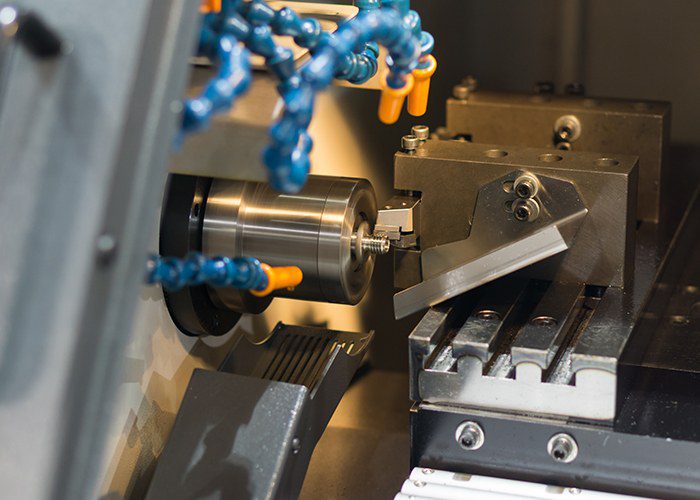
In a standard 3-axis turning center, the three axes are typically defined as:
- X-Axis: Controls the radial movement of the cutting tool, determining the diameter of the cut.
- Z-Axis: Governs the longitudinal movement along the length of the workpiece, allowing for the creation of contours, shoulders, and lengths.
- C-Axis: An optional but increasingly common addition, the C-axis provides controlled rotation of the spindle, enabling the machine to perform milling, drilling, and tapping operations without removing the workpiece from the chuck.
However, it is important to clarify that in traditional “2-axis” turning, only X and Z are present. The designation “3-axis” often includes the C-axis or, in some configurations, a Y-axis or live tooling capabilities. For the purpose of this discussion, we will focus on the standard configuration where the machine utilizes X, Z, and a programmable C-axis to perform both turning and limited milling operations in a single setup.
The Mechanics of Precision
The true strength of 3-axis CNC turning lies in its ability to produce parts with exceptional concentricity and surface finish. Because the workpiece remains clamped in the spindle throughout the operation, there is no loss of registration. This is critical for components where internal and external diameters must be perfectly aligned.
Modern 3-axis CNC lathes are equipped with live tooling, which allows driven tools (such as end mills or drills) to be mounted on the turret. Combined with the C-axis, this transforms the lathe into a hybrid machining center. For instance, a part can be turned to its final outer diameter, then a hexagon can be milled on the end, and cross-holes drilled—all without ever removing the part from the machine. This “done-in-one” capability drastically reduces cycle times and eliminates the errors associated with multiple setups.
Key Advantages
1. Unmatched Efficiency for Cylindrical Parts
For components that are predominantly rotational—such as shafts, pins, fittings, and valve bodies—a 3-axis turning center is significantly faster than a milling machine. The continuous cutting action allows for high material removal rates (MRR), making it ideal for both prototyping and high-volume production.
2. Superior Surface Finishes
The physics of turning naturally lend themselves to excellent surface finishes. Because the cutting is continuous (as opposed to the interrupted cuts common in milling), the tool experiences consistent engagement, resulting in smoother surfaces and longer tool life. Many turned parts can achieve a surface finish of 32 microinches or better without secondary grinding operations.
3. Cost-Effectiveness
Compared to multi-tasking machines (MTMs) or 5-axis machining centers, 3-axis CNC lathes represent a lower capital investment. They are also generally easier to program and maintain. For the vast majority of round parts, a 3-axis lathe is the most economical solution, balancing capability against operating cost.
4. Reduced Setup Times
Modern CNC controls, combined with quick-change tooling systems, allow for rapid changeovers. The ability to store tool offsets and part programs means that a shop can transition from producing one family of parts to another in minutes, supporting just-in-time (JIT) manufacturing strategies.
Applications Across Industries
The versatility of 3-axis CNC turning makes it indispensable across virtually every manufacturing sector.
- Aerospace: Components such as hydraulic fittings, landing gear pins, and engine mounts require the tight tolerances and material integrity that turning provides. Aerospace often uses difficult-to-machine materials like Inconel and Titanium, where the rigidity of a CNC lathe is essential.
- Automotive: From transmission shafts to brake rotors and engine pistons, the automotive industry relies heavily on turning for high-volume production. The repeatability of CNC turning ensures that millions of parts meet the same strict specifications.
- Medical: Surgical instruments, bone screws, and implantable components often require intricate geometries and biocompatible materials like stainless steel and titanium. The superior surface finish from turning reduces the risk of bacterial adhesion and improves biocompatibility.
- Oil & Gas: Valves, connectors, and drill components must withstand extreme pressures and corrosive environments. 3-axis turning allows for the creation of thick-walled, durable components with precise threading capabilities.
Programming and Tooling Considerations
Successful 3-axis CNC turning is as much about strategy as it is about machinery. CAM (Computer-Aided Manufacturing) software has simplified the programming of complex turning operations. Modern CAM systems allow programmers to simulate the entire machining process, detecting collisions and optimizing toolpaths before a single chip is cut.
Tooling selection is equally critical. The geometry of the insert must match the material being cut. For example, a sharp, positive rake angle is ideal for aluminum and plastics to prevent built-up edge, while a more robust, negative rake insert is necessary for the high cutting forces associated with hardened steels and superalloys.
Chip management is another often-overlooked aspect. In turning, chips are produced continuously. Without proper chip breakers built into the tooling or high-pressure coolant systems, “bird’s nests” of stringy chips can entangle the tooling, damage the workpiece, or pose safety risks. Modern 3-axis lathes are designed with chip conveyors and high-pressure coolant to evacuate chips efficiently.
Limitations and the Future
While 3-axis turning is incredibly powerful, it does have limitations. It is primarily optimized for parts that are axisymmetric. For parts requiring complex undercuts, angled features, or milling on non-cylindrical surfaces, a 3-axis lathe may struggle without the addition of a Y-axis or secondary operations.
However, the technology continues to evolve. The integration of Industry 4.0 principles is transforming 3-axis turning centers into smart manufacturing nodes. Modern machines are equipped with sensors that monitor spindle load, vibration, and tool wear in real-time. This data allows for predictive maintenance and adaptive control, ensuring that the machine operates at peak efficiency without human intervention.
Furthermore, the rise of automation—including robotic part loaders and bar feeders—allows 3-axis lathes to run unattended for extended periods. A single operator can now oversee a “lights-out” manufacturing cell consisting of several turning centers, dramatically reducing labor costs per part.
Conclusion
3 Axis CNC Turning is far from a legacy technology; it is a dynamic, essential process that continues to adapt to the demands of modern industry. Its combination of speed, precision, and reliability makes it the first choice for engineers when designing rotational components. By leveraging advanced tooling, sophisticated CAM software, and smart automation, manufacturers continue to push the boundaries of what is possible on a 3-axis lathe.
Whether producing a simple washer or a complex aerospace coupling, the principles of 3-axis turning remain the same: spin the work, advance the tool, and remove material with surgical precision. In a world increasingly focused on complexity, there is still immense power in mastering the fundamentals—and 3-axis CNC turning is the ultimate expression of that mastery.