The bicycle has come a long way from its humble roots as a utilitarian way to get from A to B. Today’s high-performance bicycles are marvels of engineering, demanding components that are lightweight, durable, and manufactured to exacting tolerances. At the core of this manufacturing revolution lies CNC turning—a precision machining process that has fundamentally transformed how bicycle parts are designed and produced.
Understanding CNC Turning
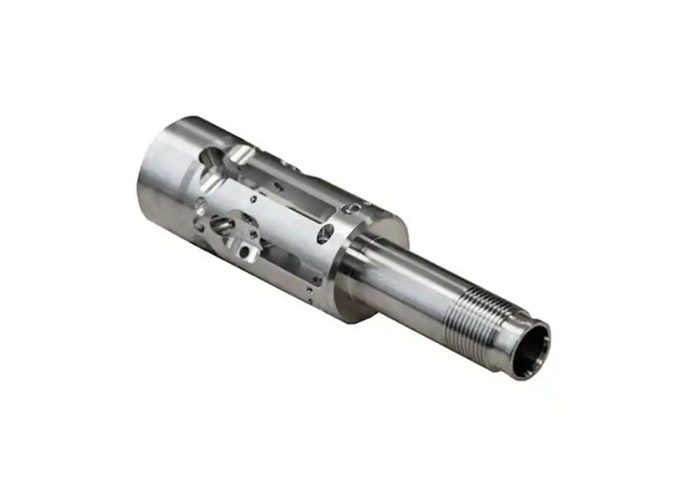
CNC turning is a subtractive manufacturing process that uses computer numerical control to automate the turning of materials. In this process, a workpiece rotates while a stationary cutting tool removes material to achieve the desired shape and dimensions. The process encompasses several machining techniques, including facing, drilling, and threading, each essential for creating the specific shapes and functional features required in bicycle components. What sets CNC turning apart from conventional manual machining is its extraordinary precision and repeatability, ensuring that each part meets strict tolerances consistently.
Critical Bicycle Components Produced by CNC Turning
CNC turning is integral to manufacturing a wide array of bicycle components. Perhaps most notably, it is used in the production of chainrings—the front gear sets that transmit power from the pedals to the drivetrain. Precision CNC turning combined with gear hobbing enables manufacturers to machine teeth with exact tooth profiles, modules, and meshing characteristics that meet demanding design requirements. Similarly, bicycle flywheels (rear gear sets) rely on precision CNC turning to ensure exceptional wear resistance and power transmission efficiency under high-speed and frequent shifting conditions.
Beyond drivetrain components, CNC turning produces axles and spindles for hubs and bottom brackets, threaded components such as pedal spindles and stem bolts, and precision fasteners like chainring nuts. The process is also essential for creating the axle bore in pedal bodies, where turning establishes the critical datum—the reference geometry that every subsequent milling operation indexes against. In high-end applications, axle bores are held to tolerances as tight as ±0.005 mm, a precision that determines whether a spindle slides in with the correct pre-load or introduces undesirable play.
Material Selection and Versatility
The choice of material is paramount in bicycle part manufacturing, and CNC turning accommodates a wide range of high-performance materials. Aluminum alloys—particularly 6061 and 7075—are among the most commonly used due to their excellent strength-to-weight ratio and machinability. 6061 aluminum is widely used for sport-grade lightweight components, while 7075 aluminum, with its significantly higher strength, is better suited for high-load and off-road applications. Titanium alloys offer outstanding fatigue resistance and corrosion resistance, making them ideal for race-level custom components, especially in outdoor environments where long-term reliability is critical. Stainless steel and chromoly steel are also frequently employed for applications requiring exceptional durability.
Advantages Driving Industry Adoption
The advantages of CNC turning for bicycle parts manufacturing are compelling and multifaceted. High precision and repeatability are perhaps the most significant benefits, enabling manufacturers to produce complex geometries with tight tolerances that would be difficult or impossible to achieve with traditional methods. This precision directly translates to better-fitting components, improved performance, and enhanced safety.
CNC turning also offers reduced production time and lower labor costs compared to conventional machining. The automated nature of the process minimizes material waste and shortens lead times, making it economically viable for both small-batch custom production and high-volume manufacturing. The ability to easily customize designs—whether for unique frame geometries, specialized components, or personalized rider preferences—has made CNC turning indispensable for brands catering to discerning cyclists who demand parts tailored to their specific riding styles.
The Manufacturing Workflow: Precision in Practice
A typical CNC turning workflow for bicycle components follows a carefully sequenced process. It begins with design and programming, where CAD software is used to create detailed specifications, determining parameters such as dimensions, tooth counts, modules, and pressure angles. Material preparation follows, with high-quality alloys selected to ensure stability and durability under load. The material is then securely clamped and aligned on the CNC lathe, ensuring axial alignment for machining precision. The turning operation itself may include rough machining to remove excess material, followed by finish machining with coated carbide tools to achieve final dimensions and surface quality. Where required, heat treatment processes such as quenching or tempering enhance surface hardness and core strength. Finally, rigorous inspection using coordinate measuring machines and other precision instruments verifies that each part meets the required specifications.
Surface Finishing and Post-Processing
Many CNC-turned bicycle parts undergo additional surface treatments to enhance performance and aesthetics. Anodizing is particularly common for aluminum components, an electrochemical process that converts the metal surface into a decorative, durable, and corrosion-resistant finish. This process increases the thickness of the natural oxide layer, providing enhanced protection against wear and corrosion while also allowing for a variety of color finishes that add visual appeal. Other post-processing techniques include deburring, bead blasting, polishing, and heat treatment to relieve stress and improve mechanical properties.
The Future of CNC Turning in Bicycle Manufacturing
As the bicycle industry continues to evolve, the role of CNC turning is expanding. The convergence of three key trends—rising e-bike adoption, increasing pressure for aerodynamic weight reduction, and a shift toward individualized customization—is catalyzing significant breakthroughs in CNC turning processes. Advanced multi-axis machines, including 4-axis and 5-axis CNC turning centers, along with turn-mill compound machines that combine rotating and linear machining in a single setup, are pushing the boundaries of what is possible. These technologies enable higher precision, greater efficiency, and unprecedented design freedom, allowing manufacturers to produce components that were once considered impossible.
From the chainring that transfers power to the pedal spindle that supports a rider’s weight, CNC turning stands as a cornerstone of modern bicycle manufacturing. It is a process that combines the art of precision engineering with the science of computer-controlled automation, delivering components that are lighter, stronger, and more reliable than ever before. As cycling continues to grow as both a sport and a sustainable mode of transportation, CNC turning will undoubtedly remain at the forefront of innovation, turning raw materials into the precision parts that keep the world rolling.