
In the demanding landscape of industrial manufacturing, few materials offer the unique combination of strength, stability, and cost-effectiveness found in cast iron. When this venerable material meets the precision of Computer Numerical Control (CNC) machining, the result is a class of components that form the backbone of modern engineering—from automotive powertrains to heavy machinery bases. However, machining cast iron presents considerable difficulties. It requires a deep understanding of the material’s metallurgy, specialized tooling, and carefully optimized processes to transform a raw casting into a high-precision, ready-to-assemble part.
Understanding the Cast Iron Family
Cast iron is not a single material but a family of iron-carbon alloys containing more than two percent carbon, often with additional elements like silicon, chromium, or nickel to enhance its properties. The primary types used in CNC machining each present distinct characteristics:
- Gray Cast Iron is the most common, known for its excellent vibration damping and thermal conductivity. The graphite flakes within its structure act as a natural lubricant during machining, contributing to good machinability. This makes it ideal for engine blocks, machine bases, and pump housings.
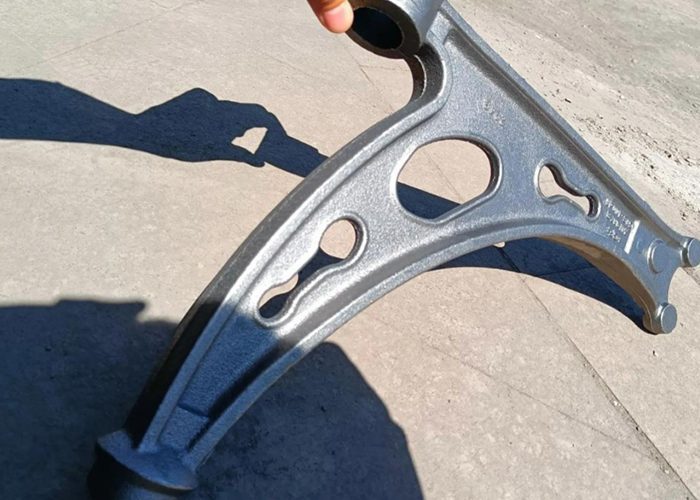
- Ductile (Nodular) Cast Iron features graphite in spherical nodules, imparting significantly higher strength, toughness, and ductility compared to gray iron. This makes it suitable for demanding applications like crankshafts, gears, and suspension components.
- Malleable Cast Iron is produced through heat treatment of white cast iron, offering a good balance of toughness and ductility for thin-walled components and pipe fittings.
- Compacted Graphite Iron (CGI) is an advanced variant gaining popularity in high-performance engine blocks, offering properties that bridge the gap between gray and ductile iron.
The Challenges of Machining Cast Iron
While cast iron offers many benefits, it poses significant challenges to the machining process. The material is inherently brittle, meaning further machining is possible only through stock removal. Perhaps the most persistent issue is abrasive tool wear. Castings often contain sand inclusions, casting skin, blowholes, and other surface irregularities from the molding process that can severely damage cutting tools. Nodular cast iron, in particular, is known to cause significant tool wear, outpacing other cast iron varieties in machining difficulty. Furthermore, differences in machinability exist between flake graphite and nodular graphite irons, requiring tailored approaches for each.
Tooling and Process Parameters: The Keys to Success
Success in CNC machining cast iron hinges on selecting the right tools and parameters. Carbide cutting tools are the industry standard, offering the hardness and wear resistance needed to withstand the abrasive nature of the material. For high-speed, high-precision applications, Cubic Boron Nitride (CBN) inserts are increasingly popular, enabling cutting speeds two to five times higher than cemented carbide.
Critical process parameters must be carefully optimized:
- Cutting Speed: Typically ranges from 150 to 300 m/min, depending on the cast iron grade and tooling.
- Feed Rate: Often set between 0.1 and 0.3 mm/rev, balancing material removal rate with surface quality.
- Depth of Cut: Varies based on whether roughing or finishing, with finishing passes often as shallow as 0.5 mm.
Advanced techniques, such as using mixed cutting tools with coarse and wiper inserts, can improve surface quality while managing tool wear. The use of five-axis CNC machines further enhances capability, allowing complex geometries to be machined in a single setup with tighter tolerances and superior surface finishes.
Applications Across Industries
The combination of cast iron’s properties and CNC precision makes these components indispensable across numerous sectors. In the automotive industry, CNC-machined cast iron parts include engine blocks, cylinder heads, brake calipers, transmission housings, and steering components. The heavy machinery sector relies on cast iron for machine bases, gearboxes, and pump housings that benefit from the material’s vibration absorption and stability. Other applications span rail technology, agriculture, aerospace, and power generation.
Advantages and Future Outlook
CNC machining unlocks the full potential of cast iron. The process delivers complex geometries, high precision, and uniform quality that would be impossible to achieve through casting alone. This yields components that lower assembly risk, minimize rework, and guarantee reliable performance at the product level. Cast iron’s inherent advantages—excellent damping capacity, high compressive strength, good wear resistance, and thermal stability—are fully realized when paired with advanced CNC technology. Moreover, cast iron remains a cost-effective option compared to many alloy steels, providing an excellent balance of properties at a lower cost.
In conclusion, CNC machining cast iron parts is a sophisticated endeavor that blends material science, precision engineering, and process optimization. As industries continue to demand higher performance and tighter tolerances, the synergy between cast iron’s robust properties and CNC’s precision will undoubtedly remain a cornerstone of modern manufacturing.


