
In the ever-evolving world of modern manufacturing, CNC (Computer Numerical Control) turning has emerged as a cornerstone technology for producing high-precision cylindrical components. Among the various materials processed on CNC lathes, aluminum stands out as one of the most versatile and widely used. The combination of CNC turning and aluminum offers a unique synergy of speed, accuracy, and cost-effectiveness, making it indispensable across industries ranging from aerospace to consumer electronics.
What is CNC Turning?
CNC turning is a subtractive machining process in which a cutting tool removes material from a rotating workpiece. Unlike CNC milling, where the tool spins and the workpiece remains stationary or moves linearly, turning rotates the workpiece at high speeds while a stationary or moving cutting tool shapes it. The result is symmetric parts such as shafts, bushings, connectors, and housings. Modern CNC lathes can perform multiple operations, including facing, threading, grooving, and boring, all with micron-level precision.
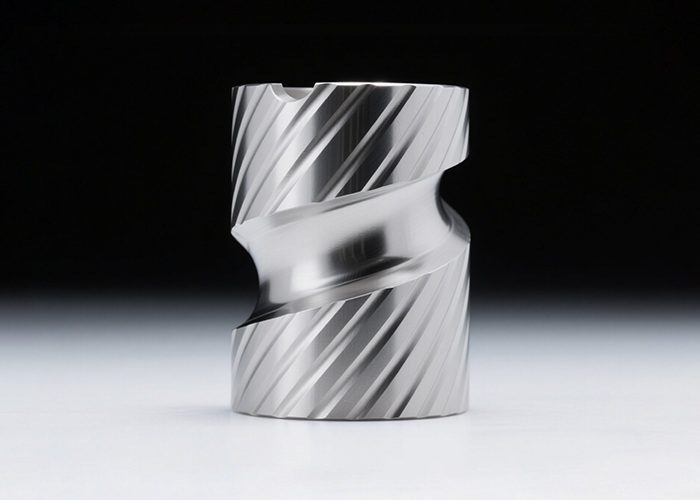
Why Aluminum?
Aluminum is a preferred material for CNC turning due to its remarkable properties. First, it is lightweight, with a density roughly one-third that of steel. This makes aluminum parts ideal for applications where weight reduction is critical, such as in aircraft components and automotive parts. Second, aluminum exhibits excellent machinability. It cuts easily, produces manageable chips, and allows for high cutting speeds without excessive tool wear. This translates to shorter cycle times and lower production costs. Third, aluminum naturally forms a protective oxide layer that provides corrosion resistance, eliminating the need for additional coatings in many environments. Lastly, aluminum can be anodized, painted, or polished to achieve various aesthetic and functional finishes, further expanding its utility.
The CNC Turning Process for Aluminum Parts
Producing high-quality CNC turned aluminum parts involves several carefully controlled stages. It begins with CAD (Computer-Aided Design) modeling, where the part geometry is defined. The CAD file is then converted into CAM (Computer-Aided Manufacturing) instructions that guide the lathe’s movements. The operator selects the appropriate aluminum grade – common choices include 6061 (general purpose, good weldability), 7075 (high strength, aerospace grade), and 2024 (excellent fatigue resistance). The aluminum bar stock is loaded into the lathe’s spindle, and the machine is programmed for toolpaths, spindle speeds, feed rates, and coolant application.
During production, the cutting tool engages the rotating aluminum workpiece. Due to aluminum’s softness relative to steel, carbide or polycrystalline diamond (PCD) tools are often used to maintain sharp edges and surface finish. Coolant is frequently applied to manage heat, as aluminum has a high thermal expansion coefficient; excessive heat can cause dimensional inaccuracies. After roughing cuts remove the bulk of material, finishing passes achieve tight tolerances, often within ±0.005 mm. Secondary operations such as drilling cross-holes, milling flats, or threading may follow on live-tooling lathes or separate machines.
Key Advantages of CNC Turning Aluminum Parts
1. Speed and Efficiency: Aluminum’s low cutting forces allow for spindle speeds up to 10,000 RPM or more, dramatically reducing cycle times compared to steel or titanium.
2. Excellent Surface Finish: With proper tooling and parameters, turned aluminum parts can achieve mirror-like finishes, often eliminating the need for post-machining polishing.
3. Dimensional Stability: Modern CNC lathes, combined with aluminum’s consistent behavior, yield parts that are true to design specifications even in high-volume production runs.
4. Cost-Effectiveness: Aluminum is less expensive than many engineering metals, and its machinability reduces tool wear and energy consumption. Scrap aluminum chips are also highly recyclable, contributing to sustainability.
Applications Across Industries
CNC turned aluminum parts are ubiquitous. In the aerospace industry, they appear as hydraulic fittings, sensor housings, and structural components where every gram counts. Automotive applications include transmission shafts, brake system components, and lightweight pulleys. In medical devices, turned aluminum parts are found in surgical instruments, imaging equipment frames, and prosthetic joints. Consumer electronics rely on aluminum turning for smartphone camera rings, laptop hinge barrels, and audio connector housings. Even the robotics and defense sectors use turned aluminum for drone components, actuator bodies, and optical mounts.
Challenges and Best Practices
Despite its advantages, machining aluminum is not without challenges. The material’s ductility can lead to built-up edge (BUE) on cutting tools, causing poor surface finish. This is mitigated by using sharp, polished tools and adequate coolant. Another issue is chip control; long, stringy chips can wrap around the workpiece or tool. Chip breakers on inserts and high-pressure coolant systems help address this. Additionally, aluminum’s high thermal expansion means that temperature control in the machining environment is crucial for maintaining tolerances. Best practices include using air or mist coolant for semi-finishing, employing diamond-like carbon (DLC) coated tools for abrasive aluminum alloys, and regularly calibrating the CNC machine.
Future Trends
The demand for CNC turned aluminum parts continues to grow, driven by trends like electric vehicles (which require lightweight thermal management components) and miniaturized electronics. Advances in automation, such as robotic part loading and in-process inspection, are further improving productivity. Additionally, the rise of hybrid manufacturing – combining additive and subtractive methods – may soon allow turned aluminum parts with complex internal geometries previously impossible to achieve.
Conclusion
CNC turning of aluminum parts represents a perfect marriage of material science and precision engineering. Aluminum offers machinability, strength-to-weight ratio, and corrosion resistance, while CNC turning provides unmatched accuracy, repeatability, and efficiency. From the smallest watch component to critical aerospace fittings, turned aluminum parts enable countless technologies that define modern life. As manufacturing continues to evolve, the role of CNC turning for aluminum will only become more central, driving innovation in every sector that demands high-performance, lightweight, and cost-effective components.
Whether you are an engineer specifying parts, a machinist optimizing processes, or a buyer sourcing components, understanding the nuances of CNC turned aluminum parts is essential for success in today’s competitive industrial landscape.


