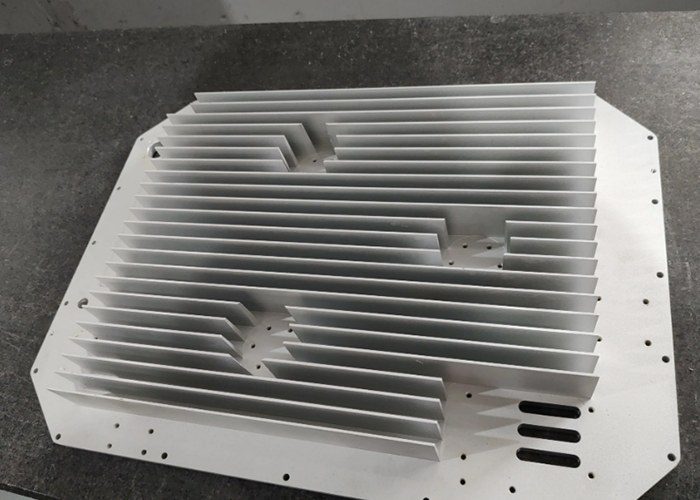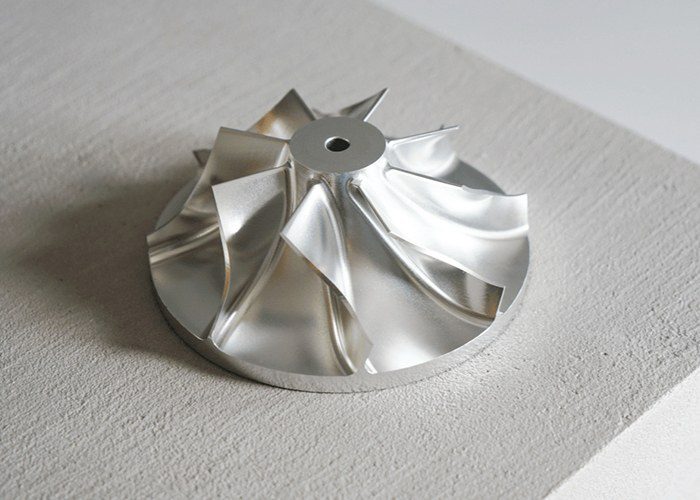
In the landscape of modern manufacturing, there is an unseen architect responsible for the intricate metal components of a jet engine, the durable enclosures of medical devices, and the precision parts in your automobile. This architect is the CNC Processing Service. Far from being a simple industrial utility, CNC (Computer Numerical Control) machining is the sophisticated bridge between digital imagination and physical reality. For businesses looking to innovate, scaling from a sketch on a screen to a tangible product requires a partner who doesn’t just cut material, but guarantees precision, speed, and reliability.
The Core Competencies of Precision
At its heart, a professional CNC processing service transforms raw blocks of metal or plastic into high-tolerance finished parts through a subtractive manufacturing process. Unlike manual machining, which relies on the steady hand of an operator, CNC machining relies on code. A digital 3D model is converted into a set of instructions (G-code) that directs tools with micron-level accuracy.
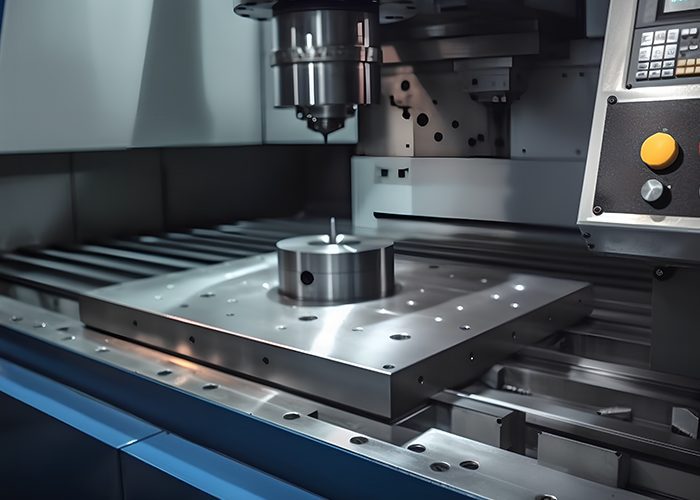
The true value of these services lies in their multifaceted capabilities. Modern providers utilize a vast arsenal of equipment, including 3-axis, 4-axis, and 5-axis machining centers. A 5-axis machine, for instance, can approach a part from virtually any direction in a single setup, drastically reducing lead times and increasing accuracy for complex geometries found in aerospace and defense applications. This is complemented by CNC turning centers for cylindrical parts, and specialized techniques like Wire EDM (Electrical Discharge Machining) for ultra-hard materials and sharp internal corners.
A Symphony of Materials and Finishes
One of the defining characteristics of a high-quality CNC processing service is its versatility in materials. The best providers act as material scientists as much as machinists. They are proficient with a wide spectrum of metals, from common aluminum alloys like 6061 and 7075 for lightweight structures, to stainless steel (304, 316) for corrosion resistance, and high-performance alloys like Titanium (Grade 5) and Inconel for extreme environments.
On the plastic side, engineering-grade materials such as ABS, PEEK, Polycarbonate, and Acetal (POM) are machined to create everything from food-safe components to high-strength insulators. However, the process doesn’t end when the cutting stops. The sophistication of a full-service provider is evident in their post-processing options. Surface treatments such as anodizing for aluminum, passivation for stainless steel, powder coating, and plating ensure that parts not only function perfectly but also withstand environmental wear and meet aesthetic requirements.
Quality Assurance and Speed to Market
In precision industries, a measurement error of 0.001 inches can mean the difference between a perfectly sealed housing and a catastrophic failure. This is why reputable CNC processing services invest heavily in quality control ecosystems. Beyond the machines themselves, they employ state-of-the-art inspection equipment—such as CMM (Coordinate Measuring Machines), optical comparators, and surface roughness testers—to validate every dimension. Adherence to standards like ISO 9001:2015 and AS9100 (for aerospace) is not just a certificate on the wall; it is a promise of traceability and consistency.
Furthermore, the agility of these services is vital for product development. Prototyping, once a bottleneck, is now a specialty. A CNC processing service can produce functional prototypes in days rather than weeks, using the exact materials intended for production. This allows engineers to conduct real-world stress tests and iterate designs rapidly, compressing the time-to-market significantly.
The Future: Automation and Intelligence
As we move further into 2026, the definition of a CNC processing service is evolving into something more dynamic. The industry is currently being reshaped by five major trends: the mainstreaming of AI, the rise of digital twins, hybrid manufacturing, sustainability, and advanced automation.
AI is moving from experimental to integral, with algorithms now adjusting feeds and speeds in real-time based on sensor feedback to optimize tool life and surface finish. Digital twin technology allows manufacturers to simulate the entire machining process virtually, catching errors before a single chip is cut. The goal for many providers is “lights-out manufacturing”—fully automated cells, tended by robots, that can run 24/7 with minimal human intervention. This shift allows human expertise to focus on complex problem-solving and process optimization rather than repetitive manual tasks.
Conclusion
Choosing a CNC processing service is more than selecting a vendor; it is selecting a strategic partner in innovation. Whether you need a single intricate prototype or a high-volume production run, the right service provider offers a synergy of advanced machinery, material expertise, and stringent quality control. In a world that demands perfection at speed, these services remain the silent, steadfast force turning the gears of progress.