In the modern landscape of manufacturing and product design, the demand for components that are simultaneously lightweight, durable, and precise has never been higher. At the intersection of these requirements lies a material and process combination that has become the gold standard across countless industries: CNC machined aluminium parts. Computer Numerical Control (CNC) machining, when applied to aluminium alloys, offers an unparalleled blend of speed, accuracy, and mechanical properties, making it the go-to solution for everything from aerospace components to consumer electronics.
The Material of Choice: Why Aluminium?
Aluminium is not a single material but a family of alloys, each tailored for specific applications. Its popularity in CNC machining stems from a unique set of characteristics. First and foremost is its exceptional strength-to-weight ratio. Aluminium is roughly one-third the density of steel, yet certain alloys, such as 7075, can achieve strengths comparable to mild steel. This makes it indispensable in industries where every gram counts, such as aerospace and automotive.
Secondly, aluminium possesses natural corrosion resistance due to the formation of a protective oxide layer. This ensures longevity and reliability in harsh environments. Furthermore, it exhibits excellent thermal and electrical conductivity, good ductility, and is fully recyclable, aligning with the growing global emphasis on sustainable manufacturing. From a machining perspective, aluminium is considered “free-machining,” meaning it allows for high cutting speeds, excellent surface finishes, and minimal tool wear compared to harder metals like stainless steel or titanium. This translates directly to faster production times and lower costs.
The CNC Machining Process
CNC machining is a subtractive manufacturing process where computer-controlled machine tools remove material from a solid block (or billet) to create a precisely defined part. The journey begins with a digital 3D model, typically created using CAD (Computer-Aided Design) software. This model is then converted into a series of commands (G-code) that dictate the movement of the milling machine or lathe.
For aluminium parts, the process can involve several operations:
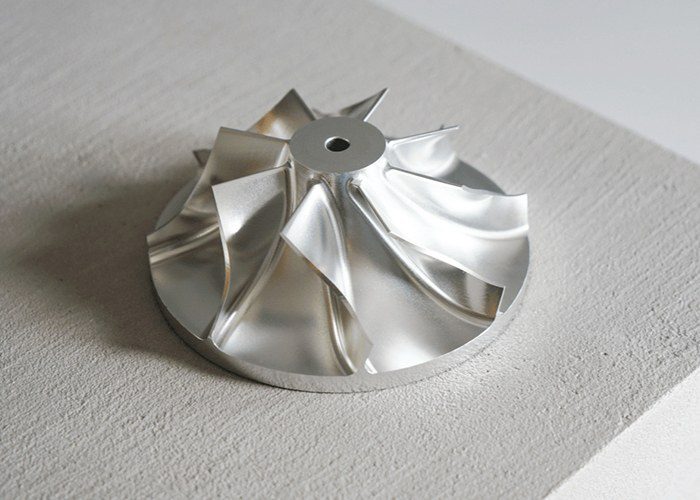
- Milling: Using rotary cutters to remove material from the workpiece. 3-axis, 4-axis, and 5-axis CNC mills can create complex geometries with undercuts and intricate details.
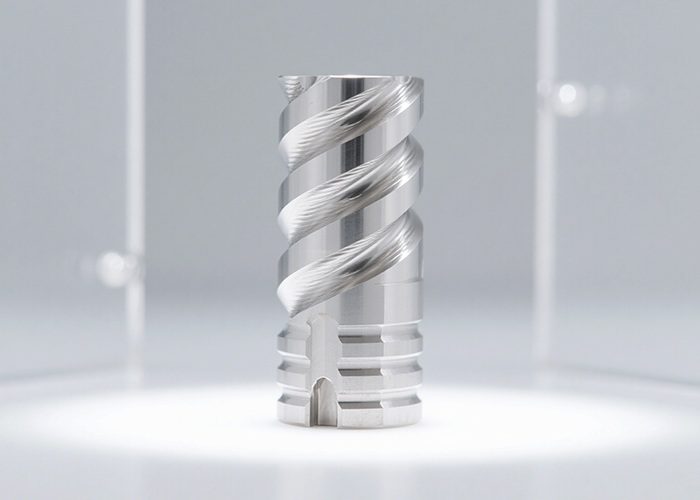
- Turning: Performed on a CNC lathe, this process rotates the aluminium billet while a stationary cutting tool shapes it, creating perfectly cylindrical features.
- Drilling and Tapping: Precisely positioned holes are drilled and threaded (tapped) to accommodate fasteners.
The precision of this process is remarkable. Tolerances as tight as ±0.025 mm (or ±0.001 inches) are routinely achievable, ensuring that parts are interchangeable and fit perfectly within larger assemblies.
Common Aluminium Alloys in CNC Machining
Selecting the right alloy is critical to the part’s performance. Some of the most commonly used grades include:
- Aluminium 6061: Often considered the “jack-of-all-trades,” 6061 offers good mechanical properties, excellent weldability, and great corrosion resistance. It is the most cost-effective and widely used alloy for general-purpose parts, prototypes, and structural components.
- Aluminium 7075: Known for its high strength, 7075 is alloyed with zinc. It is frequently used in highly stressed aerospace and automotive applications, such as gears, shafts, and fuselage frames. It is more difficult to machine than 6061 and is generally more expensive.
- Aluminium 2024: A copper-based alloy that offers high strength and good fatigue resistance. It is commonly found in aircraft structures and wing skins. However, it has lower corrosion resistance than 6061.
- Aluminium 6082: The European equivalent of 6061, often used in high-stress applications like cranes and bridges.
Applications Across Industries
The versatility of CNC machined aluminium parts means they are found virtually everywhere.
- Aerospace: The industry demands zero failure. CNC machined aluminium is used for bulkheads, wing ribs, landing gear components, and intricate brackets. The ability to create complex, lightweight structures from a single block of metal ensures structural integrity.
- Automotive: From engine pistons and cylinder heads to custom suspension components and transmission housings, aluminium helps reduce vehicle weight, improving fuel efficiency and performance. The aftermarket industry also relies extensively on CNC-machined aluminum for components like custom intake manifolds, turbocharger piping, and decorative trim.
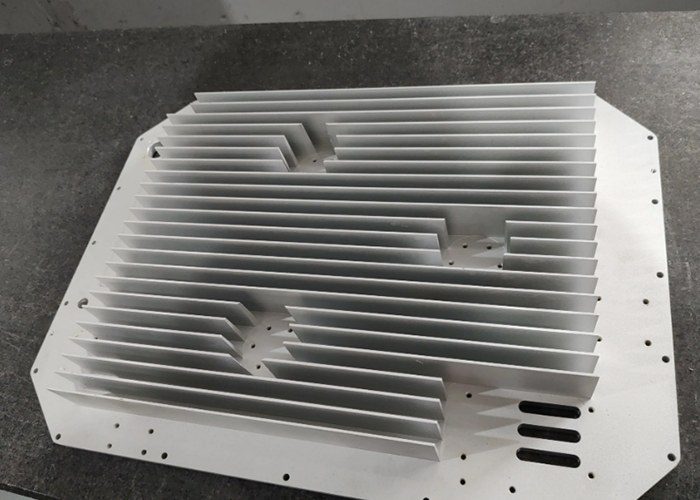
- Electronics: Aluminium is an excellent heat sink. CNC machining is used to create enclosures for computers, amplifiers, and LED lighting, where precise cutouts for ports and buttons are required, and the metal helps dissipate heat. The “unibody” construction of many high-end laptops is a prime example.
- Medical and Robotics: The precision of CNC machining allows for the creation of lightweight, rigid components for surgical robots, prosthetics, and medical imaging devices.
Finishing Touches and Future Trends
Once machined, aluminium parts often undergo secondary finishing processes. Anodizing is a popular choice, which thickens the natural oxide layer to enhance corrosion and wear resistance while also allowing for the addition of vibrant colors (like red, blue, or black). Powder coating, bead blasting, and chromate conversion (Alodine) are also common.
Looking ahead, the role of CNC machined aluminium is set to expand. With the advent of Industry 4.0, machines are becoming smarter and more connected, leading to even greater efficiency and quality control. The integration of automation and robotics allows for “lights-out” manufacturing, where parts can be produced 24/7 without human intervention. As industries continue to push the boundaries of performance and sustainability, the synergy between advanced CNC technology and the remarkable material properties of aluminium will remain a cornerstone of modern manufacturing.
In conclusion, CNC machined aluminium parts represent the perfect marriage of material science and precision engineering. They offer a unique combination of strength, lightness, and accuracy that is essential for the technologies of today and the innovations of tomorrow.