In the realm of modern manufacturing, few materials strike a balance between ancient utility and cutting-edge application as seamlessly as copper. From the wiring in microchips to the heat exchangers in aerospace systems, copper’s exceptional thermal and electrical conductivity makes it indispensable. However, transforming this malleable, highly conductive metal into high-precision components requires a sophisticated manufacturing approach. CNC processing of copper parts stands at this intersection, offering a synergy of advanced automation and metallurgical expertise to produce components that meet the most stringent industrial standards.
The Unique Metallurgical Profile of Copper
Understanding why CNC machining of copper is distinct begins with the material itself. Copper is highly ductile and exhibits excellent thermal conductivity—up to 400 W/(m·K) for pure copper alloys. While these properties are desirable in the final application, they present significant challenges during machining.
Unlike ferrous metals that produce brittle, manageable chips, copper tends to create long, stringy shavings during cutting. If not managed correctly, these shavings can wrap around the cutting tool, leading to tool breakage, surface galling, or thermal deformation. Furthermore, copper lacks the self-lubricating properties of materials like brass; its “gummy” nature means it has a high affinity for cutting tools, increasing the risk of built-up edge (BUE). Therefore, CNC processing of copper is less about brute force removal and more about a carefully controlled choreography of spindle speed, feed rate, and coolant application.
The CNC Methodologies
When manufacturing copper parts, engineers typically rely on two primary CNC modalities: milling and turning.
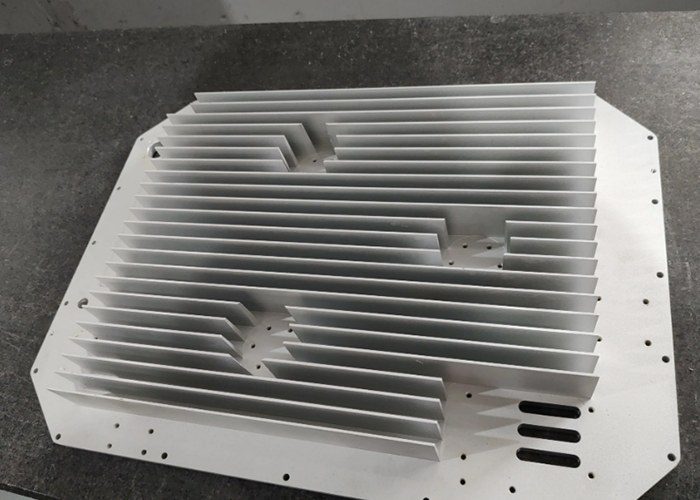
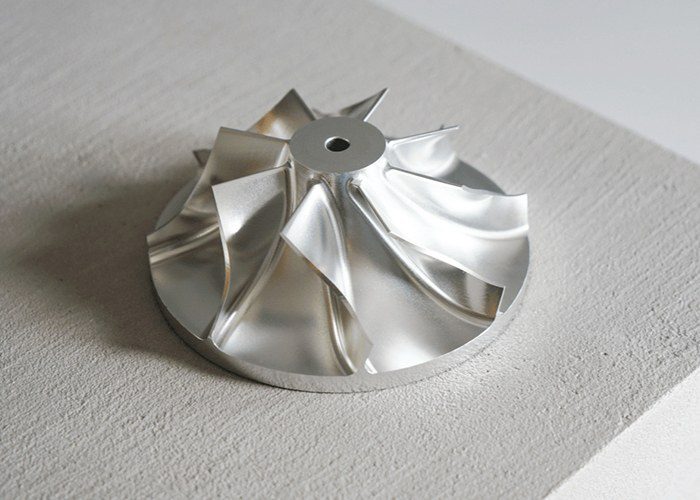
CNC Milling is utilized for creating complex geometries, enclosures, and heat sinks. Copper’s thermal conductivity works against the machinist here; heat does not stay in the chip but rather transfers quickly into the tool. Consequently, CNC milling of copper requires sharp, polished carbide tools with high helix angles. Tools with a specific geometry—such as those with a high rake angle—allow for a shearing action that separates the material cleanly before it can smearing across the surface.
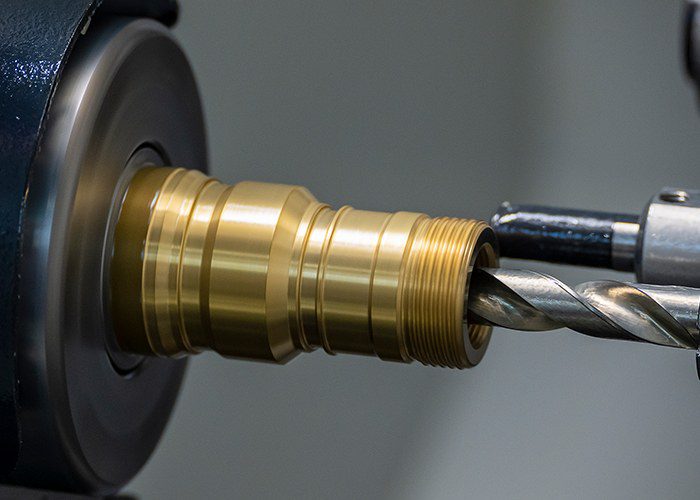
CNC Turning is often employed for busbars, connectors, and electrode tips. In turning operations, maintaining a consistent chip load is vital. Given copper’s ductility, interrupted cuts can be particularly damaging if the tool path is not optimized with advanced CAM (Computer-Aided Manufacturing) software. Live tooling lathes have further expanded capabilities, allowing for the milling of flats, cross-drilling, and threading on copper components in a single setup, thereby maintaining geometric tolerances that might otherwise be compromised by secondary handling.
Overcoming Machining Challenges
The key to successful copper processing lies in three critical factors: tooling, coolant, and fixturing.
1. Tooling Selection:
Standard high-speed steel (HSS) tools quickly dull when cutting copper due to the material’s abrasiveness. Modern CNC shops rely on solid carbide tools coated with materials like AlTiN (Aluminum Titanium Nitride) or diamond-like carbon (DLC). For high-volume production of pure copper components (C110, C101), polycrystalline diamond (PCD) tooling is often the standard. While expensive, PCD offers the wear resistance required to maintain micron-level tolerances over thousands of cycles.
2. Coolant and Lubrication:
Because copper retains work-hardening properties, managing the heat-affected zone (HAZ) is non-negotiable. High-pressure coolant systems (up to 1,000 PSI) are employed not just to cool the cutting zone but to flush away the stringy chips before they can mar the surface finish or damage the spindle. In some instances, shops use mist lubrication or oil-based coolants to reduce friction, preventing the “galling” that often plagues copper threading and drilling operations.
3. Fixturing for Stability:
Copper is relatively soft. If a part is held too tightly in a vise, it can deform elastically; when the pressure is released after machining, the part may “spring back,” resulting in out-of-tolerance dimensions. Vacuum chucks and custom soft jaws are frequently used to distribute clamping pressure evenly, ensuring that the part remains stable during high-speed operations without inducing stress.
Applications Across Industries
The demand for CNC-processed copper parts is surging due to global trends in electrification and miniaturization.
In the electronics and semiconductor industry, copper is used for test sockets, busbars, and heat spreaders. The precision required here is extreme; a misalignment of 0.01mm in a test socket can render a semiconductor testing module useless.
In the aerospace and automotive sectors, copper is utilized in high-performance battery systems for electric vehicles (EVs) and in thermal management systems. As EV batteries become more powerful, the need for complex, lightweight copper busbars with intricate cooling channels has grown exponentially. CNC processing allows for the rapid prototyping and scaling of these safety-critical components.
Medical technology also relies on copper’s antimicrobial properties. CNC machining is used to create surgical instruments and components for imaging machines where cleanliness and precision are paramount.
Quality Assurance and Surface Finishing
Post-processing is a vital component of the CNC copper workflow. Because copper oxidizes quickly when exposed to air, many parts undergo passivation or electroplating (silver or nickel plating) immediately after machining to preserve conductivity and prevent tarnishing.
Quality control for copper components involves more than just dimensional verification with CMM (Coordinate Measuring Machines). Given copper’s intended use in high-frequency or high-current applications, many parts undergo rigorous conductivity testing and surface roughness analysis. A poorly finished copper surface can create parasitic capacitance or resistance issues in electronic applications, making the machining quality directly tied to electrical performance.
Conclusion
CNC processing of copper parts is a discipline that demands respect for the material’s unique physical properties. It is a field where thermal dynamics meet mechanical precision. As industries continue to push toward higher efficiency—whether in data centers requiring better thermal management or EVs requiring robust power distribution—the role of the CNC machinist and programmer becomes increasingly critical.
By mastering the nuances of tool geometry, coolant delivery, and fixture design, manufacturers can unlock the full potential of copper. The result is not merely a metal part; it is a highly engineered component that serves as the backbone for the world’s most advanced technologies. In the landscape of precision manufacturing, CNC-processed copper remains not just a commodity, but a specialized art form that powers the future.