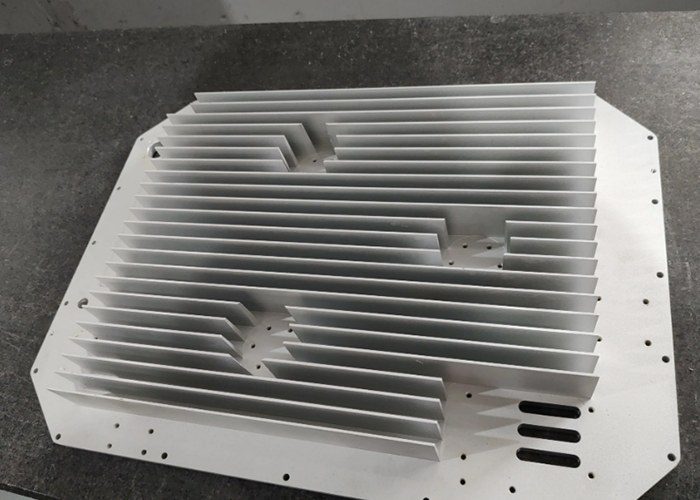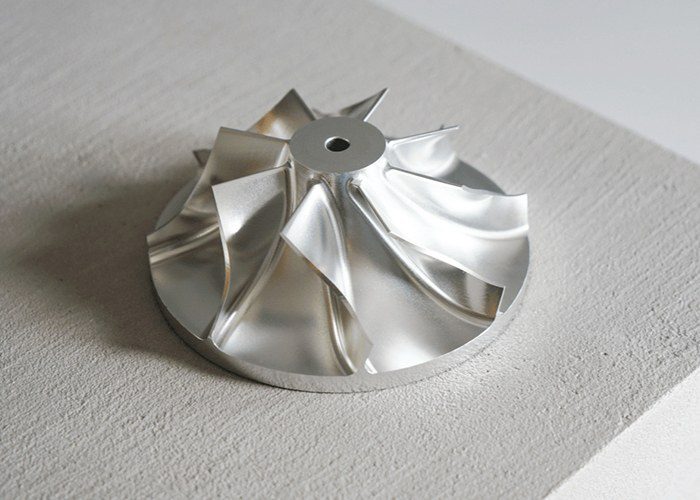
In the landscape of advanced manufacturing, few technologies have proven as transformative as CNC precision milling machining. This computer-controlled subtractive manufacturing process has become the cornerstone of industries ranging from aerospace and medical devices to automotive and electronics. By combining digital design with automated material removal, CNC milling enables manufacturers to produce components with exceptional accuracy, complex geometries, and unwavering repeatability.
Understanding CNC Precision Milling
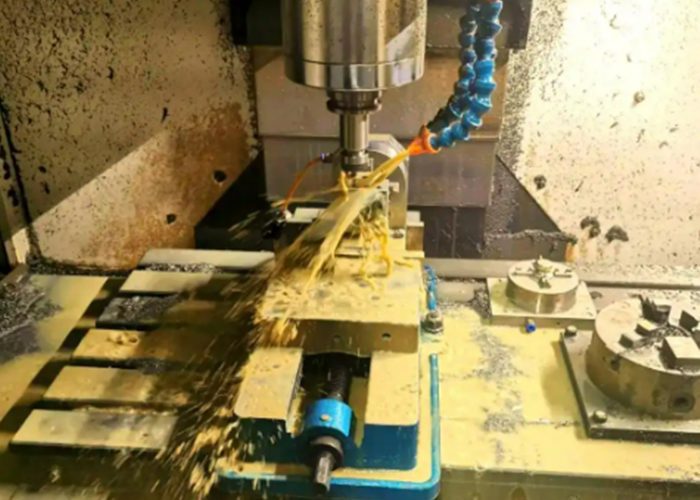
At its core, CNC (Computer Numerical Control) milling is a machining process that uses computer-controlled rotating cutting tools to selectively remove material from a solid workpiece, transforming it into a custom-designed part. Unlike conventional manual milling, which relies heavily on operator skill and is susceptible to human error, CNC milling follows pre-programmed instructions that guide every movement of the cutting tool with incredible precision.
The process begins with engineers creating a detailed three-dimensional digital model of the component using CAD (Computer-Aided Design) software. This digital design defines the exact geometry, dimensions, and tolerances required for the final part. Through CAM (Computer-Aided Manufacturing) programming, the CAD model is then converted into G-code—a machine-readable language that generates precise toolpaths. The CNC milling machine follows these commands to guide the spindle, cutting tool, and worktable with coordinated movements in the X, Y, and Z axes, shaping the raw material into the intended component.
The Precision Advantage
What sets CNC precision milling apart is its ability to achieve dimensional tolerances in the micrometre range. Modern CNC milling machines can consistently hold tolerances as tight as ±0.005 mm, with surface finishes reaching Ra 0.8 μm or lower. This level of accuracy is made possible through advanced servo motors, rigid machine structures, and precise cutting tools that minimize vibrations and inconsistencies during machining.
The precision of CNC milling is not merely about meeting specifications—it is about ensuring that every single part produced is identical to the last. Part repeatability can reach over 99%, making CNC milling indispensable for industries where even minute dimensional deviations could compromise the performance or safety of critical assemblies.
Complex Geometries and Multi-Axis Capability
Modern CNC milling machines support 3-axis, 4-axis, and 5-axis machining, enabling the production of highly complex geometries that would be impossible or prohibitively difficult with manual methods. Multi-axis coordination reduces the need for repositioning the workpiece, shortens machining time, and maintains accuracy across intricate features such as helical grooves, undercuts, and complex contoured surfaces.
Five-axis CNC milling, in particular, has revolutionized manufacturing by allowing a single setup to machine multiple faces of a component. This capability is essential for producing aerospace turbine blades, medical implants, and other high-performance components that demand both precision and complexity.
Materials and Applications
CNC precision milling is remarkably versatile in terms of material compatibility. Common materials include aluminum, stainless steel, titanium, brass, and engineering plastics such as ABS, PEEK, and nylon. Each material is selected based on its strength, machinability, and the specific requirements of the final application.
The applications of CNC precision milling span virtually every sector of modern industry. In aerospace, it produces critical components such as turbine blades, structural parts, and engine housings that must withstand extreme conditions. In the medical field, CNC milling creates surgical instruments, orthopedic implants, and dental components with the precision required for perfect human-body fit. The automotive industry relies on CNC milling for engine blocks, transmission housings, pistons, and suspension components. Beyond these, CNC milling serves the electronics, robotics, energy, and defense sectors, delivering components that demand tight tolerances and superior mechanical performance.
Efficiency and Productivity
CNC precision milling dramatically improves production efficiency through high-speed cutting and automation. Machines can operate continuously around the clock, with automatic tool changers enabling uninterrupted machining cycles. Compared with traditional methods, CNC milling can reduce production time by up to 60% while lowering scrap rates by more than 30%. This combination of speed, repeatability, and adaptability makes CNC milling equally suitable for rapid prototyping, small-batch customization, and large-scale mass production.
The Future of CNC Precision Milling
As we move through 2026, CNC precision milling is evolving at an unprecedented pace. AI-native machining is becoming mainstream, with real-time sensor feedback enabling machines to automatically adjust feeds, speeds, and toolpaths in response to vibration, load, or temperature changes. Digital twins are emerging as the production backbone, integrating design, process engineering, machining, and inspection into continuously updated models that eliminate setup errors before the first chip is cut. Hybrid manufacturing—combining additive processes with CNC subtractive finishing—is gaining traction, enabling internal channels and lattice structures impossible to achieve through conventional methods alone.
Conclusion
CNC precision milling machining stands as a testament to how digital technology has transformed manufacturing. From its foundational role in producing life-saving medical devices to its critical function in aerospace and automotive engineering, this technology enables the creation of components that define modern life. As AI, digital twins, and hybrid manufacturing continue to reshape the industry, CNC precision milling will undoubtedly remain at the forefront of precision manufacturing—pushing the boundaries of what is possible, one micrometre at a time.