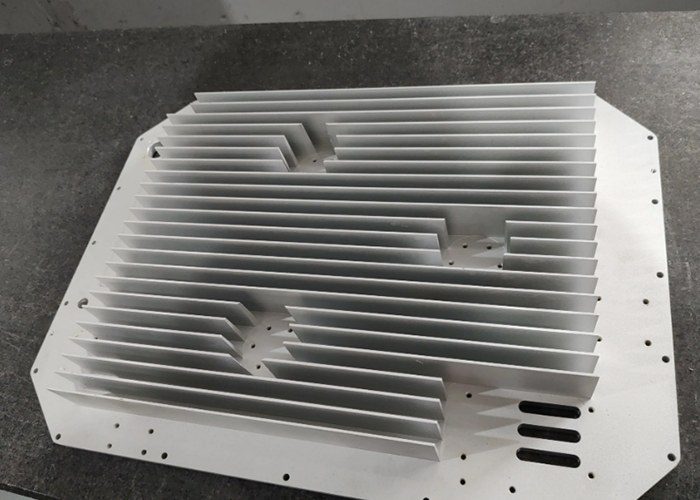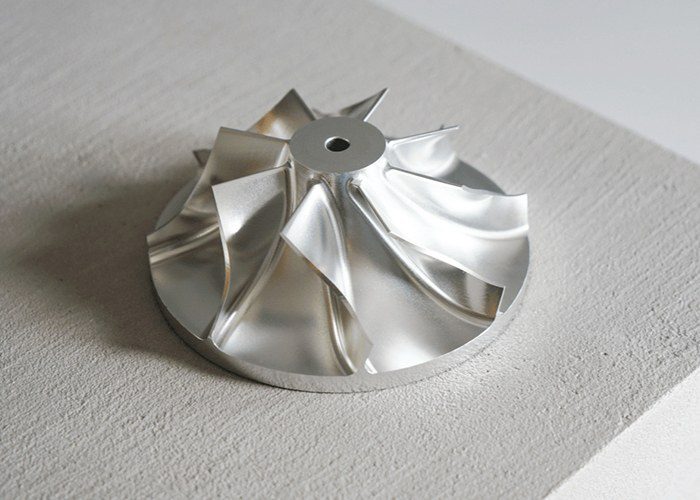
In the rapidly evolving landscape of modern manufacturing, the demand for complexity, precision, and speed has never been greater. Custom 5-axis CNC machining has emerged as a transformative force, enabling manufacturers to produce intricate components that were once considered impossible—or prohibitively expensive—to machine. By moving a cutting tool or workpiece along five different axes simultaneously, this advanced subtractive manufacturing process is redefining what is possible across aerospace, medical, automotive, robotics, and beyond.
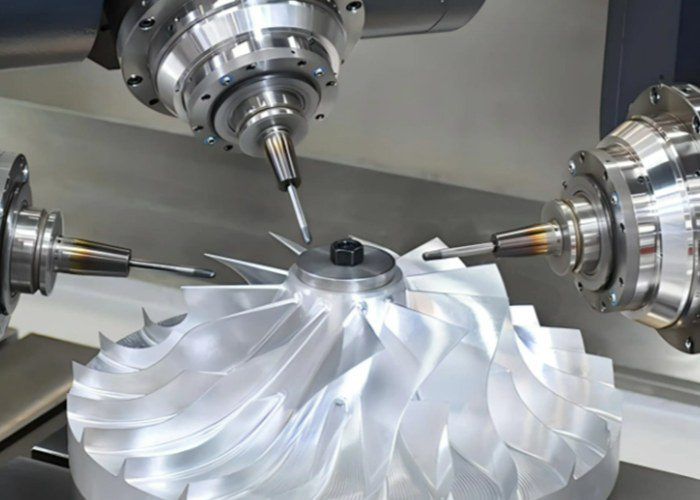
Understanding the Fifth Axis
Traditional 3-axis CNC machining restricts tool movement to linear paths along the X, Y, and Z axes. While effective for simpler, flat parts, this approach often requires multiple setups to machine different faces of a component. Each repositioning adds time, cost, and the risk of tolerance stacking.
5-axis machining changes this paradigm entirely. By adding two rotational axes—typically designated as A, B, or C—the machine can approach the workpiece from virtually any angle in a single setup. This capability allows for the continuous processing of multi-angle and complex surfaces that would otherwise require extensive manual intervention.
The Power of Single-Setup Machining
Perhaps the most significant advantage of custom 5-axis CNC machining is the ability to complete complex geometries in a single operation. Machining multiple faces without repositioning the workpiece delivers higher accuracy, better consistency, and far greater design freedom. This single-setup approach reduces lead times, eliminates fixturing errors, and improves overall surface quality.
The efficiency gains are substantial. Studies show that one-setup 5-axis simultaneous machining can reduce production time by 50 to 70 percent compared to multi-step 3-axis processes. For high-mix, low-volume production environments—where flexibility and speed are critical—these efficiencies often translate directly into competitive advantage.
Precision That Matters
Custom 5-axis machining delivers tolerances that meet the most demanding specifications. Advanced machines are capable of holding tolerances within ±0.005 mm, supported by climate-controlled inspection environments equipped with coordinate measuring machines, laser scanning, and optical comparators. Tighter tolerances and smoother surfaces are achieved because the tool can maintain optimal cutting angles throughout the entire operation.
This level of precision is essential for mission-critical applications. In the aerospace sector, 5-axis machining enables the production of turbine blades, structural components, and complex airfoil surfaces that demand continuous tool-path optimization. In medical manufacturing, it allows for the direct machining of patient-specific implants from CT scan data.
Design Freedom and Innovation
The design implications of 5-axis machining are profound. Engineers are no longer constrained by the limitations of 3-axis equipment. Complex curved profiles, deep cavities, compound angles, and undercut features can all be machined accurately and repeatably, often eliminating the need for secondary processes like electrical discharge machining or manual finishing. This capability has fundamentally changed how engineers approach design for manufacturability, enabling more innovative, flowing, and generative designs.
Versatility Across Materials and Industries
Custom 5-axis CNC machining services work with an extensive range of materials. From aerospace-grade aluminum alloys (including 6061-T6, 7075-T6, and 2024) to stainless steels, titanium, brass, copper, engineering plastics, and exotic alloys such as Inconel and Monel, the technology adapts to the most demanding material requirements.
The applications span virtually every advanced manufacturing sector. Aerospace relies on 5-axis machining for turbine blades and structural parts. Medical device manufacturers employ it in the production of implants and surgical instruments. Automotive engineers depend on it for molds, prototypes, and engine components. Robotics and automation industries leverage its precision for end-effectors and axial components with micron-level accuracy. Energy sector applications include impellers, valves, and specialized turbine components.
The Role of Advanced Software
Modern 5-axis machining relies as much on software as it does on machine hardware. Advanced CAM systems allow engineers to create optimized toolpaths that improve cutting efficiency while protecting both tooling and equipment. Features such as collision detection, adaptive machining strategies, and precise control over tool engagement are essential when working with complex 3D surfaces. When integrated effectively, high-performance CAM software delivers consistent quality, shorter cycle times, and reliable, repeatable results.
The Investment Case
While 5-axis CNC machines require a higher initial investment than 3-axis alternatives, the long-term return is compelling. Reduced setup and labor costs, lower scrap rates, shorter cycle times, improved product quality, and the ability to take on higher-value projects all contribute to rapid return on investment. For many manufacturers, the efficiency gains outweigh the costs, particularly in high-mix, low-volume production environments.
A Strategic Imperative
No longer just a behind-the-scenes specialty, precision engineering has become a strategic differentiator, propelled by industry demands for faster throughput, pinpoint accuracy, and end-to-end traceability. The combination of advanced 5-axis machining, intelligent CAM software, and skilled engineering collaboration is transforming how products are designed and developed. Organizations that invest in these capabilities are better positioned to innovate quickly, compete internationally, and deliver high-value products across a wide range of sectors.
Custom 5-axis CNC machining is no longer a niche technology reserved for the most expensive, high-tolerance parts. It is becoming the industry standard for precision manufacturing. For engineers, designers, and manufacturers seeking to push the boundaries of what is possible, embracing this technology is not just an option—it is a necessity.