
In the world of modern manufacturing, where tolerances are measured in microns and reliability is non-negotiable, CNC precision machined parts stand as the fundamental building blocks of innovation. From the smartphone in your pocket to the satellite orbiting Earth, these components form the silent, perfect backbone of advanced technology. Computer Numerical Control (CNC) machining represents more than just a manufacturing process; it is a digital revolution in physical production, enabling the creation of parts with astonishing accuracy, repeatability, and complexity that manual methods could never achieve.
At its core, CNC precision machining is a subtractive manufacturing process where pre-programmed computer software dictates the movement of factory tools and machinery. This code controls everything from lathes and mills to routers and grinders, transforming raw material—blocks of metal, plastic, or composite—into intricate, finished parts. The “precision” in its name is the defining characteristic. It refers to the ability to consistently produce components that adhere to extraordinarily tight dimensional tolerances, often within a few thousandths of a millimeter. This is not mere approximation; it is the realm of exactitude, where every cut, bore, and thread is executed with digitally guaranteed fidelity to the original design.
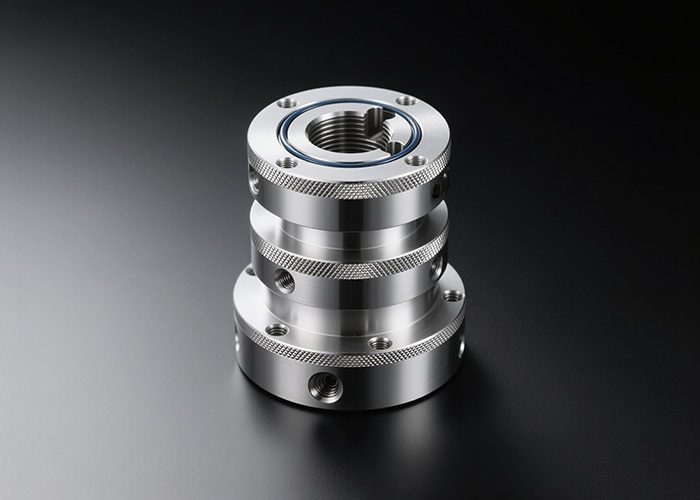
The advantages of CNC machining are manifold. First and foremost is its unparalleled accuracy and consistency. Once a program is verified, it can produce ten or ten thousand identical parts, each a perfect replica of the last. This eliminates human error and ensures critical interchangeability in assemblies. Secondly, it enables exceptional complexity. CNC machines can create intricate geometries, internal cavities, complex contours, and precise undercuts that are impossible with conventional machining. Techniques like 3+2 and 5-axis machining allow the workpiece to be approached from virtually any angle in a single setup, creating breathtakingly complex parts like impellers or aerospace housings.
Furthermore, CNC machining is highly versatile in materials. It can expertly handle a vast spectrum, from common aluminum and stainless steel to exotic alloys like titanium and Inconel, as well as engineering plastics like PEEK and Delrin. This makes it indispensable across industries. Finally, while ideal for high-volume runs, CNC also offers remarkable efficiency for low to medium-volume production and prototyping. Digital designs can be translated into physical parts rapidly, accelerating development cycles and allowing for quick iterations.
The applications of CNC precision machined parts are a testament to their critical role. In the aerospace and defense industries, they are found in engine components, landing gear assemblies, and avionics housings, where failure is not an option, and every gram of weight matters. The medical and dental field relies on them for sterile, biocompatible, and extremely reliable parts: surgical instruments, implants, MRI scanner components, and robotic surgery arms. The automotive sector, especially in high-performance and electric vehicles, uses precision parts for fuel systems, transmission components, sensors, and custom engine modifications.
In electronics and telecommunications, CNC machining produces heat sinks, connector housings, and waveguide components that require non-conductive properties and perfect fits. The burgeoning field of robotics and automation depends on precisely machined joints, actuators, and frames to ensure smooth, predictable movement. Even in energy and optics, from turbine blades to laser housings and intricate lens mounts, the demand for precision is met by CNC technology.
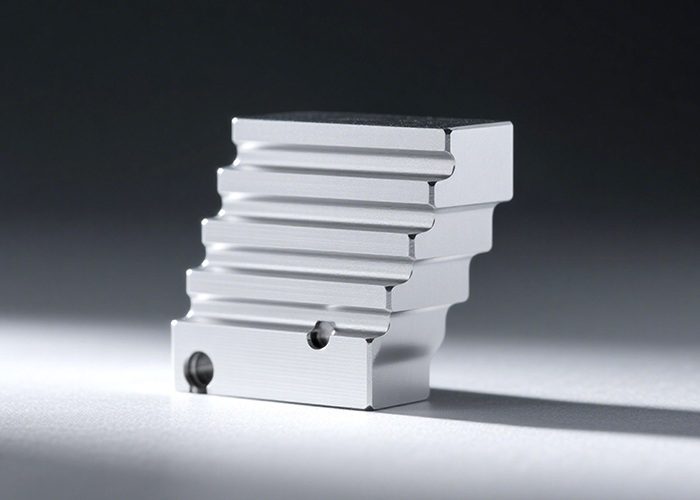
The process of creating these parts is a blend of digital art and engineering science. It begins with a robust CAD (Computer-Aided Design) model, which is then translated into machining instructions via CAM (Computer-Aided Manufacturing) software. This G-code dictates every toolpath, speed, and feed rate. The selection of the right CNC machine—a milling center, lathe, or multi-axis system—is crucial. Equally important is the choice of cutting tools, fixtures to hold the workpiece, and optimal cutting parameters. Post-machining, parts often undergo secondary processes like anodizing, plating, or heat treatment to enhance their properties before stringent quality control, using tools like Coordinate Measuring Machines (CMMs), verifies their perfection.
In conclusion, CNC precision machined parts are far more than mere commodities; they are the enablers of technological progress. They represent the perfect marriage of digital design and physical execution, providing the essential components that demand the highest standards of accuracy, strength, and reliability. As industries push the boundaries towards miniaturization, greater performance, and smarter manufacturing, the evolution of CNC technology—with advancements in automation, AI integration, and even tighter tolerances—will continue to be the unseen engine driving innovation forward. In the precise world of modern engineering, they are, quite simply, the pieces that allow everything else to fit perfectly together.


