In the world of computer-controlled manufacturing, the hum of a CNC milling machine is the sound of modern industry. While the machine frame, linear guides, and control software are all critical, the true heart of this system—the component that brings raw power and motion to the cutting tool—is the CNC milling spindle. More than just a rotating shaft, the spindle is a sophisticated electromechanical assembly responsible for the accuracy, surface finish, and productivity of virtually every milling operation.
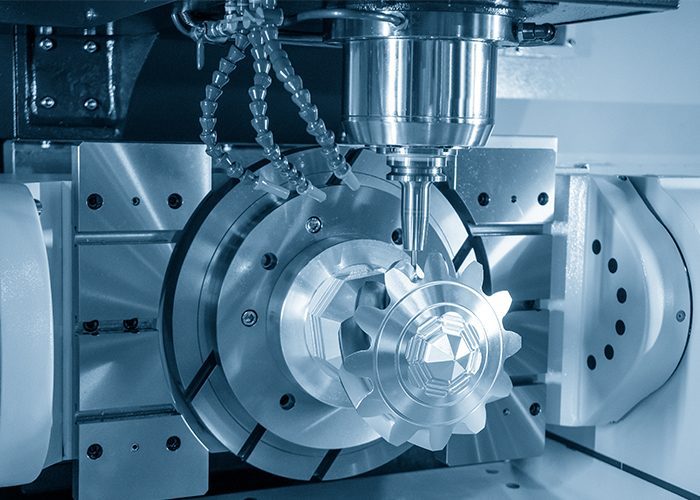
At its core, a CNC milling spindle is a high-precision motorized unit that holds and drives the cutting tool, such as an end mill, drill, or face mill. Its primary functions are to provide rotational force (torque) at a controlled speed (RPM) while maintaining exceptional radial and axial rigidity. This rigidity is paramount; any deflection or vibration under cutting loads translates directly into dimensional inaccuracies, poor surface finish, and accelerated tool wear. Therefore, spindle design is a constant battle against physical forces, balancing power, speed, and stability.
Spindles are broadly categorized by their drive technology and speed capability. Integral Motor Spindles, where the rotor is directly mounted on the spindle shaft, are the standard for high-performance machining. This direct-drive design eliminates power loss and vibration from belts or gears, allowing for higher speeds, faster acceleration, and smoother operation. They are powered by either asynchronous (induction) or, more commonly in high-end applications, synchronous (AC servo) motors, which offer superior control and power density.
For extreme speed applications, such as machining aluminum or composites, high-speed spindles (often reaching 30,000 to 60,000 RPM or more) are employed. These frequently utilize cartridge-style designs and may incorporate advanced cooling systems to manage the intense heat generated. Conversely, geared or belt-driven spindles are used for high-torque, low-speed applications, like heavy-duty face milling of steel, where raw cutting force is more critical than rotational velocity.
Several key specifications define a spindle’s capability and application suitability:
- Power (kW/HP): Determines the spindle’s ability to maintain speed under load, especially during aggressive material removal. More power allows for larger tools and deeper cuts.
- Speed Range (RPM): Dictates the types of materials and tools that can be used efficiently. High speeds are for small tools and soft materials; low-end torque is for large tools and hard materials.
- Torque (Nm): The rotational force available at the tool. High torque at low speeds is essential for tough materials.
- Tool Interface: The standard taper that holds the toolholder, such as CAT (BT) or HSK. HSK tapers are increasingly dominant in high-speed CNC machining due to their superior rigidity and balance at high RPM.
- Cooling System: Critical for thermal stability. Spindles use internal air/oil cooling, external jacket cooling, or even through-spindle coolant to manage heat and maintain precision.
- Bearing Technology: The soul of precision. High-precision angular contact ball bearings are standard. For the ultimate in speed and rigidity, magnetic levitation bearings or hydrostatic bearings are used in ultra-high-end applications, eliminating mechanical contact and friction.
The applications of CNC milling spindles are as varied as industry itself. In aerospace, high-speed spindles mill intricate profiles in aluminum alloys and titanium. In die/mold making, spindles with a wide torque curve enable the roughing of hardened steel and the fine finishing of complex surfaces. The electronics industry relies on ultra-high-speed spindles for micromachining circuit boards and casings. From automotive engines to medical implants, the spindle’s performance sets the boundary for what is manufacturable.
Looking forward, spindle technology continues to evolve. The integration of sensors for vibration, temperature, and load monitoring is leading to smarter “condition-aware” spindles that can predict maintenance needs and optimize cutting processes in real-time. The demand for greater energy efficiency is pushing motor design forward. Furthermore, the rise of additive-subtractive hybrid manufacturing is spurring the development of multi-function spindles that can both deposit and machine material.
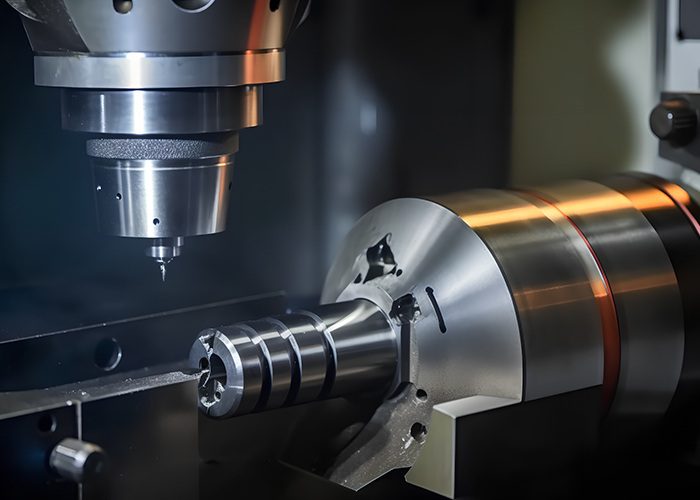
In conclusion, the CNC milling spindle is far from a simple component. It is a masterpiece of mechanical and electrical engineering, a precision instrument that converts digital instructions into physical reality. Its relentless rotation is the driving force behind the precision, complexity, and innovation that define modern manufacturing. As materials become more advanced and part geometries more complex, the evolution of the spindle will continue to be the pivotal factor in unlocking new possibilities in machining.