
Gears are the silent workhorses behind every machine. From the intricate movements of a wristwatch to the colossal power transmission in wind turbines and the precise control in automotive transmissions, these fundamental components quietly enable motion, torque, and speed conversion. Their performance is paramount, and at the heart of manufacturing high-performance, reliable gears today lies Computer Numerical Control (CNC) machining. This advanced manufacturing process has revolutionized gear production, merging digital precision with mechanical excellence.
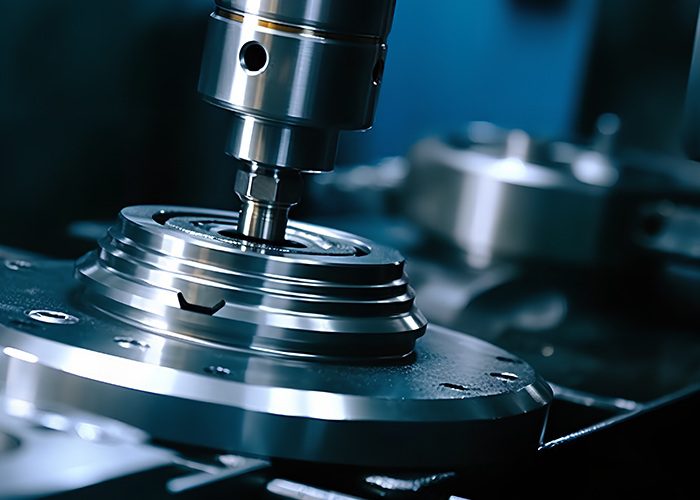
CNC machining is a subtractive manufacturing process that uses pre-programmed computer software to control the movement of tools and machinery. Gear manufacturing typically utilizes CNC milling and turning centers. The process begins far from the machine shop, with sophisticated Computer-Aided Design (CAD) software. Engineers design the gear’s critical parameters here: tooth profile (involute being most common), module or diametral pitch, pressure angle, helix angle for helical gears, and root fillets. This digital blueprint is then translated, via Computer-Aided Manufacturing (CAM) software, into a set of precise instructions (G-code) that will guide the CNC machine through every cut.
The advantages of CNC machining for gears are profound and multifaceted. Foremost is unmatched precision and repeatability. CNC machines can hold tolerances within microns, ensuring each tooth form is geometrically perfect and identical to the next. This consistency is impossible to maintain with manual methods and is critical for smooth, quiet, and efficient meshing of gear pairs, minimizing vibration, noise, and wear. Secondly, it offers exceptional flexibility. A single CNC machine can produce a vast array of gear types—spur, helical, bevel, worm wheels, and even custom non-standard profiles—simply by changing the tooling and the program. This is ideal for prototyping, low-to-medium volume production, and manufacturing custom or replacement gears where dedicated tooling like hobs or shaping cutters would be cost-prohibitive.
Furthermore, CNC machining enables the production of high-strength, monolithic gears. Starting from a solid blank of high-grade material—such as stainless steel, titanium, aluminum, or engineered plastics—the gear is cut from a single piece. This results in superior structural integrity and fatigue life compared to cast or sintered gears. The process also allows for integrated design, where the gear can be machined as part of a larger, complex shaft or component in one setup, enhancing overall alignment and reducing assembly time.
The process flow is systematic. It starts with a selected material blank mounted in the machine. Using a variety of cutting tools—end mills, gear hobbing attachments on CNC mills, or specially shaped form cutters—the machine precisely cuts the tooth spaces. For spur gears, this may involve rotary milling or hobbing. For helical gears, the machine synchronizes axial movement with rotary motion. Advanced 5-axis CNC centers can machine complex face gears or bevel gears in a single setup. After the initial tooth cutting, secondary operations like deburring, heat treatment (to enhance surface hardness), and final precision grinding or honing (often also performed by CNC grinders) may be applied to achieve the ultimate in surface finish and dimensional accuracy.
CNC-machined gears are indispensable across modern industry. In aerospace and defense, they are found in actuation systems, helicopter transmissions, and satellite mechanisms, where failure is not an option. The automotive racing and high-performance sector relies on them for custom transmission and differential gears that can withstand extreme loads. Medical robotics and surgical devices utilize tiny, ultra-precise CNC-machined gears for smooth, reliable movement. They are also pivotal in industrial machinery, food processing equipment, and advanced robotics, wherever custom design, material specificity, and reliable precision are required.
Looking ahead, the future of CNC gear machining is intertwined with broader Industry 4.0 trends. The integration of AI and adaptive machining will allow systems to adjust cutting parameters in real-time based on sensor feedback, optimizing tool life and surface finish. Additive-subtractive hybrid manufacturing is emerging, where a near-net-shape gear is 3D printed and then finished to high precision via CNC machining, offering new possibilities in lightweight, optimized gear geometries with internal structures. Furthermore, advancements in ultra-high-speed machining and new cutting tool materials continue to push the boundaries of efficiency and the grades of materials that can be precisely shaped.
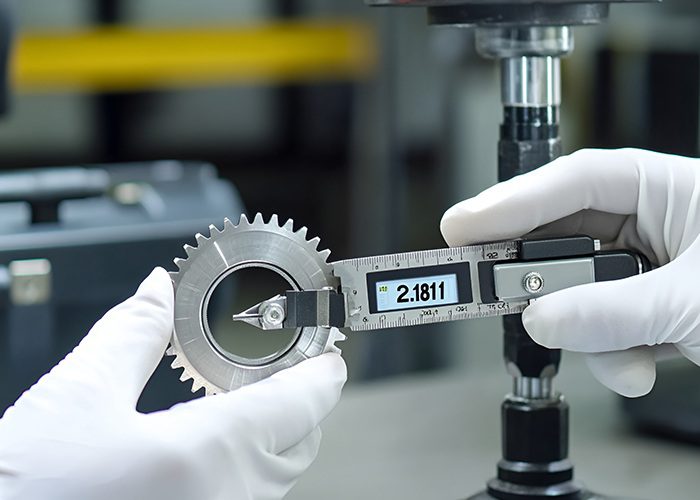
In conclusion, CNC machining has transformed gear manufacturing from a craft reliant on specialized tools into a flexible, digital engineering discipline. It stands as the enabling technology for the custom, high-performance gears that drive innovation across countless fields. By marrying digital design fidelity with robotic precision in material removal, CNC machining ensures that these fundamental mechanical components meet the ever-increasing demands for power density, efficiency, and reliability in our moving world. It is not merely a method of production; it is the cornerstone of modern power transmission design.


